
The shape of a prayer
Standing, bowing, prostrating and sitting: the movements of one unit of prayer and their Arabic names.
- 8 min
- Gratuit — sans inscription
One unit of prayer
Every prayer is made of units called rak'ahs. Fajr has two, Maghrib three, and Dhuhr, Asr and Isha four each. One rak'ah has the same simple shape every time:
- Standing and reciting,
- bowing with the back straight,
- standing up again,
- prostrating with the forehead on the ground,
- sitting for a moment,
- and prostrating a second time.
The schools differ on some details, such as where the hands are placed while standing. These are differences in the sunnah, and each is followed by many Muslims.
The positions in Arabic
قِيَام · رُكُوع · سُجُود · جُلُوس
Translittération: qiyām · rukūʿ · sujūd · julūs
Sens standing · bowing · prostrating · sitting
Your prayer space
Touchez un numéro pour en savoir plus sur cette partie.
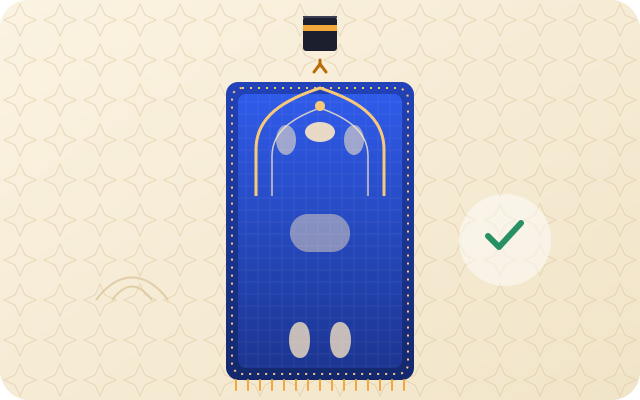
-
The prayer is made facing the Kaaba in Makkah. The top of the mat points that way.
-
The forehead and nose rest here, with the palms flat on either side of the head.
-
Between the two prostrations, and at the end of the prayer, you sit here on your heels or folded legs.
-
You begin the prayer standing here, feet a little apart, facing forward.
-
Any clean place will do. A mat simply helps keep the place clean and marks the direction.
Put one rak'ah in order
Faites glisser les étapes, ou utilisez les flèches, pour les remettre dans l'ordre.
- Stand and recite
- Bow
- Prostrate again
- Prostrate
- Sit for a moment
- Stand up again
Match the Arabic names
Choisissez la bonne réponse pour chacun.
Learning by watching
وَعَنْهُ قَالَ: قَالَ لَنَا رَسُولُ اللَّهِ صَلَّى اللَّهُ عَلَيْهِ وَسَلَّمَ: «صَلُّوا كَمَا رَأَيْتُمُونِي أُصَلِّي فَإِذا حضرت الصَّلَاة فليؤذن لكم أحدكُم وليؤمكم أكبركم»
He also told of God's Messenger saying to them, “Pray as you have seen me prayer, and when the time for prayer comes one of you should call the adhan for you and the oldest of you should act as imam.”* * In this tradition the plural is used throughout; in the preceding the dual is used, two persons being referred to. (Bukhari and Muslim.)
The companions learned the prayer by watching the Prophet (peace be upon him). You can do the same today: pray beside someone you trust, or follow the step-by-step practice room in our Salah Studio.