
Phase 2 — How the caliphs governed
New cities, old peoples
- 11 min
- Gratuit — sans inscription
Kufah, 638
Kufah, 638
On a strip of land by the Euphrates, an army camp becomes a city. First come reed huts. After a fire, mud brick. At the centre is a large mosque, and the governor’s house beside it.
This is Kufah, founded about 17 AH. Basrah, near the Gulf, was begun a few years earlier, and Fustat in Egypt a few years later.
Why build new cities?

Check
Go deeper
The people of the covenant
Most people in the new lands were Christians, Jews or Zoroastrians. They became ahl al-dhimmah, people under a covenant of protection.
They kept their faith, their churches and synagogues, and their own courts for family matters. Able-bodied men paid a tax called the jizyah. In most rulings women, children, the poor and monks were exempt. Muslims paid zakat and served in the army instead.
Duties side by side, in the early caliphate
Freedom of belief
Faith was not forced
This verse teaches that faith cannot be forced. The conquests were wars, with real loss on every side. But people were not made Muslim by the sword.
Conversion came slowly, through families, marriage, trade and the example of Muslims. Historians estimate that Muslims became the majority in lands like Iran and Egypt only after two or three centuries, and they differ on the exact pace.
The rights of those under a covenant
وَعَنْ صَفْوَانَ بْنِ سُلَيْمٍ عَنْ عِدَّةٍ مِنْ أَبْنَاءِ أَصْحَابِ رَسُولِ اللَّهِ صَلَّى اللَّهُ عَلَيْهِ وَسَلَّمَ عَنْ آبَائِهِمْ عَنْ رَسُولِ اللَّهِ صَلَّى اللَّهُ عَلَيْهِ وَسَلَّمَ قَالَ: «أَلَا مَنْ ظَلَمَ مُعَاهِدًا أَوِ انْتَقَصَهُ أَوْ كَلَّفَهُ فَوْقَ طَاقَتِهِ أَوْ أَخَذَ مِنْهُ شَيْئًا بِغَيْرِ طِيبِ نَفْسٍ فَأَنَا حَجِيجُهُ يَوْمَ الْقِيَامَةِ» . رَوَاهُ أَبُو دَاوُدَ
Safwan b. Sulaim quoted the authority of a number of the sons of the Companions of God’s Messenger who told on the authority of their fathers that God’s Messenger said, “If anyone wrongs a man with whom a covenant has been made, or curtails any right of his, or imposes on him more than he can bear, or takes anything from him without his ready agreement, I shall be his adversary on the day of resurrection.” Abu Dawud transmitted it.
True or false?
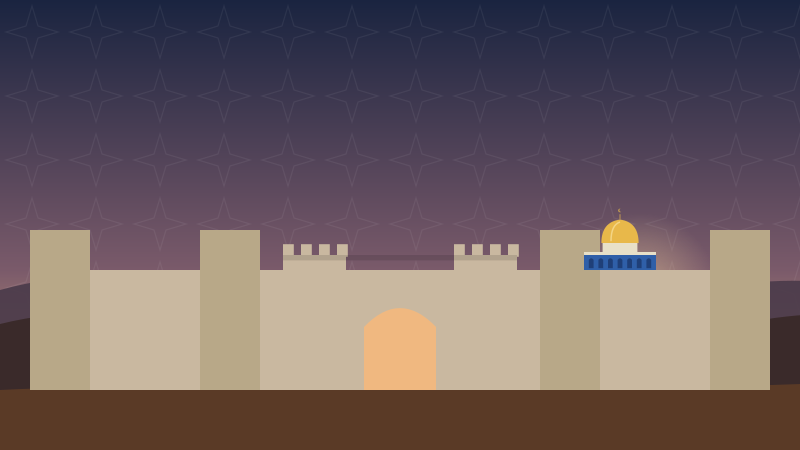
Jerusalem, about 637–638
Explore the map
True or false?
Check
Common mistakes
For your life
You live beside people of other faiths at work, at school and on your street. Keep your word to them, deal fairly in money, and defend their rights as you would your own. The covenant of the first caliphs was, at heart, a promise kept.
A heart moment
Faith cannot be forced; it is won by example. Who might come to know Islam through the way you treat them?
Privé : conservé uniquement dans ce navigateur, jamais envoyé chez nous.
The lesson in three lines
Keep it
In one line: New cities were built; the old peoples kept their faith under a covenant.
Try it today: Be fair today to someone of another faith in your town.