
Phase 3 — Hard questions, principles only
Organ donation and post-mortems
- 10 min
- Gratuit — sans inscription
A form on the table

Principles, not a ruling
This lesson does not give a ruling. It explains the principles scholars weigh, so you can ask a mufti the right question. Contemporary scholars have differed on organ donation.
The dignity of the body
وَعَنْ عَائِشَةَ: أَنَّ رَسُولَ اللَّهِ صَلَّى اللَّهُ عَلَيْهِ وَسَلَّمَ قَالَ: «كَسْرُ عَظْمِ الْمَيِّتِ كَكَسْرِهِ حَيًّا» . رَوَاهُ مَالِكٌ وَأَبُو دَاوُدَ وَابْنُ مَاجَهْ
‘A’isha reported God’s messenger as saying, “Breaking a dead man’s bone is like breaking it when he is alive.” Malik, Abu Dawud and Ibn Majah transmitted it.
The principles weighed
Touchez un numéro pour en savoir plus sur cette partie.
-
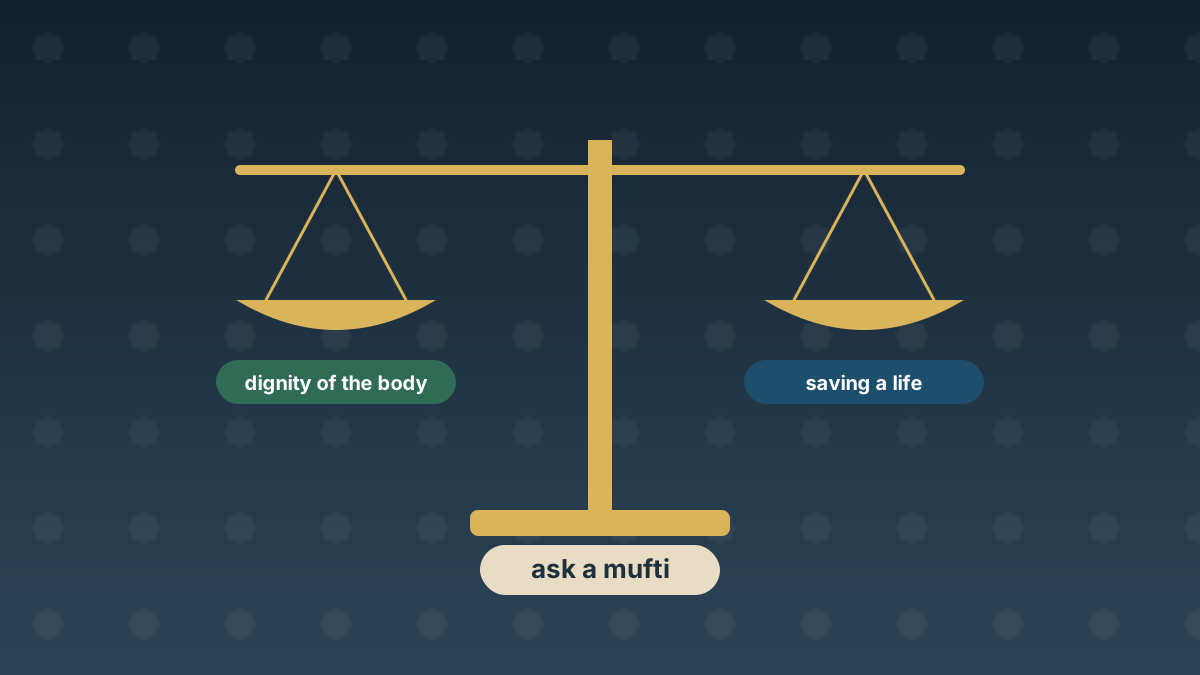
The body is honoured in life and death; the hadith treats harm to the dead like harm to the living.
-
The Quran praises saving a life greatly, and necessity can allow what is otherwise not allowed.
-
How these weigh depends on the case: living or after death, consent, the organ, and the law where you live.
Views you may hear
Post-mortems
The donor register
Asking for your own case
These are live questions, and scholars today hold more than one view. Before signing a register or refusing a post-mortem:
- ask a mufti who knows the medical facts in your country;
- tell your family what you decided;
- if a post-mortem is required by law, ask the coroner for speed and respect.
True or false?
True or false?
Pause and think
If today were your last day, what is one thing you would want to have done? Can you do it today?
Privé : conservé uniquement dans ce navigateur, jamais envoyé chez nous.
Common mistakes
In short
- The body keeps its dignity after death.
- Organ donation: ask a mufti for your case.
- Required post-mortems: ask for speed and respect.
Keep it
In one line: On organ donation and post-mortems, learn the principles and take your case to a mufti.
Try it today: Write down your question for a mufti, with your details, and send it this month.