
Historia islámica
Del primer profeta a una fe de dos mil millones
Recorre la historia del islam: los profetas enviados a la humanidad desde Adán hasta Muhammad ﷺ, la vida del Profeta, cómo el islam viajó con comerciantes y eruditos a través de océanos y desiertos, y los descubrimientos que los musulmanes regalaron al mundo.
- profetas mencionados en el Corán
- 25
- momentos de la Sira
- 17
- países en el mapa de expansión
- 99
- inventos y descubrimientos
- 20
Cuatro recorridos
Elige por dónde empezar
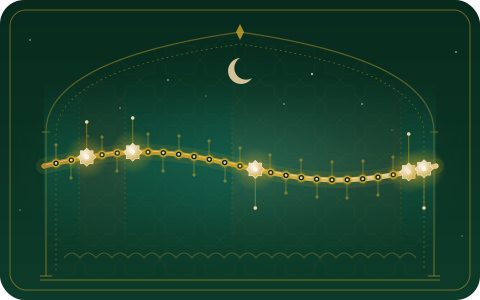 Cronología de los profetas
Los veinticinco profetas mencionados en el Corán en una bella línea del tiempo. Abre cualquiera de ellos para ver su época, su pueblo, su lugar y lo que el Corán dice de él.
25 profetas
Explorar
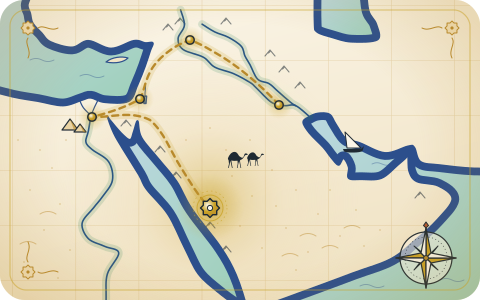 El viaje de los profetas
Sigue un camino dorado por el mundo antiguo desde Adán hasta Muhammad ﷺ. El mapa se desliza de profeta en profeta mientras se narra la historia, y puede leerse en voz alta si lo deseas.
De Adán a Muhammad ﷺ
Explorar
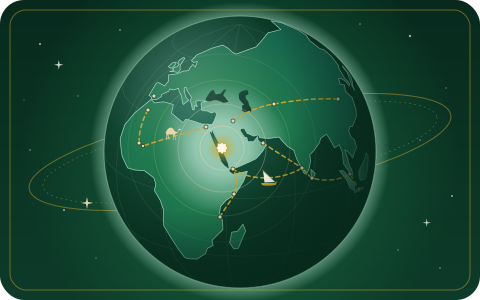 La Sira y la expansión del islam
La vida del Profeta ﷺ desde el Año del Elefante hasta la Peregrinación de Despedida y, después, catorce siglos en un mapa: mira cómo el mundo se vuelve verde a medida que los musulmanes se asientan en todos los continentes.
99 países en el mapa
Explorar
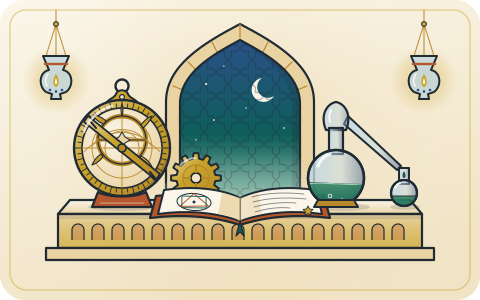 Inventos y descubrimientos
Álgebra, óptica, hospitales, universidades, astrolabios y el reloj del elefante, ilustrados, fechados y con fuentes, en una línea del tiempo sinuosa o en un globo giratorio.
20 inventos y descubrimientos
Explorar
Catorce siglos
Del Año del Elefante hasta hoy
- c. 570 d. C. The Year of the Elephant and the Prophet's birth Makkah
- c. 595 d. C. Marriage to Khadijah Makkah
- c. 610 d. C. The first revelation in the Cave of Hira Cave of Hira, Jabal al-Nour, Makkah
- c. 613 d. C. Preaching openly in Makkah Makkah
- c. 615 d. C. The migration to Abyssinia Aksum, Abyssinia (Ethiopia)
- c. 619 d. C. The Year of Sorrow Makkah and Ta'if
- c. 621 d. C. The Night Journey and Ascension (Isra and Mi'raj) Makkah to Jerusalem
- 621–622 d. C. The Pledges of al-Aqabah Al-Aqabah, near Mina, Makkah
- 622 d. C. The Hijrah to Madinah Makkah to Madinah (Quba)
- 624 d. C. The Battle of Badr Badr, south-west of Madinah
- 625 d. C. The Battle of Uhud Mount Uhud, Madinah
- 627 d. C. The Battle of the Trench (Khandaq) Madinah
- 628 d. C. The Treaty of Hudaybiyyah Al-Hudaybiyyah, near Makkah
- 628 d. C. Khaybar Khaybar
- c. 629 d. C. Arab traders on India's Malabar coast Kodungallur, Kerala, India
- 630 d. C. The Opening of Makkah Makkah
- 632–633 d. C. The Arabian Peninsula united Madinah, Arabia
- 632–750 d. C. The early caliphates and a slow conversion Damascus, the Umayyad capital
- 632 d. C. The Farewell Hajj Mount Arafat, near Makkah
- 632 d. C. The passing of the Prophet ﷺ Madinah
- c. 651 d. C. An envoy to Tang China Chang'an (Xi'an), China
- 711 d. C. Al-Andalus begins Gibraltar (Jabal Tariq)
- 711–713 d. C. Sindh and the Indus valley Debal (Banbhore), Sindh, Pakistan
- c. 750 d. C. Mosques on the Swahili coast Shanga, Pate Island, Kenya
- 751 d. C. Talas and the Silk Road Talas River, near Taraz, Kazakhstan
- 819–999 d. C. The Samanids and learning in Bukhara Bukhara, Uzbekistan
- 827–1091 d. C. Muslim Sicily Palermo, Sicily
- 851 d. C. Muslim merchants in Guangzhou Guangzhou (Canton), China
- 922 d. C. Volga Bulgaria and Ibn Fadlan Bolghar, on the Volga, Russia
- c. 1068 d. C. West Africa and the Saharan trade Koumbi Saleh, Mauritania (Ghana Empire)
- 1077–1308 d. C. Anatolia and the Seljuks of Rum Konya, Turkey
- c. 1200 d. C. Moinuddin Chishti and the Sufis of India Ajmer, Rajasthan, India
- c. 1267–1297 d. C. Samudera Pasai, Sumatra Pasai, Aceh, Sumatra, Indonesia
- 1313–1341 d. C. Özbeg Khan and the Golden Horde Sarai, lower Volga, Russia
- 1324–1325 d. C. Mansa Musa's Hajj and Timbuktu's scholars Timbuktu, Mali
- c. 1350–1478 d. C. Muslim gravestones at Trowulan, Java Trowulan, East Java, Indonesia
- 1352 d. C. Bengal: traders, Sufis and a sultanate Bengal delta
- 1380 d. C. Sulu and the first mosque in the Philippines Simunul, Tawi-Tawi, Philippines
- c. 1400–1511 d. C. The Malacca Sultanate Malacca, Malaysia
- c. 1404 d. C. The Wali Songo of Java Gresik, East Java, Indonesia
- 1463 d. C. The Balkans: Bosnia and Albania Sarajevo, Bosnia and Herzegovina
- 1492 d. C. The fall of Granada Granada, Spain
- 1522 d. C. Enslaved African Muslims in the Americas Hispaniola, Caribbean
- 1609–1614 d. C. The expulsion of the Moriscos Spain to North Africa
- c. 1845–1939 d. C. Indian and Javanese Muslims in the Caribbean Trinidad, Guyana and Suriname
- c. 1945 d. C. New communities in Europe and North America Western Europe and North America
- 2020 d. C. Islam today Worldwide
Regalos al mundo
Una muestra de los inventos
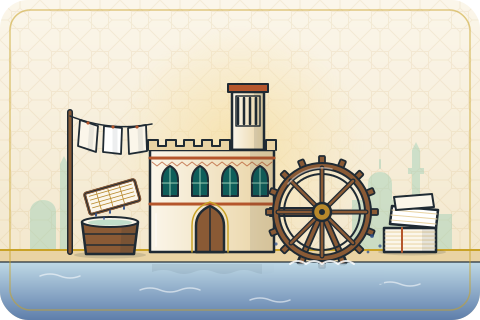 c. 794 d. C.
Paper-Making in Baghdad
Papermakers of Abbasid Baghdad
 c. 800 d. C.
Jabir and Arabic Alchemy
Jabir ibn Hayyan (the Jabirian corpus)
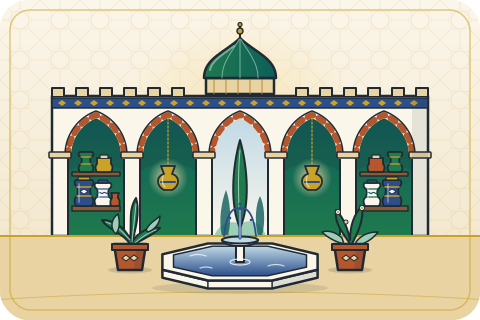 c. 805 d. C.
The Bimaristan Hospitals
Abbasid Baghdad; later Ahmad ibn Tulun, Nur al-Din and Sultan Qalawun
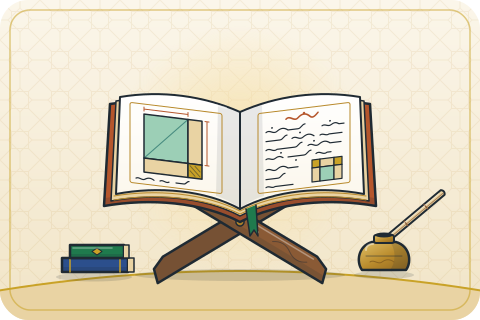 c. 820 d. C.
Al-Jabr: The Book of Algebra
Muhammad ibn Musa al-Khwarizmi
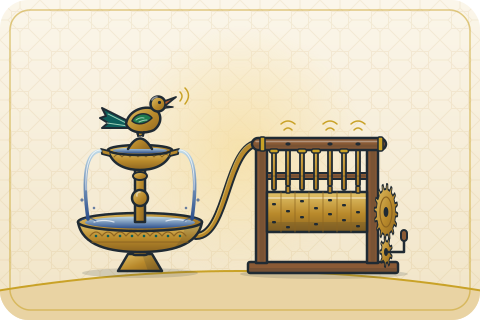 c. 850 d. C.
The Book of Ingenious Devices
The Banu Musa: Muhammad, Ahmad and al-Hasan ibn Musa ibn Shakir
 c. 850 d. C.
Breaking Codes by Counting Letters
Abu Yusuf Ya'qub ibn Ishaq al-Kindi
Nuestro enfoque
Cómo contamos esta historia
Aquí la historia se cuenta con cuidado: lo que se sabe va fechado y con fuentes, y lo que es incierto se señala como tal.
- Las fechas proceden de fuentes citadas. Cuando no hay ninguna, indicamos que la fecha es desconocida o aproximada en lugar de adivinarla.
- Las aleyas del Corán se citan a partir del texto coránico guardado en el sitio, con la sura y la aleya.
- Cada ficha indica sus fuentes para que puedas seguir leyendo y comprobarlo por ti mismo.
- El mapa de expansión muestra dónde han vivido musulmanes en números importantes: personas, no imperios.
Y ahora
Ver todas las secciones
Adónde ir desde aquí
- Atlas de la sira y la historia Un mapa interactivo de los lugares de la sira y de la historia islámica.
- Profetas Las historias de los profetas, una cronología y un mapa de sus viajes.
- Inventos musulmanes Descubrimientos e inventos de sabios y artesanos musulmanes.
- Musulmanes del mundo Comunidades, mezquitas y tradiciones de todo el mundo.