↑↓منتخب کرنے کے لیے↵کھولنے کے لیےEscبند کرنے کے لیےکسی بھی صفحے سے Ctrl K دبا کر تلاش کریں
یہ صفحہ ابھی آپ کی زبان میں دستیاب نہیں، اس لیے انگریزی میں دکھایا جا رہا ہے۔انگریزی صفحہ پڑھیں
نماز اسٹوڈیو
نمازِ جنازہ صلاة الجنازة
نمازِ جنازہ ایک ایک قدم سیکھیں: کھڑے ہو کر چار تکبیریں، ہر تکبیر کے بعد کیا پڑھا جاتا ہے، اور مذاہب کا اختلاف۔
مرحلہ 1 از 6
اس ویب سائٹ کے لیے آسان زبان میں لکھا گیا ہے۔ یہ عمومی تعلیم ہے؛ اپنی صورتِ حال کے لیے کسی مستند عالم سے رجوع کریں۔
وضاحت دکھائیں:
اس انتخاب سے تصاویر بدلتی ہیں؛ مراحل سب کے لیے ایک ہی ہیں۔
مرحلہ 1 از 6
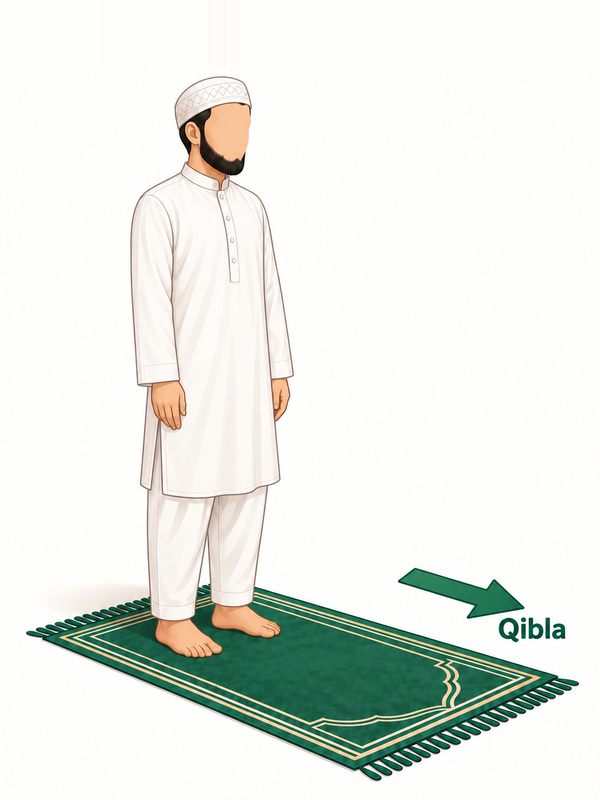
Intention and standing النية والقيام
Standing in rows
Stand in rows behind the imam, facing the qiblah, with the deceased in front of the imam. Make the intention in your heart to pray the funeral prayer for this person for the sake of Allah. Fill the rows calmly; the imam will arrange them.
مذاہب کا اختلاف
Everyone agrees on the intention, standing in rows behind the imam, and facing the qiblah.
Hanafi: The intention is to pray to Allah and to supplicate for the deceased.
Shafiʿi: The intention should be present at the first takbir.
عام غلطیاں
Saying the intention aloud as if it were a recitation.
Standing in front of the imam or the deceased.
Rushing to join without facing the qiblah.
اس انتخاب سے تصاویر بدلتی ہیں؛ مراحل سب کے لیے ایک ہی ہیں۔
مرحلہ 2 از 6
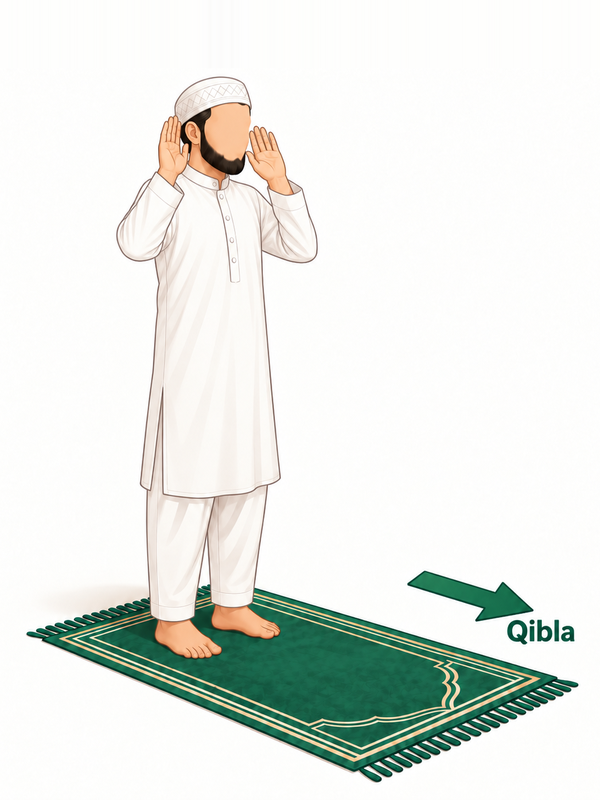
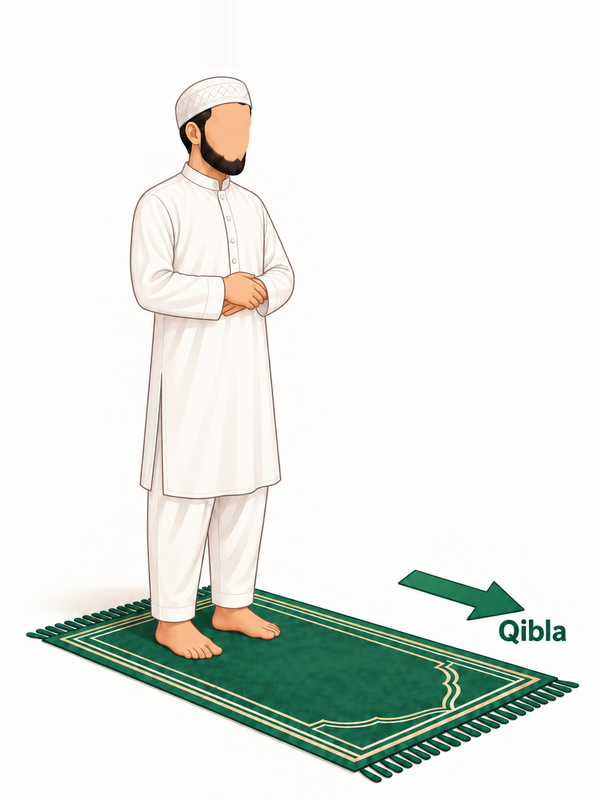
First takbir التكبيرة الأولى
Standing
Raise your hands and say the takbir with the imam, then fold your hands as in prayer. Then recite quietly: in the Hanafi practice the opening praise (thanaʼ); in the Shafiʿi and Hanbali practice, seeking refuge in Allah and al-Fatihah. Choose the practice you follow; the studio shows both.
Bismillahir-Rahmanir-Rahim. Alhamdu lillahi Rabbil-alamin. Ar-Rahmanir-Rahim. Maliki yawmid-din. Iyyaka na'budu wa iyyaka nasta'in. Ihdinas-siratal-mustaqim. Siratal-ladhina an'amta alayhim, ghayril-maghdubi alayhim wa lad-dallin.
ترجمہ
In the name of Allah, the Most Gracious, the Most Merciful. All praise is for Allah, Lord of all worlds. The Most Gracious, the Most Merciful. Master of the Day of Judgment. You alone we worship; You alone we ask for help. Guide us to the straight path — the path of those You have blessed, not those who earned anger, nor those who went astray. (Then say “Ameen”.)
مذاہب کا اختلاف
What is said after the first takbir differs:
Hanafi: The opening praise (thanaʼ) is said; al-Fatihah is not recited as Quran, though some Hanafi scholars allow it with the intention of praise.
Maliki: Praise of Allah and supplication; al-Fatihah is not part of the prayer in the school's best-known view.
Shafiʿi: Al-Fatihah is recited and is a pillar of the prayer, preceded by seeking refuge in Allah.
Hanbali: Al-Fatihah is recited and is a pillar of the prayer.
Raising the hands at the takbirs also differs:
Hanafi: The hands are raised at the first takbir only.
Maliki: The hands are raised at the first takbir only, in the best-known view.
Shafiʿi: The hands are raised at every takbir.
Hanbali: The hands are raised at every takbir.
عام غلطیاں
Reciting aloud; the funeral prayer is recited quietly.
Bowing after the recitation; there is no bowing in this prayer.
اس انتخاب سے تصاویر بدلتی ہیں؛ مراحل سب کے لیے ایک ہی ہیں۔
مرحلہ 3 از 6
Second takbir التكبيرة الثانية
Standing
Say the takbir (some schools raise the hands again, others do not), then send blessings on the Prophet ﷺ with the words said in the final sitting of every prayer.
Allahumma salli ala Muhammadin wa ala ali Muhammad, kama sallayta ala Ibrahima wa ala ali Ibrahim, innaka Hamidun Majid. Allahumma barik ala Muhammadin wa ala ali Muhammad, kama barakta ala Ibrahima wa ala ali Ibrahim, innaka Hamidun Majid.
ترجمہ
O Allah, send blessings upon Muhammad and his family, as You blessed Ibrahim and his family. You are Praiseworthy, Glorious. (Recited in the final sitting only.)
مذاہب کا اختلاف
Blessings on the Prophet ﷺ (as-salah ʿala an-Nabi), as in the final sitting of prayer. The four schools agree it is said here; the Shafiʿis and Hanbalis count it as a pillar.
عام غلطیاں
Forgetting to stay standing; the whole prayer is standing.
اس انتخاب سے تصاویر بدلتی ہیں؛ مراحل سب کے لیے ایک ہی ہیں۔
مرحلہ 4 از 6
Third takbir التكبيرة الثالثة
Standing
Say the takbir, then pray for the deceased sincerely: for forgiveness, mercy, a wide and light grave, and a good place in the Hereafter. The Prophet's own supplication, preserved in hadith, is shown below; you may also pray in your own words.
The Prophet's supplication for the deceased
After the third takbir, the worshipper prays for the deceased. A Companion memorised the Prophet's words in one funeral prayer; they are in the hadith below. Any sincere supplication for the deceased is valid.
حدیث
Abu 'Abdur-Rahman 'Auf bin Malik (May Allah be pleased with him) reported: The Messenger of Allah (ﷺ) offered a funeral prayer and I memorized his supplication. He (ﷺ) prayed: "Allahummaghfir lahu, warhamhu, wa 'afihi, wa'fu 'anhu, wa akrim nuzulahu, wa wassi' mudkhalahu, waghsilhu bil-ma'i wath-thalji wal-baradi, wa naqqihi minal-khataya, kama naqqaytath-thawbal-abyada minad-danasi, wa abdilhu daran khairan min darihi, wa ahlan khairan min ahlihi, wa zawjan khairan min zawjihi, wa adkhilhul-Jannata, wa a'idh-hu min 'adhabil- qabri, wa min 'adhabin-nar .
عربی متن دکھائیں
عن أبي عبد الرحمن بن عوف بن مالك رضي الله عنه قال: صلى رسول الله صلى الله عليه وسلم علي جنازة، فحفظت من دعائه وهو يقول: "اللهم اغفر له، وارحمه، وعافه، واعف عنه، وأكرم نزله، ووسع مدخله واغسله بالماء والثلج والبرد ونقه من الخطايا، كما نقيت الثوب الأبيض من الدنس، وأبدله داراً خيراً من داره، وأهلاً خيراً من أهله، وزوجاً خيراً من زوجه، وأدخله الجنة، وأعذه من عذاب القبر، ومن عذاب النار” حتي تمنين أن أكون ذلك الميت. ((رواه مسلم)).
Supplication for the deceased. All four schools agree this is the heart of the prayer. The supplications the Prophet ﷺ used are recommended, and many people also pray for all Muslims, living and dead.
عام غلطیاں
Hurrying this part; the supplication for the deceased is the heart of the prayer.
اس انتخاب سے تصاویر بدلتی ہیں؛ مراحل سب کے لیے ایک ہی ہیں۔
مرحلہ 5 از 6
Fourth takbir التكبيرة الرابعة
Standing
Say the takbir. Depending on the school, pause briefly or make a short supplication, then follow the imam into the salam.
مذاہب کا اختلاف
After the fourth takbir:
Hanafi: The imam gives the salam without a further supplication, in the best-known view.
Maliki: A brief supplication may be made before the salam.
Shafiʿi: A brief supplication is recommended before the salam.
Hanbali: A short pause, with or without a brief supplication, then the salam.
عام غلطیاں
Giving the salam before the imam.
اس انتخاب سے تصاویر بدلتی ہیں؛ مراحل سب کے لیے ایک ہی ہیں۔
مرحلہ 6 از 6
Salam التسليم
Standing
End the prayer with the salam, turning the head to the right, and (in the schools that do so) to the left. Then help carry the deceased to the burial if you can.
السَّلَامُ عَلَيْكُمْ وَرَحْمَةُ اللّٰهِ
رومن تلفظ
As-salamu alaykum wa rahmatullah
ترجمہ
Peace and mercy of Allah be upon you. (Turn your face to the right.)
السَّلَامُ عَلَيْكُمْ وَرَحْمَةُ اللّٰهِ
رومن تلفظ
As-salamu alaykum wa rahmatullah
ترجمہ
Peace and mercy of Allah be upon you. (Then turn your face to the left — this completes the Salah.)
مذاہب کا اختلاف
How the prayer ends:
Hanafi: Two salams, to the right and then the left.
Maliki: One salam to the right.
Shafiʿi: Two salams; the first is required and the second recommended.
Hanbali: One salam to the right; a second is permitted.
عام غلطیاں
Leaving immediately; following the funeral to the burial carries great reward.
مشورہ: مراحل کے درمیان جانے کے لیے تیر والی کلیدیں استعمال کریں۔
اللہ تمام مرحومین پر رحم فرمائے
آپ نے نمازِ جنازہ کے مراحل مکمل کر لیے۔ جنازے میں شرکت اور تدفین تک ٹھہرنے کا بڑا اجر ہے۔