Islamic Portal
Join freeJoin free
Islamic Portal
Explore everything
Theme

Salah Practice Studio

Understand your Salah

Every phrase you say in the prayer — in Arabic, with its transliteration, its translation, audio and a short explanation of what it means.

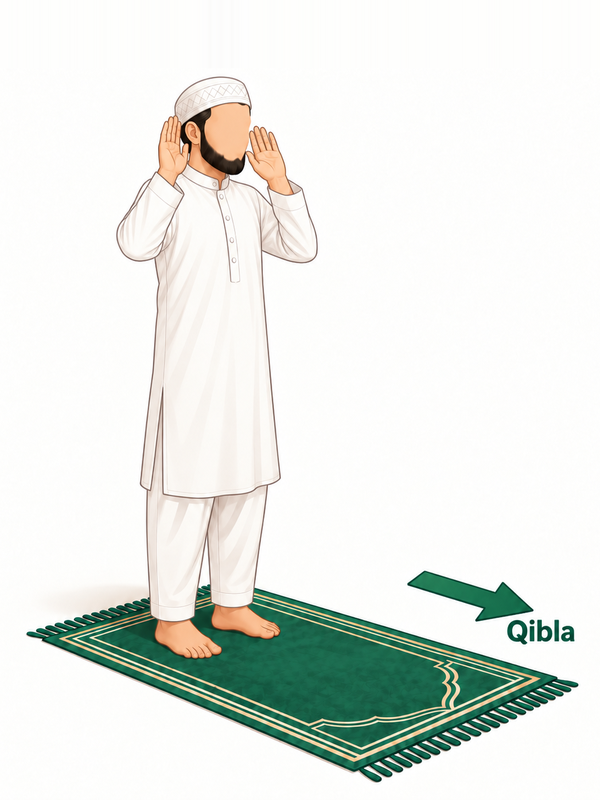
Man in takbir, raising the hands to begin

Qiyam

القيام

1

Allahu Akbar

Takbir · Takbiratul Ihram

اللّٰهُ أَكْبَرُ

Allahu Akbar

Allah is the Greatest

What it means

"Allah is the Greatest" — greater than anything we could compare Him to, and greater than whatever is on our minds. It is said at the start of the prayer and at almost every change of position, so the whole prayer is woven together by this one remembrance.
2

The opening supplication

Opening Dua · Takbiratul Ihram

سُبْحَانَكَ اللّٰهُمَّ وَبِحَمْدِكَ، وَتَبَارَكَ اسْمُكَ، وَتَعَالَىٰ جَدُّكَ، وَلَا إِلٰهَ غَيْرُكَ

Subhanaka Allahumma wa bihamdika, wa tabarakasmuka, wa ta'ala jadduka, wa la ilaha ghayruk.

Glory and praise be to You, O Allah. Blessed is Your name and exalted is Your majesty. There is no god but You.

What it means

A short praise that opens the conversation: Allah is glorified and praised, His name is blessed, His majesty is exalted, and there is no god but Him. Before asking for anything, we begin by recognising who we are speaking to.

3

Seeking refuge and Bismillah

Ta'awwudh · Takbiratul Ihram

أَعُوذُ بِاللّٰهِ مِنَ الشَّيْطَانِ الرَّجِيمِ ۞ بِسْمِ اللّٰهِ الرَّحْمٰنِ الرَّحِيمِ

A'udhu billahi minash-shaytanir-rajim. Bismillahir-Rahmanir-Rahim.

I seek refuge in Allah from Satan, the accursed. In the name of Allah, the Most Gracious, the Most Merciful.

What it means

Before reciting the Quran, we ask Allah to protect us from Satan, whose aim is to distract us, and then begin in the name of Allah, the Most Gracious, the Most Merciful — the two names of mercy that open almost every surah.

Sources 1
فَإِذَا قَرَأْتَ ٱلْقُرْءَانَ فَٱسْتَعِذْ بِٱللَّهِ مِنَ ٱلشَّيْطَٰنِ ٱلرَّجِيمِ

98And when thou recitest the Qur'an, seek refuge in Allah from Satan the outcast.

An-Nahl 16:98 · Marmaduke Pickthall (en.pickthall)
4

Al-Fatihah

Al-Fatiha · Qiyam — Recitation

From the Quran (stored text)

بِسْمِ ٱللَّهِ ٱلرَّحْمَٰنِ ٱلرَّحِيمِ ٱلْحَمْدُ لِلَّهِ رَبِّ ٱلْعَٰلَمِينَ ٱلرَّحْمَٰنِ ٱلرَّحِيمِ مَٰلِكِ يَوْمِ ٱلدِّينِ إِيَّاكَ نَعْبُدُ وَإِيَّاكَ نَسْتَعِينُ ٱهْدِنَا ٱلصِّرَٰطَ ٱلْمُسْتَقِيمَ صِرَٰطَ ٱلَّذِينَ أَنْعَمْتَ عَلَيْهِمْ غَيْرِ ٱلْمَغْضُوبِ عَلَيْهِمْ وَلَا ٱلضَّآلِّينَ

1In the name of Allah, the Beneficent, the Merciful. 2Praise be to Allah, Lord of the Worlds, 3The Beneficent, the Merciful. 4Master of the Day of Judgment, 5Thee (alone) we worship; Thee (alone) we ask for help. 6Show us the straight path, 7The path of those whom Thou hast favoured; Not the (path) of those who earn Thine anger nor of those who go astray.

Al-Fatihah 1:1–7 · Marmaduke Pickthall (en.pickthall)

Bismillahir-Rahmanir-Rahim. Alhamdu lillahi Rabbil-alamin. Ar-Rahmanir-Rahim. Maliki yawmid-din. Iyyaka na'budu wa iyyaka nasta'in. Ihdinas-siratal-mustaqim. Siratal-ladhina an'amta alayhim, ghayril-maghdubi alayhim wa lad-dallin.

What it means

The first half of Al-Fatihah praises Allah: He is Lord of all the worlds, the Most Gracious, the Most Merciful, Master of the Day of Judgement. Then comes the turning point: "You alone we worship and You alone we ask for help." The rest is our request — to be guided on the straight path of those Allah has blessed. Because it is recited in every rak'ah, it is the heart of the prayer.

5

Al-Ikhlas (a short surah)

Short Surah · Qiyam — Recitation

From the Quran (stored text)

بِسْمِ ٱللَّهِ ٱلرَّحْمَٰنِ ٱلرَّحِيمِ قُلْ هُوَ ٱللَّهُ أَحَدٌ ٱللَّهُ ٱلصَّمَدُ لَمْ يَلِدْ وَلَمْ يُولَدْ وَلَمْ يَكُن لَّهُۥ كُفُوًا أَحَدٌۢ

1Say: He is Allah, the One! 2Allah, the eternally Besought of all! 3He begetteth not nor was begotten. 4And there is none comparable unto Him.

Al-Ikhlas 112:1–4 · Marmaduke Pickthall (en.pickthall)

Qul huwa Allahu ahad. Allahus-samad. Lam yalid wa lam yulad. Wa lam yakun lahu kufuwan ahad.

What it means

Al-Ikhlas, "Sincerity", is one of the shortest surahs and one of the most loved. In four verses it describes Allah: One, the Eternal Refuge whom everything needs, who has no child and no parent, and to whom nothing is comparable. Any surah or passage you know may be recited here; this one is a common first choice.

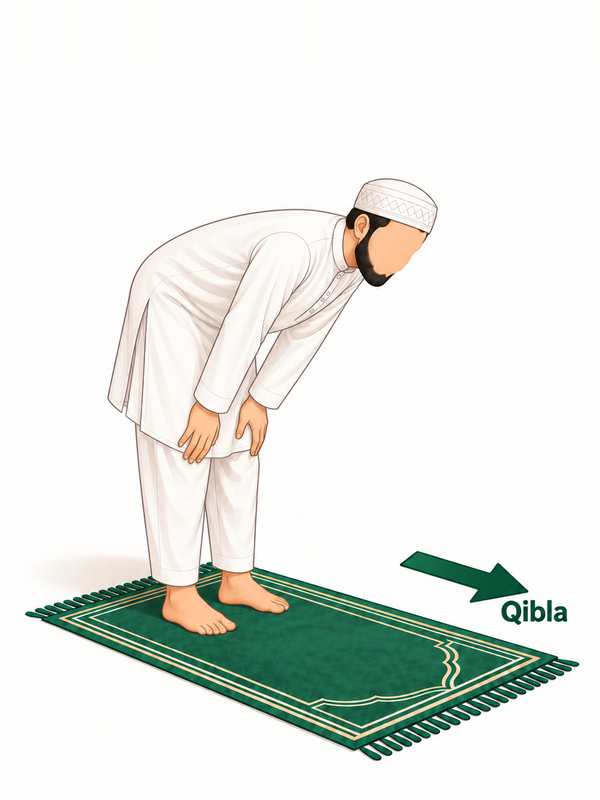
Man in ruku, bowing

Ruku

الركوع

6

Subhana Rabbiyal 'Azim

Tasbih · Ruku — Bowing

×3

سُبْحَانَ رَبِّيَ الْعَظِيمِ

Subhana Rabbiyal Azeem (repeat 3 times)

Glory be to my Lord, the Most Great.

What it means

"Glory be to my Lord, the Most Great." While the body bows, the tongue declares that Allah is far above any fault and that His greatness is beyond us. It is usually said three times.

7

Sami' Allahu liman hamidah

Rising Up · Qawmah — Standing from Ruku

سَمِعَ اللّٰهُ لِمَنْ حَمِدَهُ، رَبَّنَا وَلَكَ الْحَمْدُ

Sami' Allahu liman hamidah. Rabbana wa lakal-hamd.

Allah hears those who praise Him. Our Lord, all praise is for You. (Say while standing up straight.)

What it means

"Allah hears the one who praises Him" — said while rising — and then, standing: "Our Lord, and to You belongs all praise." It is a promise and a reply: Allah hears, so we praise.

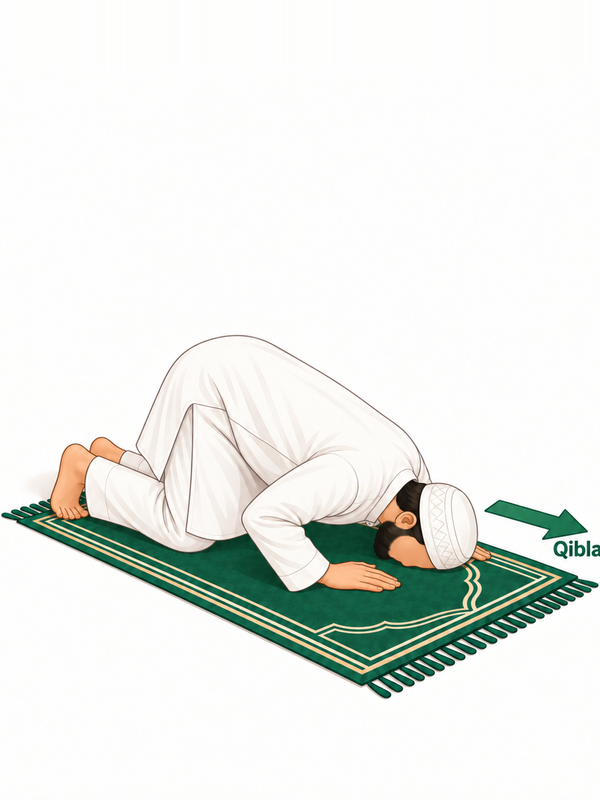
Man in sujood, prostrating

Sujood

السجود

8

Subhana Rabbiyal A'la

Tasbih · Sujood — Prostration

×3

سُبْحَانَ رَبِّيَ الْأَعْلَى

Subhana Rabbiyal A'la (repeat 3 times)

Glory be to my Lord, the Most High.

What it means

"Glory be to my Lord, the Most High." At the lowest point of our body we declare Allah the Most High. It echoes the opening of Surah Al-A'la (87), "Glorify the name of your Lord, the Most High". It is usually said three times.

Sources 2
بِسْمِ ٱللَّهِ ٱلرَّحْمَٰنِ ٱلرَّحِيمِ سَبِّحِ ٱسْمَ رَبِّكَ ٱلْأَعْلَى

1Praise the name of thy Lord the Most High,

Al-A'la 87:1 · Marmaduke Pickthall (en.pickthall)
Ibn ‘Abbas said that when the Prophet recited, “Glorify the name of thy most high Lord,” (Al-Quran; 87) he said, “Glory be to my Lord most high.” Ahmad and Abu Dawud transmitted it.
Mishkat al-Masabih 805 · Transmitted by Ahmad and Abu Dawud
9

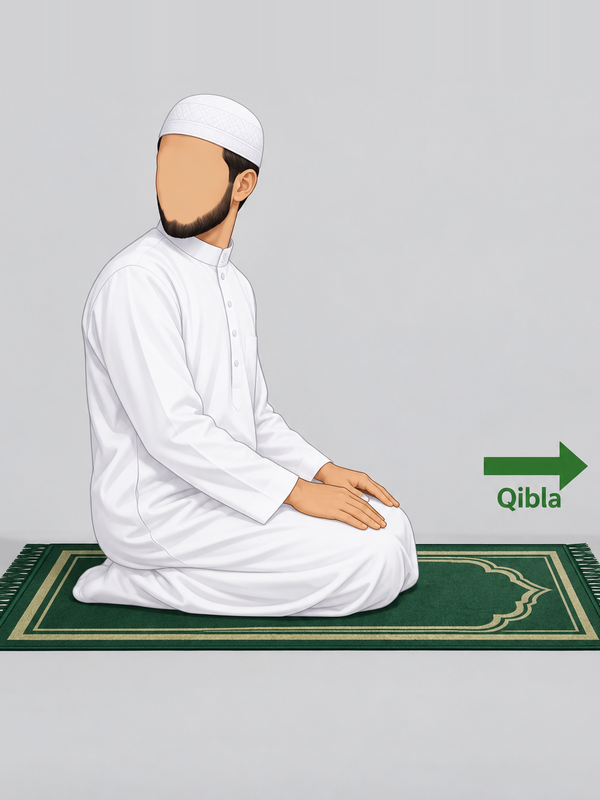
Rabbighfir li

Sitting · Jalsa — Sitting between prostrations

رَبِّ اغْفِرْ لِي

Rabbighfir li

My Lord, forgive me. (Said while sitting briefly between the two prostrations.)

What it means

"My Lord, forgive me." Between the two prostrations, a short, sincere request. Some people add more supplications here, such as asking for mercy, guidance and provision.

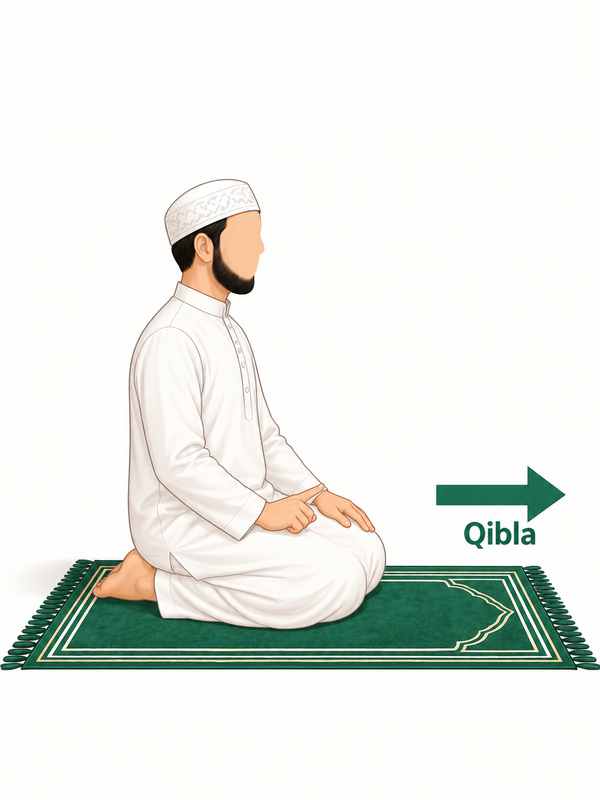
Man in tashahhud, sitting for the tashahhud with the right index finger raised

Tashahhud

التشهد

10

At-Tahiyyat

At-Tahiyyat · Short Qaʿdah — At-Taḥiyyāt Only

التَّحِيَّاتُ لِلّٰهِ وَالصَّلَوَاتُ وَالطَّيِّبَاتُ، السَّلَامُ عَلَيْكَ أَيُّهَا النَّبِيُّ وَرَحْمَةُ اللّٰهِ وَبَرَكَاتُهُ، السَّلَامُ عَلَيْنَا وَعَلَىٰ عِبَادِ اللّٰهِ الصَّالِحِينَ، أَشْهَدُ أَنْ لَا إِلٰهَ إِلَّا اللّٰهُ وَأَشْهَدُ أَنَّ مُحَمَّدًا عَبْدُهُ وَرَسُولُهُ

At-tahiyyatu lillahi was-salawatu wat-tayyibat. As-salamu alayka ayyuhan-nabiyyu wa rahmatullahi wa barakatuh. As-salamu alayna wa ala ibadillahis-salihin. Ash-hadu an la ilaha illa Allah, wa ash-hadu anna Muhammadan abduhu wa rasuluh.

All greetings, prayers and good things are for Allah. Peace be upon you, O Prophet, and Allah's mercy and blessings. Peace be upon us and upon the righteous servants of Allah. I bear witness that there is no god but Allah, and that Muhammad is His servant and Messenger. (Recited in every sitting.)

What it means

"All greetings, prayers and good things are for Allah." We then send peace upon the Prophet ﷺ, upon ourselves and upon every righteous servant of Allah in the heavens and on earth, and bear witness that there is no god but Allah and that Muhammad is His servant and messenger. It is the testimony of faith, repeated in every prayer.

Sources 2
‘Abdallah b. Mas'ud said: When we prayed with the Prophet we said,* “Peace be to God before it is supplicated for His servants; peace be to Gabriel; peace be to Michael; peace be to so and so.” When the Prophet finished he turned his face to us and said: Do not say, “Peace be to God”, for God Himself is Peace. When one of you sits during the prayer he should say, “The adorations of the tongue, acts of worship and all good things are due to God. Peace be upon you, O Prophet, and God’s mercy and blessings. Peace be upon us and upon God’s upright servants (for when he says that it reaches every upright servant in heaven and earth). I testify that there is no god but God, and I testify that Muhammad is His servant and Messenger.” Then he may choose any supplication which pleases him and offer it. * I.e. at the tashahhud. (Bukhari and Muslim.)
Mishkat al-Masabih 854 · Bukhari and Muslim Sahih
‘Abdallah b. ‘Abbas said: God’s Messenger used to teach us the tashahhud just as he would teach us a sura of the Qur’an, and would say, “The blessed adorations of the tongue, acts of worship and all good things are due to God. Peace be upon you, O Prophet, and God’s mercy and blessings. Peace be upon us and upon God’s upright servants. I testify that there is no god but God, and I testify that Muhammad is God’s Messenger.’’ Muslim transmitted it. In the two Sahihs and in al-Jam' bain as-Sahihain I did not find “Peace be upon you” and “Peace be upon us” without the definite article, but the author of al-Jami' transmitted it that way from Tirmidhi.
Mishkat al-Masabih 855
11

The Ibrahimic blessings (Durood)

Durood · Tashahhud

اللّٰهُمَّ صَلِّ عَلَىٰ مُحَمَّدٍ وَعَلَىٰ آلِ مُحَمَّدٍ، كَمَا صَلَّيْتَ عَلَىٰ إِبْرَاهِيمَ وَعَلَىٰ آلِ إِبْرَاهِيمَ، إِنَّكَ حَمِيدٌ مَجِيدٌ، اللّٰهُمَّ بَارِكْ عَلَىٰ مُحَمَّدٍ وَعَلَىٰ آلِ مُحَمَّدٍ، كَمَا بَارَكْتَ عَلَىٰ إِبْرَاهِيمَ وَعَلَىٰ آلِ إِبْرَاهِيمَ، إِنَّكَ حَمِيدٌ مَجِيدٌ

Allahumma salli ala Muhammadin wa ala ali Muhammad, kama sallayta ala Ibrahima wa ala ali Ibrahim, innaka Hamidun Majid. Allahumma barik ala Muhammadin wa ala ali Muhammad, kama barakta ala Ibrahima wa ala ali Ibrahim, innaka Hamidun Majid.

O Allah, send blessings upon Muhammad and his family, as You blessed Ibrahim and his family. You are Praiseworthy, Glorious. (Recited in the final sitting only.)

What it means

We ask Allah to send His blessings and grace upon Muhammad ﷺ and his family as He did upon Ibrahim and his family, "for You are Praiseworthy, Glorious". It connects the last Prophet with the father of the prophets, and every praying Muslim with both.

Sources 1
إِنَّ ٱللَّهَ وَمَلَٰٓئِكَتَهُۥ يُصَلُّونَ عَلَى ٱلنَّبِىِّ ۚ يَٰٓأَيُّهَا ٱلَّذِينَ ءَامَنُوا۟ صَلُّوا۟ عَلَيْهِ وَسَلِّمُوا۟ تَسْلِيمًا

56Lo! Allah and His angels shower blessings on the Prophet. O ye who believe! Ask blessings on him and salute him with a worthy salutation.

Al-Ahzab 33:56 · Marmaduke Pickthall (en.pickthall)
12

Rabbana atina

Closing Dua · Tashahhud

From the Quran (stored text)

وَمِنْهُم مَّن يَقُولُ رَبَّنَآ ءَاتِنَا فِى ٱلدُّنْيَا حَسَنَةًۭ وَفِى ٱلْءَاخِرَةِ حَسَنَةًۭ وَقِنَا عَذَابَ ٱلنَّارِ

201And of them (also) is he who saith: "Our Lord! Give unto us in the world that which is good and in the Hereafter that which is good, and guard us from the doom of Fire."

Al-Baqarah 2:201 · Marmaduke Pickthall (en.pickthall)

Rabbana atina fid-dunya hasanatan wa fil-akhirati hasanatan wa qina adhaban-nar.

What it means

A supplication from the Quran asking for good in this world, good in the Hereafter and protection from the Fire. In one line it covers everything we need, which is why it is so often chosen to close the prayer.

Man in salam, turning the head to the right

Salam

التسليم

13

As-salamu 'alaykum wa rahmatullah

Salam (Right) · Salam — Concluding

السَّلَامُ عَلَيْكُمْ وَرَحْمَةُ اللّٰهِ

As-salamu alaykum wa rahmatullah

Peace and mercy of Allah be upon you. (Turn your face to the right.)

What it means

"Peace and the mercy of Allah be upon you." Said turning to the right and then to the left, it greets the angels and the people beside you, and it is how the prayer ends.