
Phase 2 — Science as worship
Water, light and machines
- 9 min
- Free — no signup needed
A clock at the mosque gate
A clock at the mosque gate

Engineers of water
The Book of Optics
Light and maps

Water for everyone
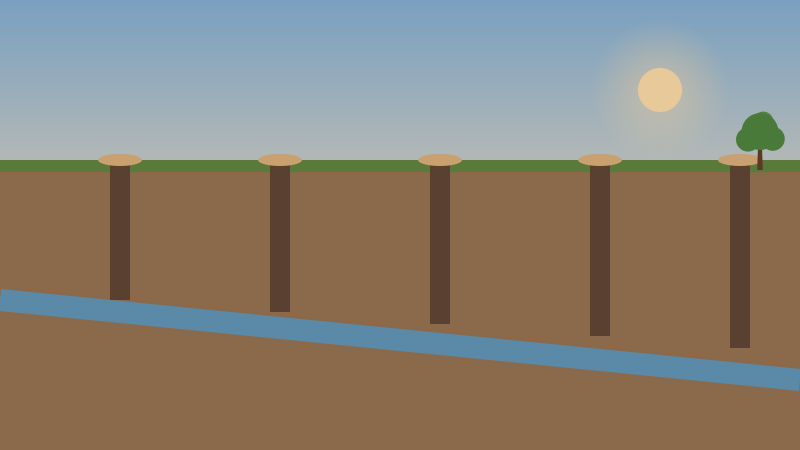
Water was a gift to share. Endowments paid for public fountains on city streets, so anyone could drink, and for the taps where people made wudu at the mosque.
Islamic law gave a right of thirst: no one may refuse drinking water to a thirsty person or animal. Rights to rivers and canals were shared by rules.
Check
Doubt, then test
Ibn al-Haytham taught a method. The seeker of truth, he wrote, does not simply trust the old books; he questions them and tests them.
He made a dark room with a tiny hole and watched light carry an upside-down picture of the outside onto the wall. Experiment, not just argument, decided the answer.
Match the invention to the inventor or place
Choose the right answer for each one.
Fill the gap
Put these in time order
Drag the steps, or use the arrows, to put them in order.
- Al-Idrisi’s map
- Al-Jazari’s book
- The Banu Musa’s devices
- Ibn al-Haytham’s optics
Studying creation
These engineers and scientists saw studying creation as a way to know the Creator. What part of creation amazes you most?
Private: kept only in this browser, never sent to us.
Common mistakes
For your life
Water is a trust. Make wudu with a tap turned low, or from a jug: the Sunnah is to use water sparingly, even beside a river. Fix a dripping tap, and if you can, give to a well or a water project in a dry land.
The lesson in three lines
Keep it
In one line: Engineers of water, light and machines served the cities of Islam.
Try it today: Notice one piece of engineering today and thank Allah for the minds behind it.