
0 رکھا
منظر میں آئیں
The turning point
Maghrib, the light fading. The fifth verse of al-Fatihah is the turning point: from telling Allah who He is, to asking.
قرآن سے
Al-Fatihah 5 to 7
إِيَّاكَ نَعْبُدُ وَإِيَّاكَ نَسْتَعِينُ﴿5﴾ ٱهْدِنَا ٱلصِّرَٰطَ ٱلْمُسْتَقِيمَ﴿6﴾ صِرَٰطَ ٱلَّذِينَ أَنْعَمْتَ عَلَيْهِمْ غَيْرِ ٱلْمَغْضُوبِ عَلَيْهِمْ وَلَا ٱلضَّآلِّينَ﴿7﴾
5 Thee (alone) we worship; Thee (alone) we ask for help.
6 Show us the straight path,
7 The path of those whom Thou hast favoured; Not the (path) of those who earn Thine anger nor of those who go astray.
دیکھیں
The key words
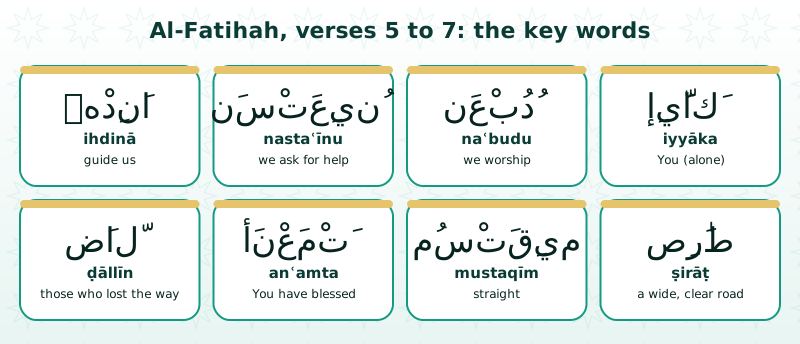
Iyyāka, You alone; naʿbudu, we worship; nastaʿīnu, we ask for help; ihdinā, guide us; ṣirāṭ, a wide, clear road; mustaqīm, straight; anʿamta, You blessed; ḍāllīn, those who lost the way.
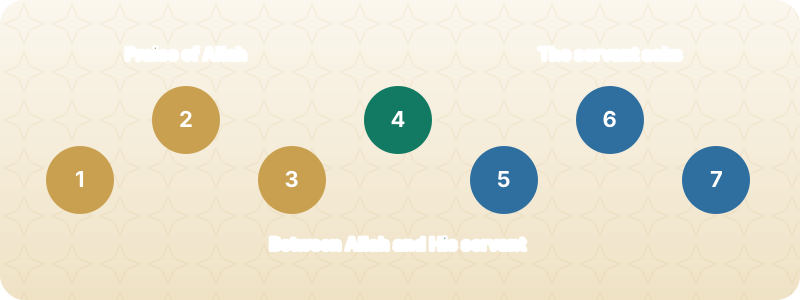
The verse shared between Allah and His servant is the fifth; the last two are the servant’s asking.
جگہ کو چھوئیں Tap the spot
Tap “we ask for help”.
جواب دکھائیں
Nastaʿīnu: form X of ʿ-w-n, asking for help.
لفظ بہ لفظ
Word by word
- إِيَّاكَ iyyāka
- نَعْبُدُ naʿbudu to worship, to serve · عبد
- وَإِيَّاكَ waʾiyyāka
- نَسْتَعِينُ nastaʿīnu to ask for help, to seek help · عون
Thee (alone) we worship; Thee (alone) we ask for help.
پڑھیں
You alone, then asking
Iyyāka comes first: You alone. Then naʿbudu, we worship, and nastaʿīnu, we ask for help: we, not I, because you pray as part of the whole ummah.
Then ihdinā, guide us: the one request of al-Fatihah. The rest describes the road: the way of those He blessed, and not of those who lost it.
Go deeper: the grammar
Iyyāka is put before its verb to mean only You. Naʿbudu and nastaʿīnu begin with na-, we. Ihdinā is a command used as a dua. Aṣ-ṣirāṭa l-mustaqīma is a noun with its matching describing word, and ghayri means other than.
ترتیب دیں
Sort them
Praise or asking?
praise of Allah
- al-ḥamdu
- ar-Raḥmān
- mālik
the servant asking
- ihdinā
- nastaʿīnu
- ṣirāṭ
دیکھیں
The seven verses
چنیں Check
Why does iyyāka come before naʿbudu?
جواب دکھائیں
To mean You alone. What is moved forward is singled out.
یادداشت کا کھیل
The words of asking
Match each word to its meaning.
- iyyāka You alone
- naʿbudu we worship
- nastaʿīnu we ask for help
- ihdinā guide us
- ṣirāṭ a wide, clear road
- mustaqīm straight
حدیث سے
The greatest surah
عن أبي سعيد رافع بن المعلى رضي الله عنه قال : قال لي رسول الله صلى الله عليه وسلم :"ألا أعلمك أعظم سورة في القرآن قبل أن تخرج من المسجد؟ فأخذ بيدي ، فلما أردنا أن نخرج قلت : يا رسول الله إنك قلت لأعلمنك أعظم سورة في القرآن ؟ قال: "الحمد لله رب العالمين هي السبع المثاني، والقرآن العظيم الذي أوتيته ". ((رواه البخاري)).
Abu Sa'id Ar-Rafi' bin Al-Mu'alla (May Allah be pleased with him) reported: The Messenger of Allah (ﷺ) said, "Shall I teach you the greatest Surah in the Qur'an before you leave the mosque?" Then he (ﷺ), took me by the hand, and when we were about to step out, I reminded him of his promise to teach me the greatest Surah in the Qur'an. He (ﷺ) said, "It is 'Alhamdu lillahi Rabbil 'Alamin (i.e., Surat Al-Fatihah) which is As-Sab' Al-Mathani (i.e., the seven oft- repeated Ayat) and the Great Qur'an which is given to me."
صحیح یا غلط True or false?
Āmīn is part of al-Fatihah.
جواب دکھائیں
Āmīn is said after it (quietly), but it is not one of its seven verses.
پڑھیں
For your life

Say Āmīn quietly after al-Fatihah, whether you lead, follow or pray alone: it is not part of the surah, but a short dua of its own.
Make ihdinā your own outside salah too. Before a decision at work, a hard conversation or a new step, ask for guidance in your own words.
ظاہر کریں
Common mistakes
Think of the right answer first, then flip each card.
- Saying iyāka without the shaddah Hold the ya: iyyāka. Without the shaddah the word changes.
- Thinking of "I" in naʿbudu It is we: you pray with the whole ummah.
- Saying aḍ-ḍāllīn with a light d or a z Ḍad is its own heavy letter; learn it from a teacher.
پڑھیں
A moment for the heart

At least seventeen times a day, you ask for one thing: guidance.
Of everything you could ask for, this is the request Allah put on your tongue in every rakʿah.
ظاہر کریں
In short
Answer each one in your head first, then tap to check.
- Why does iyyāka come first? To mean You alone.
- What is the one request of al-Fatihah? Ihdinā: guide us to the straight road.
- Is Āmīn part of al-Fatihah? No. It is said after it, quietly.
سبق مکمل
Al-Fatihah, verses 5 to 7: asking
آپ نے اضافہ کیا: ایک رکعت — جائے نماز جو رکعت بہ رکعت بھرتی ہے.
آپ نے کیا سیکھا
- Iyyāka naʿbudu: You alone; ihdinā: guide us, a command said as a dua.
- مکمل
- 0
- پہلی بار میں درست
- 0
- دہرانے کے لیے
- 0
آپ کا عمل · آج آزمائیں
Say al-Fatihah in your next salah as a conversation: praise, the turn, then asking.
جو آپ نے رکھا
سائن اِن کریں تاکہ آپ کی پیش رفت ہر ڈیوائس پر محفوظ رہے۔