
0 رکھا
منظر میں آئیں
Your first rak’ah of the day
Where you already stand
You say these seven verses at least seventeen times a day. Today, word by word, you start to hear them.
دیکھیں
Start where you stand

Every rak’ah begins with al-Fatihah, so its words are the best place to start. Listen to it below, then tap each word of verse 2 to see its root.
قرآن سے
Al-Fatihah
بِسْمِ ٱللَّهِ ٱلرَّحْمَٰنِ ٱلرَّحِيمِ﴿1﴾ ٱلْحَمْدُ لِلَّهِ رَبِّ ٱلْعَٰلَمِينَ﴿2﴾ ٱلرَّحْمَٰنِ ٱلرَّحِيمِ﴿3﴾ مَٰلِكِ يَوْمِ ٱلدِّينِ﴿4﴾ إِيَّاكَ نَعْبُدُ وَإِيَّاكَ نَسْتَعِينُ﴿5﴾ ٱهْدِنَا ٱلصِّرَٰطَ ٱلْمُسْتَقِيمَ﴿6﴾ صِرَٰطَ ٱلَّذِينَ أَنْعَمْتَ عَلَيْهِمْ غَيْرِ ٱلْمَغْضُوبِ عَلَيْهِمْ وَلَا ٱلضَّآلِّينَ﴿7﴾
1 In the name of Allah, the Beneficent, the Merciful.
2 Praise be to Allah, Lord of the Worlds,
3 The Beneficent, the Merciful.
4 Master of the Day of Judgment,
5 Thee (alone) we worship; Thee (alone) we ask for help.
6 Show us the straight path,
7 The path of those whom Thou hast favoured; Not the (path) of those who earn Thine anger nor of those who go astray.
لفظ بہ لفظ
Word by word
- إِيَّاكَ iyyāka
- نَعْبُدُ naʿbudu to worship, to serve · عبد
- وَإِيَّاكَ waʾiyyāka
- نَسْتَعِينُ nastaʿīnu to ask for help, to seek help · عون
Thee (alone) we worship; Thee (alone) we ask for help.
دیکھیں
Watch: al-Fatihah word by word
یادداشتی کارڈ
Key words
دیکھیں
One root, two names

Ar-Raḥman and ar-Raḥim share the root r-ḥ-m, mercy. Scholars explain ar-Raḥman as mercy that is vast and covers all creation, and ar-Raḥim as mercy that reaches the believers and stays.
When you say them in salah, you are describing Allah’s mercy twice, from two sides.
بنائیں
Build the root of mercy
Tap the three letters of the root of ar-Raḥman and ar-Raḥim.
رحم
ملائیں Match
Match the word to its root
- rabb r-b-b
- raḥman r-ḥ-m
- din d-y-n
- ʿalamin ʿ-l-m
جواب دکھائیں
Rabb comes from r-b-b, rahman from r-h-m, din from d-y-n, and 'alamin from '-l-m. Each word grows from a three-letter root.
خالی جگہ پُر کریں Fill the gap
Ar-Raḥman and ar-Raḥim both come from the root r-ḥ-m, meaning ______.
جواب دکھائیں
Mercy. Two names of mercy grow from the one root r-h-m.
پڑھیں
In your day
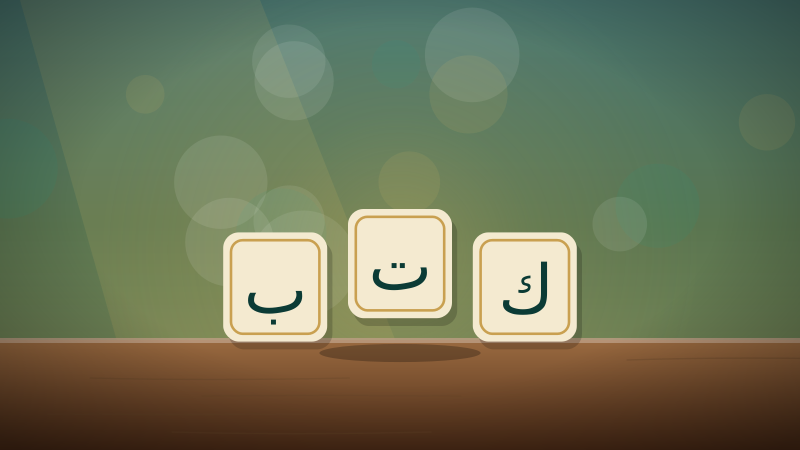
Pick two words of al-Fatihah each day and think of them as you recite. Deed: today, rabb and rahman.
ظاہر کریں
Common mistakes
Think of the right answer first, then flip each card.
- "I know the translation, so the words don't matter." Each word carries more than the translation.
- "Too many words to learn." Two a day.
سبق مکمل
The words of al-Fatihah
آپ نے اضافہ کیا: ایک صفحہ — مصحف جس کے صفحے پلٹتے ہیں.
آپ نے کیا سیکھا
- Al-Fatihah word by word.
- Two words a day.
- Rabb and rahman today.
- مکمل
- 0
- پہلی بار میں درست
- 0
- دہرانے کے لیے
- 0
آپ کا عمل · آج آزمائیں
In your next salah, think of the meaning of one word of al-Fatihah as you say it.
جو آپ نے رکھا
سائن اِن کریں تاکہ آپ کی پیش رفت ہر ڈیوائس پر محفوظ رہے۔