
0 محفوظ
ادخل المشهد
Seventeen times a day
In the five daily prayers you say al-Fatihah at least seventeen times. In its middle verse are two present verbs, and you are the one doing them.
من القرآن
We worship, we ask for help
إِيَّاكَ نَعْبُدُ وَإِيَّاكَ نَسْتَعِينُ﴿5﴾
5 Thee (alone) we worship; Thee (alone) we ask for help.
شاهد
Watch: two present verbs in al-Fatihah
كلمة كلمة
Word by word
- إِيَّاكَ iyyāka
- نَعْبُدُ naʿbudu to worship, to serve · عبد
- وَإِيَّاكَ waʾiyyāka
- نَسْتَعِينُ nastaʿīnu to ask for help, to seek help · عون
Thee (alone) we worship; Thee (alone) we ask for help.
اقرأ
Muḍāriʿ: the present
A present verb (muḍāriʿ) adds a letter in front: ya- he, ta- you or she, a- I, na- we. Naʿbudu, we worship; nastaʿīnu, we ask for help.
The present covers now and the future, and things that go on: we worship, and we keep worshipping.
انظر
Who is doing it?
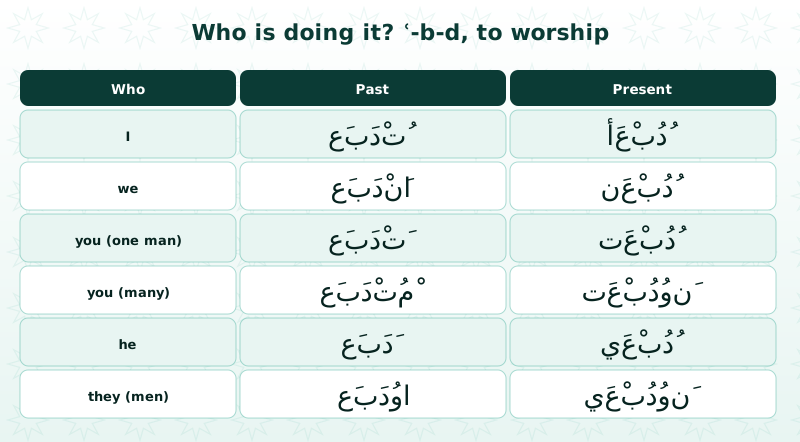
The front letter and the ending say who: aʿbudu, I worship; naʿbudu, we worship; taʿbudu, you worship; yaʿbudu, he worships.
In al-Fatihah you speak as “we”: one worshipper among many.
المس المكان Tap the spot
Tap “we worship”.
أظهر الإجابة
Na'budu: the na- at the front means we, so it means we worship.
ابنِها
Build it
Build “we worship”
na (we) ʿbud (worship) u (the present’s -u)
صِل Match
Match the front letter to who
- a- I
- na- we
- ta- you (or she)
- ya- he
أظهر الإجابة
Four front letters, easy to remember: a, na, ta, ya.
اختر Check
Why do you say “we” in al-Fatihah, even praying alone?
أظهر الإجابة
Scholars note the humility and unity in “we”: you stand with all who worship Allah.
صح أم خطأ True or false?
Naʿbudu is a present verb.
أظهر الإجابة
True. Na- at the front and -u at the end mark a present verb.
انتهى الدرس
The present: we do, we ask
أضفت صفحة إلى مصحف تُقلَّب صفحاته.
ما تعلّمته
- A front letter makes the present: a-, na-, ta-, ya-.
- منجزة
- 0
- صحيح من أول مرة
- 0
- للمراجعة
- 0
عملك · جرّبه اليوم
At 1:5 in your next salah, feel the “we”: you are one of many worshippers.
ما حفظته
سجّل الدخول لتحفظ تقدّمك على كل أجهزتك.