
0 محفوظ
ادخل المشهد
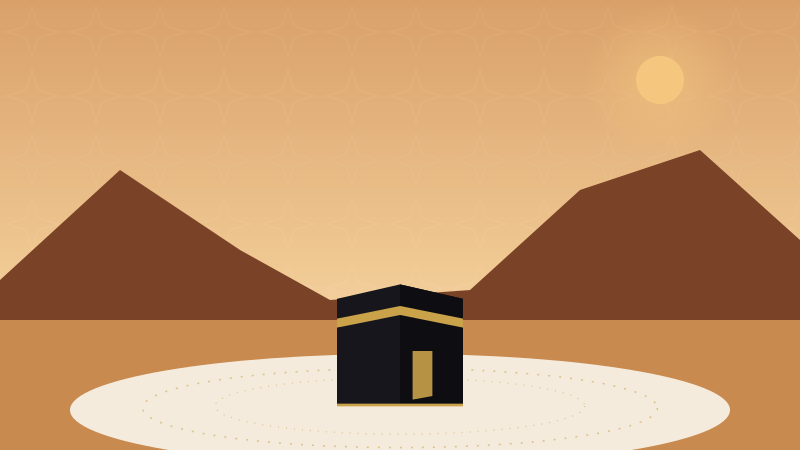
The Ka’bah, Makkah
Praying in the open
For years the believers prayed out of sight. Today they walk to the Ka’bah in two rows, and no one stops them.
انظر
Praying in the open

Before ’Umar (radiyallahu ’anhu), the believers often prayed out of sight. After he and Hamzah (radiyallahu ’anhu) accepted Islam, the Muslims prayed openly at the Ka’bah.
Ibn Mas’ud later said the Muslims had grown strong since ’Umar became Muslim. He was given the title al-Faruq: the one who separates truth from falsehood.
انظر
When revelation agreed with him

’Umar once said that his view had agreed with his Lord’s in three things, as al-Bukhari reports. Two of them are below.
He wished the Station of Ibrahim to be a place of prayer, and the verse came. He wished the Prophet’s ﷺ wives to be screened from visitors, and the verse of the screen came.
كلمة كلمة
The Station of Ibrahim
- وَإِذْ waʾidh when (in the past); (and remember) when
- جَعَلْنَا jaʿalnā to make, to place, to appoint · جعل
- ٱلْبَيْتَ al-bayta house, home (plural buyut) · بيت
- مَثَابَةًۭ mathābatan
- لِّلنَّاسِ lilnnāsi people, mankind · نوس
- وَأَمْنًۭا waʾamnan
- وَٱتَّخِذُوا۟ wattakhidhū to take (for oneself), to adopt · أخذ
- مِن min from, of, out of, some of
- مَّقَامِ maqāmi
- إِبْرَٰهِۦمَ ibrāhīma Ibrahim (Abraham), a prophet
- مُصَلًّۭى muṣallan
- وَعَهِدْنَآ waʿahidnā
- إِلَىٰٓ ilā to, towards, until
- إِبْرَٰهِۦمَ ibrāhīma Ibrahim (Abraham), a prophet
- وَإِسْمَٰعِيلَ waʾismāʿīla
- أَن an that, to (before a verb)
- طَهِّرَا ṭahhirā
- بَيْتِىَ baytī house, home (plural buyut) · بيت
- لِلطَّآئِفِينَ lilṭṭāʾifīna
- وَٱلْعَٰكِفِينَ walʿākifīna
- وَٱلرُّكَّعِ warrukkaʿi
- ٱلسُّجُودِ as-sujūdi
And when We made the House (at Makka) a resort for mankind and sanctuary, (saying): Take as your place of worship the place where Abraham stood (to pray). And We imposed a duty upon Abraham and Ishmael, (saying): Purify My house for those who go around and those who meditate therein and those who bow down and prostrate themselves (in worship).
كلمة كلمة
The verse of the screen
- يَٰٓأَيُّهَا yāʾayyuhā which, whichever; in ya ayyuha: O (you)
- ٱلَّذِينَ alladhīna those who (masculine plural)
- ءَامَنُوا۟ āmanū to believe, to have faith · أمن
- لَا lā no, not; (before a command) do not
- تَدْخُلُوا۟ tadkhulū to enter; (adkhala) to admit, to make enter · دخل
- بُيُوتَ buyūta house, home (plural buyut) · بيت
- ٱلنَّبِىِّ an-nabī prophet · نبأ
- إِلَّآ illā except, but, only
- أَن an that, to (before a verb)
- يُؤْذَنَ yuʾdhana
- لَكُمْ lakum for, to, belonging to (a one-letter word joined to the next)
- إِلَىٰ ilā to, towards, until
- طَعَامٍ ṭaʿāmin food · طعم
- غَيْرَ ghayra other than, not, without · غير
- نَٰظِرِينَ nāẓirīna
- إِنَىٰهُ ināhu
- وَلَٰكِنْ walākin but, however
- إِذَا idhā when, whenever; (idhan) then, in that case
- دُعِيتُمْ duʿītum
- فَٱدْخُلُوا۟ fadkhulū to enter; (adkhala) to admit, to make enter · دخل
- فَإِذَا faʾidhā when, whenever; (idhan) then, in that case
- طَعِمْتُمْ ṭaʿimtum
- فَٱنتَشِرُوا۟ fantashirū
- وَلَا walā no, not; (before a command) do not
- مُسْتَـْٔنِسِينَ mustaʾnisīna
- لِحَدِيثٍ liḥadīthin speech, account, narrative · حدث
- إِنَّ inna indeed, truly (adds certainty to a sentence)
- ذَٰلِكُمْ dhālikum that (pointing to something further away)
- كَانَ kāna to be, was; (kana yaf'al) used to do · كون
- يُؤْذِى yuʾdhī
- ٱلنَّبِىَّ an-nabī prophet · نبأ
- فَيَسْتَحْىِۦ fayastaḥī
- مِنكُمْ minkum from, of, out of, some of
- وَٱللَّهُ wallāhu Allah, God: the proper name of the One God
- لَا lā no, not; (before a command) do not
- يَسْتَحْىِۦ yastaḥī
- مِنَ mina from, of, out of, some of
- ٱلْحَقِّ al-ḥaqqi truth, the truth; a right; true · حقق
- وَإِذَا waʾidhā when, whenever; (idhan) then, in that case
- سَأَلْتُمُوهُنَّ saʾaltumūhunna to ask · سأل
- مَتَٰعًۭا matāʿan enjoyment, provision for a while · متع
- فَسْـَٔلُوهُنَّ fasʾalūhunna
- مِن min from, of, out of, some of
- وَرَآءِ warāʾi
- حِجَابٍۢ ḥijābin
- ذَٰلِكُمْ dhālikum that (pointing to something further away)
- أَطْهَرُ aṭharu
- لِقُلُوبِكُمْ liqulūbikum heart (plural qulub) · قلب
- وَقُلُوبِهِنَّ waqulūbihinna heart (plural qulub) · قلب
- وَمَا wamā not (negation)
- كَانَ kāna to be, was; (kana yaf'al) used to do · كون
- لَكُمْ lakum for, to, belonging to (a one-letter word joined to the next)
- أَن an that, to (before a verb)
- تُؤْذُوا۟ tuʾdhū
- رَسُولَ rasūla messenger (plural rusul) · رسل
- ٱللَّهِ allāhi Allah, God: the proper name of the One God
- وَلَآ walā no, not; (before a command) do not
- أَن an that, to (before a verb)
- تَنكِحُوٓا۟ tankiḥū
- أَزْوَٰجَهُۥ azwājahū spouse, mate; one of a pair (plural azwaj) · زوج
- مِنۢ min from, of, out of, some of
- بَعْدِهِۦٓ baʿdihī after · بعد
- أَبَدًا abadan ever, forever; (with a negative) never · أبد
- إِنَّ inna indeed, truly (adds certainty to a sentence)
- ذَٰلِكُمْ dhālikum that (pointing to something further away)
- كَانَ kāna to be, was; (kana yaf'al) used to do · كون
- عِندَ ʿinda at, with, near, in the presence of
- ٱللَّهِ allāhi Allah, God: the proper name of the One God
- عَظِيمًا ʿaẓīman great, tremendous, mighty · عظم
O Ye who believe! Enter not the dwellings of the Prophet for a meal without waiting for the proper time, unless permission be granted you. But if ye are invited, enter, and, when your meal is ended, then disperse. Linger not for conversation. Lo! that would cause annoyance to the Prophet, and he would be shy of (asking) you (to go); but Allah is not shy of the truth. And when ye ask of them (the wives of the Prophet) anything, ask it of them from behind a curtain. That is purer for your hearts and for their hearts. And it is not for you to cause annoyance to the messenger of Allah, nor that ye should ever marry his wives after him. Lo! that in Allah's sight would be an enormity.
اقرأ
Strong, but humble
This was not pride. ’Umar (radiyallahu ’anhu) knew he was only a servant. When he asked to go for Umrah, the Prophet ﷺ asked him for something.
من الحديث
A request for dua
وعن عمر بن الخطاب رضي الله عنه قال: استأذنت النبي صلى الله عليه وسلم في العمرة، فأذن لي، وقال: "لا تنسنا يا أخي من دعائك" فقال كلمة ما يسرني أن لي بها الدنيا. وفي رواية قال: "أشركنا يا أخي في دعائك". حديث صحيح ((رواه أبو داود، والترمذي وقال: حديث حسن صحيح)).
'Umar bin Al-Khattab (May Allah be pleased with him) reported: I sought permission of the Prophet (ﷺ) to perform 'Umrah. He granted me leave and said, "Dear brother! Do not forget us in your supplications". ('Umar added): This is something I would not exchange for the whole world.Another narration is: He (ﷺ) said, "Include us, my dear brother, in your supplications."
اكشف
Myth or fact?
Decide, then flip each card.
- Al-Faruq means “the one who separates truth from falsehood”. Fact. He would not let the two be mixed.
- He suggested praying at the Station of Ibrahim before the verse came. Fact. 'Umar suggested praying at the Station of Ibrahim, and later a verse came that agreed with him.
- ’Umar boasted when the Prophet ﷺ asked for his dua. Myth. He treasured it humbly and said nothing would please him more.
صِل
Match the title or event
صِل كل واحد بما يناسبه.
- Al-Faruq The one who separates truth from falsehood
- The Station of Ibrahim Made a place of prayer
- The verse of the screen Privacy for the Prophet’s ﷺ wives
- The Umrah request He was asked to remember the Prophet ﷺ in dua
أظهر الإجابة
His strength served the truth, and his humility kept it pure.
صح أم خطأ True or false?
’Umar was proud that the Prophet ﷺ asked for his dua, and boasted about it.
أظهر الإجابة
He treasured it: he said he would not exchange it for the whole world. That is gratitude, not boasting.
اقرأ
Truth and falsehood, kept apart

Al-Faruq could not bear right and wrong to be blurred. In a judgement, in trade, in worship, he wanted what was true to stand clear of what was false.
That made him feared by wrongdoers and loved by the weak, who knew he would not let a strong man’s word bury their rights.
Go deeper: who gave the title
Reports differ on who first called him al-Faruq. Some say the Prophet ﷺ, others that the companions did. The meaning is agreed: the one who separates truth from falsehood.
اكشف
Common mistakes
Flip each card: what people often get wrong, and what is right.
- “’Umar’s view could overrule revelation.” Revelation decides. His insight often agreed with it, and when it did not, as at al-Hudaybiyah, he submitted.
- “Al-Faruq means harsh.” It means one who separates truth from falsehood. His firmness served the truth.
- “The Muslims went public only because of ’Umar.” Hamzah had accepted Islam just before him. By Allah’s will, the two together gave the believers strength.
اقرأ
Insight, a gift from Allah

Scholars counted more cases than three where ’Umar’s view came before the verse, such as his advice about the captives of Badr. Al-Bukhari also reports the Prophet ﷺ praising his insight.
Scholars explain this as sound inspiration, never revelation. It was a gift from Allah, and ’Umar never claimed it as his own.
اقرأ
For your life
Be a faruq in your own life. Do not blur right and wrong to keep people happy. When it matters, say clearly and kindly what is halal and what is haram.
And live it yourself first. A clear word from someone whose life matches it is rarely forgotten.
فكّر في الأمر
A heart moment
When were you last tempted to blur right and wrong, to avoid an awkward moment or keep someone happy? What would al-Faruq have done, and what will you do next time?
لا يراه أحد غيرك، ويُحفظ على هذا الجهاز.
اقرأ
The lesson in three lines
After ’Umar and Hamzah accepted Islam, the believers prayed openly at the Ka’bah. ’Umar was called al-Faruq, the one who separates truth from falsehood. Revelation agreed with his view more than once, and he stayed humble.
انتهى الدرس
Al-Faruq
أضفت نجمة إلى كوكبة تضيء، نجمة لكل شخص.
ما تعلّمته
- Al-Faruq brought the believers into the open, and revelation agreed with him more than once.
- منجزة
- 0
- صحيح من أول مرة
- 0
- للمراجعة
- 0
عملك · جرّبه اليوم
Ask someone you respect to make dua for you today, and make dua for them.
ما حفظته
سجّل الدخول لتحفظ تقدّمك على كل أجهزتك.