
0 رکھا
منظر میں آئیں
The high street
Saturday rich, Thursday broke
Shop windows, a café, a bubble tea queue. Forty pounds on Saturday; six by Thursday.
پڑھیں
£40 on Saturday, £6 by Thursday
Birthday money from your aunt, plus car-washing money. You feel rich. By Thursday: bubble tea, a meal deal, an in-game skin. £6 left and you are not sure where it went.
آپ کیا کریں گے؟
Real talk
Where does your money usually go first?
- Food and snacks
- Games and apps
- Clothes
- I save most of it
- I give some away
قرآن سے
Not wasteful, not stingy
وَٱلَّذِينَ إِذَآ أَنفَقُوا۟ لَمْ يُسْرِفُوا۟ وَلَمْ يَقْتُرُوا۟ وَكَانَ بَيْنَ ذَٰلِكَ قَوَامًۭا﴿67﴾
67 And those who, when they spend, are neither prodigal nor grudging; and there is ever a firm station between the two;
پڑھیں
The middle way
This verse describes the servants of the Most Merciful: when they spend, they are not wasteful and not stingy, but keep a steady middle way.
Not wasting, not hoarding: somewhere fair in between.
قرآن سے
The chained hand and the open hand
وَلَا تَجْعَلْ يَدَكَ مَغْلُولَةً إِلَىٰ عُنُقِكَ وَلَا تَبْسُطْهَا كُلَّ ٱلْبَسْطِ فَتَقْعُدَ مَلُومًۭا مَّحْسُورًا﴿29﴾
29 And let not thy hand be chained to thy neck nor open it with a complete opening, lest thou sit down rebuked, denuded.
پڑھیں
Two extremes
This verse paints two pictures: a hand chained shut so it never gives, and a hand so wide open that everything falls through. Both end in regret.
حدیث سے
Contentment brings blessing
وعن حكيم بن حزام رضي الله عنه قال: سألت رسول الله صلى الله عليه وسلم فأعطاني، ثم سألته فأعطاني، ثم سألته فأعطاني ثم قال: "يا حكيم، إن هذا المال خضر حلو، فمن أخذه بسخاوة نفس بورك له فيه، ومن أخذه بإشراف نفس لم يبارك له فيه، وكان كالذي يأكل ولا يشبع، واليد العليا خير من اليد السفلى" قال حكيم: فقلت يا رسول الله والذي بعثك بالحق لا أرزأ أحداً بعدك شيئاً حتى أفارق الدنيا. فكان أبو بكر رضي الله عنه يدعو حكيماً ليعطيه العطاء، فيأبى أن يقبل منه شيئاً ثم إن عمر رضي الله عنه دعاه ليعطيه، فأبى أن يقبله. فقال: يا معشر المسلمين، أشهدكم على حكيم أني أعرض عليه حقه الذي قسمه الله له في هذا الفيء فيأبى أن يأخذه فلم يرزأ حكيم أحداً بعد النبي صلى الله عليه وسلم حتى توفي. ((متفق عليه)). "يرزأ" براء ثم زاى ثم همزة، أي: لم يأخذ من أحد شيئاً، وأصل الرزء: النقصان، أي: لم ينقص أحداً شيئاً بالأخذ منه. و"إشراف النفس": تطلعها وطمعها بالشيء. "سخاوة النفس": هي عدم الإشراف إلى الشيء، والطمع فيه، والمبالاة به والشره.
Hakim bin Hizam (May Allah be pleased with him) reported: I begged Messenger of Allah (ﷺ) and he gave me; I begged him again and he gave me. I begged him again and he gave me and said, "O Hakim, wealth is pleasant and sweet. He who acquires it with self-contentment, it becomes a source of blessing for him; but it is not blessed for him who seeks it out of greed. He is like one who goes on eating but his hunger is not satisfied. The upper hand is better than the lower one." I said to him, "O Messenger of Allah, by Him Who sent you with the Truth I will not, after you, ask anyone for anything till I leave this world." So Abu Bakr (May Allah be pleased with him) would summon Hakim (May Allah be pleased with him) to give his rations, but he would refuse. Then 'Umar (May Allah be pleased with him) would call him but he would decline to accept anything. So 'Umar (May Allah be pleased with him) said addressing Muslims: "O Muslims, I ask you to bear testimony that I offer Hakim his share of the booty that Allah has assigned for him but he refuses my offer." Thus Hakim did not accept anything from anyone after the death of Messenger of Allah (ﷺ), till he died..
دیکھیں
Your receipt
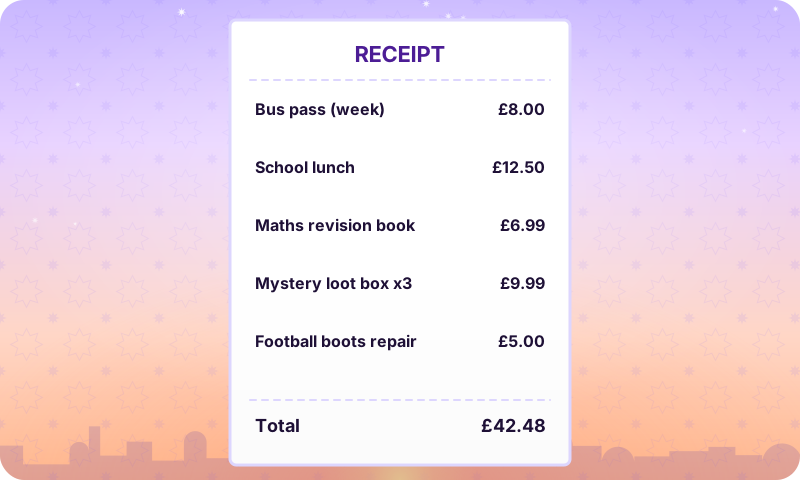
جگہ کو چھوئیں Need or want?
Tap the item that is a want, not a need, and close to gambling.
جواب دکھائیں
Mystery loot boxes: paying for a random prize. That is the one to cut.
پڑھیں
Needs, wants and waste
Go deeper: showing off with money
Buying things to impress people, or to look richer than friends, is one of the quickest ways money disappears. Islam warns against showing off and against waste. A simple rule: buy what you need and some of what you enjoy, never just to be seen.
صحیح یا غلط True or false?
Islam asks for a middle way with money: not wasteful and not stingy.
جواب دکھائیں
True. The verse in this lesson praises spending that is neither wasteful nor tight-fisted.
یادداشتی کارڈ
Money words
ظاہر کریں
Common mistakes
Think of the right answer first, then flip each card.
- "It's my money, I can do what I like." Money is a trust from Allah; you'll be asked how you earned and spent it.
- "Being careful with money is being stingy." Islam asks for the middle way: not wasteful, not stingy.
- "Treats are haram." Halal treats are fine. Waste and showing off are the problem.
+20 XP
Money is a trust
آپ نے اضافہ کیا: XP — XP، لگاتار دن اور درجے.
آپ نے کیا سیکھا
- Money is a trust: spend in the middle way, neither wasteful nor stingy.
- مکمل
- 0
- پہلی بار میں درست
- 0
- دہرانے کے لیے
- 0
آپ کا عمل · آج آزمائیں
Write down everything you spend today.
جو آپ نے رکھا
سائن اِن کریں تاکہ آپ کی پیش رفت ہر ڈیوائس پر محفوظ رہے۔