
0 رکھا
منظر میں آئیں
A masjid courtyard, just after Fajr
A tiled courtyard
Sunlight slides down a wall of blue stars. A band of gold writing runs above the arch. Water whispers in a fountain. Nothing in the picture looks back at you.
دیکھیں
What do you notice first?

Walk into an old masjid in Cordoba, Cairo, Istanbul or Lahore and your eye finds the same four things: pattern, writing, leaves and flowers, and light.
What you will rarely find is a picture of a person or an animal. That is not an accident; it is a choice made by belief.
تلاش کریں
Explore
Tap the four great themes on this tile wall.
- Calligraphy Beautiful writing: here a stored Name of Allah, al-Khaliq, the Creator. The word became the highest art.
- Geometry Stars and shapes built with a compass and a ruler, repeating without end.
- The arabesque Leaves, stems and flowers scrolling in a rhythm: plants, which have no face and no soul.
- Light A window screen that turns sunlight into pattern on the floor.
قرآن سے
The Creator, the Shaper, the Fashioner
هُوَ ٱللَّهُ ٱلْخَٰلِقُ ٱلْبَارِئُ ٱلْمُصَوِّرُ ۖ لَهُ ٱلْأَسْمَآءُ ٱلْحُسْنَىٰ ۚ يُسَبِّحُ لَهُۥ مَا فِى ٱلسَّمَٰوَٰتِ وَٱلْأَرْضِ ۖ وَهُوَ ٱلْعَزِيزُ ٱلْحَكِيمُ﴿24﴾
24 He is Allah, the Creator, the Shaper out of naught, the Fashioner. His are the most beautiful names. All that is in the heavens and the earth glorifieth Him, and He is the Mighty, the Wise.
دیکھیں
Made for the eye and the heart
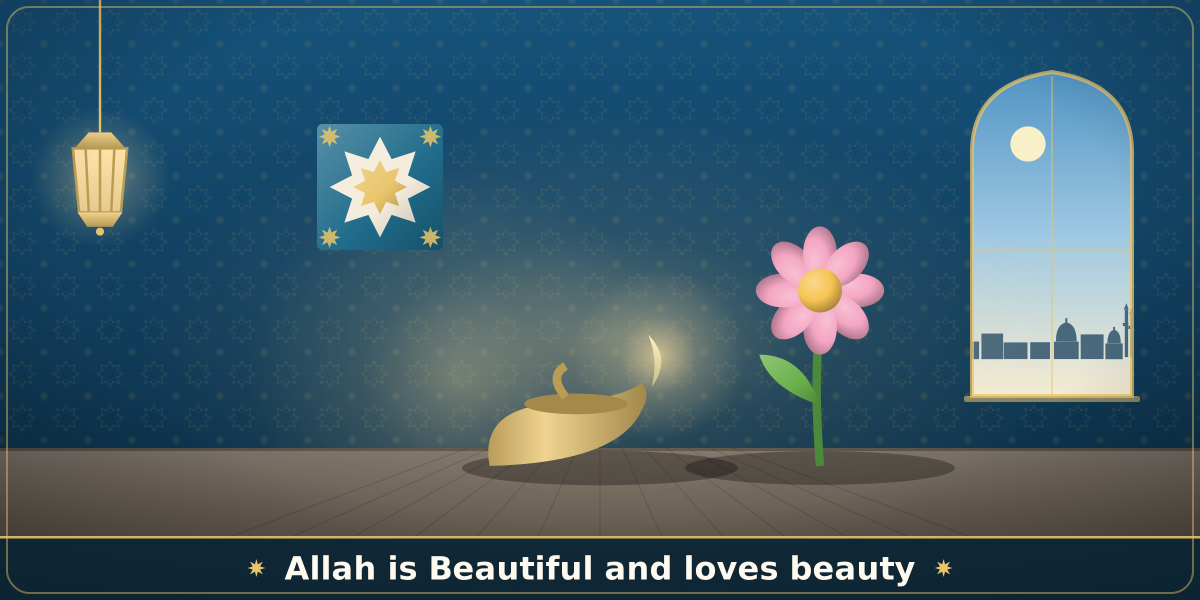
This verse names Allah as the Creator and the Fashioner of every form, and tells us the most beautiful Names are His. The Muslim artist does not compete with that. They work for it: making beauty that points back to its Source.
چنیں Check
What does this verse teach the artist?
جواب دکھائیں
The Muslim artist does not compete with the Creator. The work points back to Him.
حدیث سے
Allah loves beauty
وعن ابن مسعود رضي الله عنه عن النبي صلى الله عليه وسلم قال: "لا يدخل الجنة من كان في قلبه مثقال ذرة من كبر" فقال رجل: إن الرجل يحب أن يكون ثوبه حسنًا، ونعله حسنة، فقال: "إن الله جميل يحب الجمال، الكبر بَطَر الحق، وغمط الناس".((رواه مسلم)). ومعنى "بَطَر الحق": دفعه، "وغمطهم": احتقارهم، وقد سبق بيانه أوضح من هذا في باب الكبر.
Ibn Mas'ud (May Allah be pleased with him) said: The Prophet (ﷺ) said, "The haughty, even with pride equal to a mustard seed in his heart, will not enter Jannah." A man enquired: "What about that a person likes fine dress and fine shoes?" He said: "Allah is Beautiful and likes beauty. Pride amounts to disclaiming truth out of self- esteem, and despising people ."
پڑھیں
Four themes, simply
Geometry: stars and grids, built with a compass and a ruler. Calligraphy: verses, Names of Allah and poems. Arabesque: vines, leaves and flowers that curl on without end. And light and water: windows, carved screens and fountains.
You will meet all four on a single wall in Fez or Isfahan.
Go deeper: arabesque
The curling vine pattern is called islimi in Persian and Turkish. Its leaves split and grow new leaves, so the eye never finds a final end.
صحیح یا غلط True or false?
Islamic art holds back from beauty because beauty leads to pride.
جواب دکھائیں
Allah is beautiful and loves beauty. Pride is a matter of the heart, not of fine things.
پڑھیں
Calm in front of the worshipper
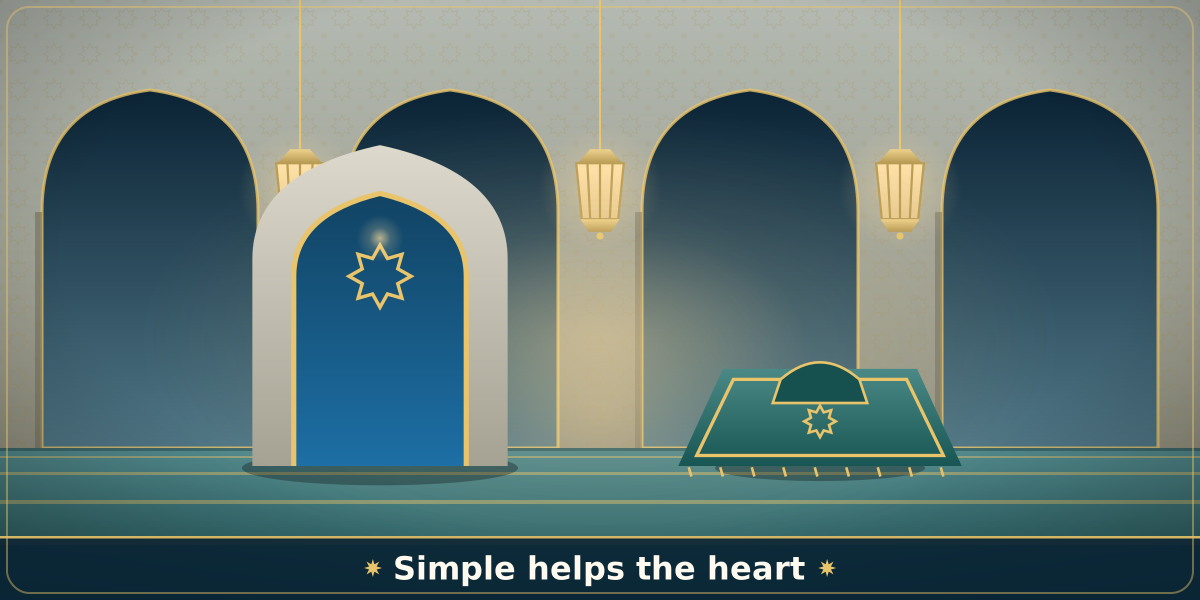
In a masjid, the wall in front of the people praying is kept calm. The scholars dislike bold decoration on the qiblah wall and the mihrab, because it pulls the heart away in salah.
So the richest work often sits high in a dome, on the doorways or around the courtyard.
چنیں Check
A man asks the Prophet ﷺ whether liking fine clothes and shoes is pride. What does this stored hadith teach?
جواب دکھائیں
Beauty itself is loved by Allah. Pride is something else: refusing the truth and belittling others. So Muslims made beautiful things, and kept their hearts humble.
ترتیب دیں
Sort them
Which theme is each one?
Geometry
- An eight-point star
- A honeycomb of hexagons
Calligraphy
- A Name of Allah in gold letters
- A band of letters over a doorway
Plants (arabesque)
- A scrolling vine with split leaves
- Tulips and carnations on a tile
اس پر غور کریں
Reflect
Think of a room you love. Is it beautiful because of pictures, or because of light, order and calm? What might that tell you about the art of the masjid?
یہ صرف آپ دیکھ سکتے ہیں۔ یہ اسی ڈیوائس پر محفوظ ہے۔
ظاہر کریں
Common mistakes
Flip each card: what people often get wrong, and what is right.
- “Islamic art is only decoration.” It carries meaning and serves a use.
- “Islamic art shows nothing from nature.” Trees, flowers and landscapes are welcome; living faces are not.
- “The more decoration in a masjid, the better.” The wall in front of the worshipper stays calm.
پڑھیں
For your life
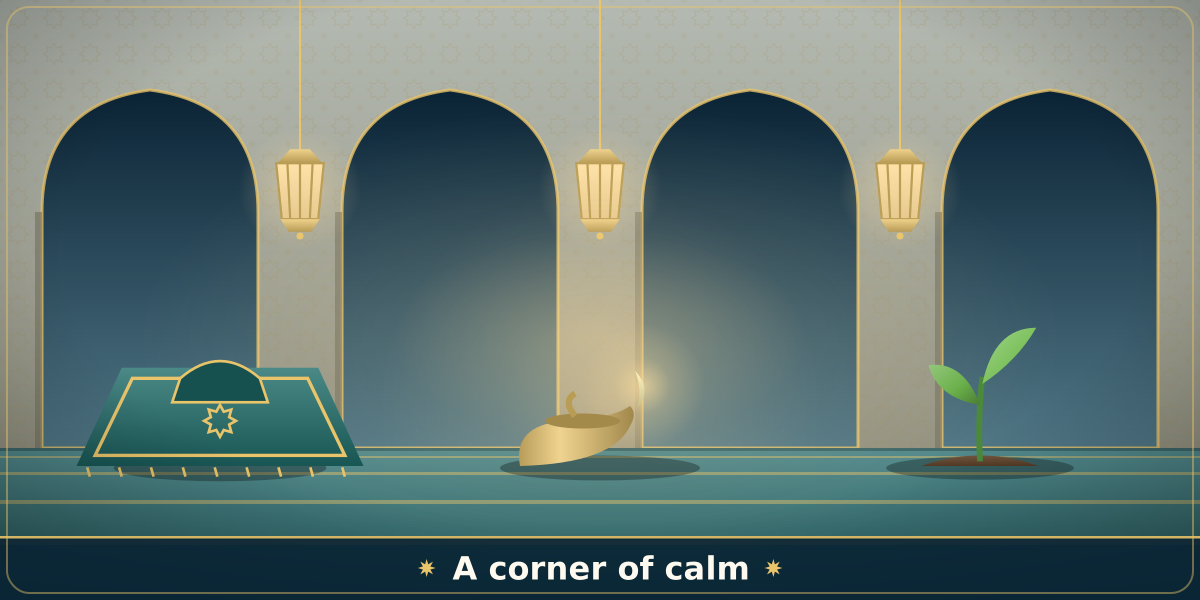
Keep the wall in front of your own prayer place plain. Put the beautiful things beside or behind you, so nothing pulls your eyes in salah.
ظاہر کریں
The lesson in three lines
Sum up the lesson in your own words first, then tap to check.
- The lesson in one line Islamic art leads with four themes: geometry, calligraphy, arabesque, and light and water. It leaves living faces to their Maker. In a masjid the wall in front of the worshipper stays calm.
سبق مکمل
A courtyard in the morning
آپ نے اضافہ کیا: ایک صدی — نقشہ جس کی سرحدیں بدلتی ہیں.
آپ نے کیا سیکھا
- Islamic art leads with geometry, calligraphy, plants and light, and leaves out living faces.
- مکمل
- 0
- پہلی بار میں درست
- 0
- دہرانے کے لیے
- 0
آپ کا عمل · آج آزمائیں
Look around your home or your masjid today and find one example of each of the four themes.
جو آپ نے رکھا
سائن اِن کریں تاکہ آپ کی پیش رفت ہر ڈیوائس پر محفوظ رہے۔