
0 رکھا
منظر میں آئیں
What do I say when I bow?
Every position has its own words. In ruku you glorify Allah as the Most Great. In sujud, with your forehead on the ground, you glorify Him as the Most High. Rising, you praise Him.
دیکھیں
All of it is taught in authentic hadith. Learn them once and they stay with you for life.
The words are short on purpose: you can say them calmly even in a quick prayer, and they fit every person, child or scholar. Each one names something true about Allah that matches what your body is doing. Learn them once, with their meaning, and every ruku and sujood will say something to you.
پڑھیں
The words of ruku
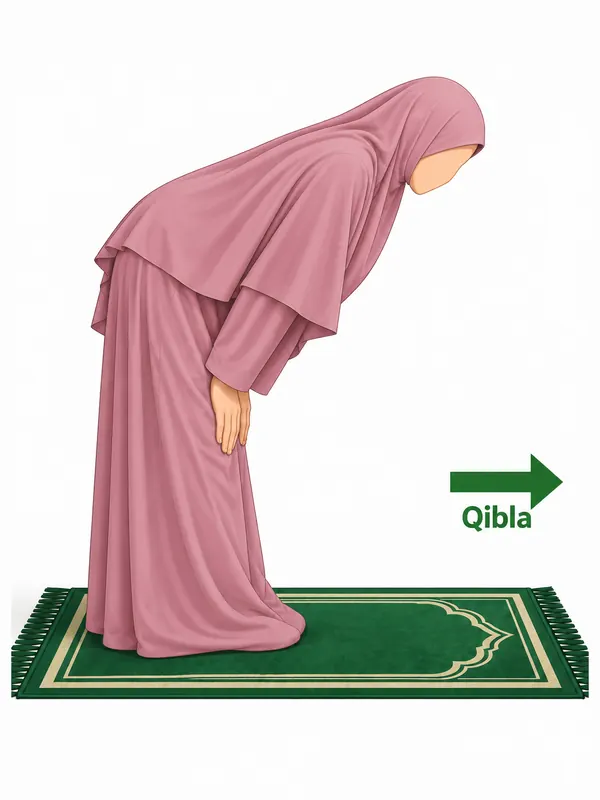
Bow with Allāhu akbar said as you move. In ruku say subḥāna rabbiyal-'aẓīm, glorifying your Lord, the Most Great. Three times is the Sunnah; someone praying alone may add more in odd numbers. An imam keeps to what the rows can follow.
Men and women say the same words. Only the posture differs: a man's back level, a woman's bow lighter.
حدیث سے
The glorifications of ruku and sujud
وَعَنْ حُذَيْفَةَ: أَنَّهُ صَلَّى مَعَ النَّبِيِّ صَلَّى اللَّهُ عَلَيْهِ وَسَلَّمَ فَكَانَ يَقُولُ فِي رُكُوعِهِ: «سُبْحَانَ رَبِّيَ الْعَظِيمِ» وَفِي سُجُودِهِ: «سُبْحَانَ رَبِّيَ الْأَعْلَى» . وَمَا أَتَى عَلَى آيَةِ رَحْمَةٍ إِلَّا وَقَفَ وَسَأَلَ وَمَا أَتَى عَلَى آيَةِ عَذَابٍ إِلَّا وَقَفَ وَتَعَوَّذَ. رَوَاهُ التِّرْمِذِيُّ وَأَبُو دَاوُدَ وَالدَّارِمِيُّ وَرَوَى النَّسَائِيُّ وَابْنُ مَاجَهْ إِلَى قَوْلِهِ: «الْأَعْلَى» . وَقَالَ التِّرْمِذِيُّ: هَذَا حَدِيثٌ حَسَنٌ صَحِيحٌ
Hudhaifa said that he prayed along with the Prophet and that he said when bowing, “Glory be to my mighty Lord”, and when prostrating himself, “Glory be to my most high Lord”; when he came to a verse which spoke of mercy he stopped and made supplication, and when he came to a verse which spoke of punishment he stopped and sought refuge in God. Tirmidhi, Abu Dawud and Darimi transmitted it. Nasa’i and Ibn Majah transmitted up to “my most high Lord”. Tirmidhi said that this is a hasan sahih tradition.
ظاہر کریں
What the hadith teaches
Think about it first, then open the card.
- What is the lesson for you? The Prophet ﷺ glorified his Lord's greatness in ruku and His highness in sujud. In the night prayer he would also pause at verses of mercy to ask, and at verses of warning to seek refuge.
حدیث سے
Three times, at least
وَعَنْ عَوْنِ بْنِ عَبْدِ اللَّهِ عَنِ ابْنِ مَسْعُودٍ قَالَ: قَالَ رَسُولُ اللَّهِ صَلَّى اللَّهُ عَلَيْهِ وَسَلَّمَ: " إِذَا رَكَعَ أَحَدُكُمْ فَقَالَ فِي رُكُوعِهِ: سُبْحَانَ رَبِّيَ الْعَظِيمِ ثَلَاثَ مَرَّاتٍ فَقَدْ تَمَّ رُكُوعُهُ وَذَلِكَ أَدْنَاهُ وَإِذَا سَجَدَ فَقَالَ فِي سُجُودِهِ سُبْحَانَ رَبِّيَ الْأَعْلَى ثَلَاثَ مَرَّاتٍ فَقَدْ تَمَّ سُجُودُهُ وَذَلِكَ أَدْنَاهُ ". رَوَاهُ التِّرْمِذِيُّ وَأَبُو دَاوُد ابْن مَاجَهْ. وَقَالَ التِّرْمِذِيُّ: لَيْسَ إِسْنَادُهُ بِمُتَّصِلٍ لِأَنَّ عونا لم يلق ابْن مَسْعُود
‘Aun b. ‘Abdallah reported on the authority of Ibn Mas'ud that God’s Messenger said: When one of you bows and says three times while doing so, “Glory be to my mighty Lord”, his bowing is complete; and that is the least which effects this. When he prostrates himself and says three times while doing so, “Glory be to my most high Lord”, his prostration is complete; and that is the least which effects this. Tirmidhi, Abu Dawud and Ibn Majah transmitted it, but Tirmidhi said that its isnad is not connected, because ‘Aun did not meet Ibn Mas'ud.
حدیث سے
Rising from ruku
وَعَنْ أَبِي هُرَيْرَةَ رَضِيَ اللَّهُ عَنْهُ قَالَ: قَالَ رَسُولُ اللَّهِ صَلَّى اللَّهُ عَلَيْهِ وَسَلَّمَ: " إِذَا قَالَ الْإِمَامُ: سَمِعَ اللَّهُ لِمَنْ حَمِدَهُ فَقُولُوا: اللَّهُمَّ رَبَّنَا لَكَ الْحَمْدُ فَإِنَّهُ مَنْ وَافَقَ قَوْلُهُ قَوْلَ الْمَلَائِكَةِ غُفِرَ لَهُ مَا تقدم من ذَنبه "
Abu Huraira reported God’s Messenger as saying: When the imam says, “God listens to him who praises Him," say, “O God, our Lord, to Thee be the praise for if what anyone says synchronises with what the angels say, he will be forgiven his past sins. (Bukhari and Muslim.)
پڑھیں
The words of sujood
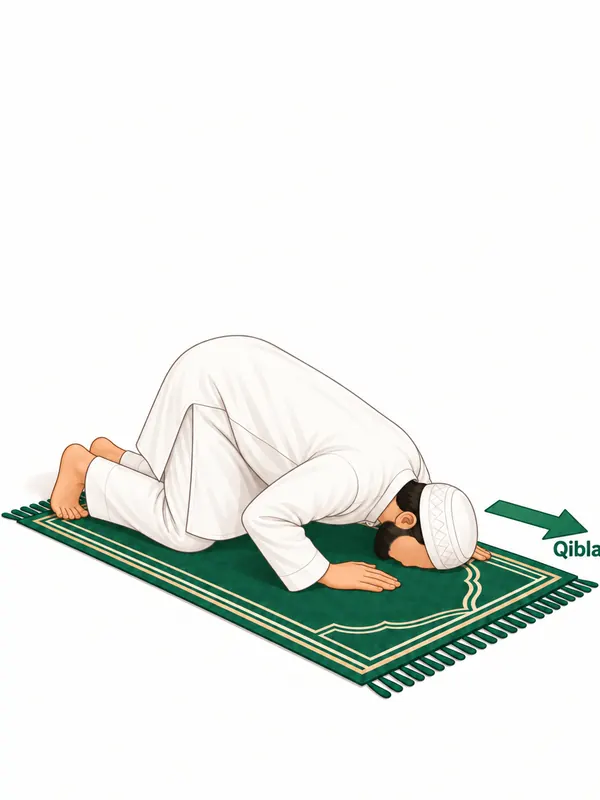
Go down with Allāhu akbar. In sujood say subḥāna rabbiyal-a'lā, glorifying your Lord, the Most High, three times or more.
In the fard, keep to these glorifications. In nafl prayers, such as tahajjud, you may add duas from the Quran and the Sunnah in sujood. Requests in your own words are for after the salam.
Go deeper: why "Most Great" in ruku and "Most High" in sujood
In ruku you bow, so you name His greatness. In sujood you are as low as a person can go, the forehead on the ground, so you name His highness. The words match the body, and the body teaches the heart where it stands before Allah.
دیکھیں
Who says what when rising
- The imam says Sami'allāhu liman ḥamidah, declaring that Allah hears those who praise Him.
- The follower answers only Rabbanā lakal-ḥamd, giving that praise.
- Praying alone, you say both.
پڑھیں
Between the two prostrations

Rise with Allāhu akbar and sit fully upright, hands on the thighs, before the second sujood. In the fard there are no set words here; in nafl you may ask for forgiveness and mercy in the words of the Sunnah.
Every movement from one position to the next has its takbir, said while moving. These takbirs are Sunnah; the imam says them aloud so the rows can follow.
دیکھیں
Watch: two rak'ahs of Fajr
مشق کریں
The words, position by position, men
-
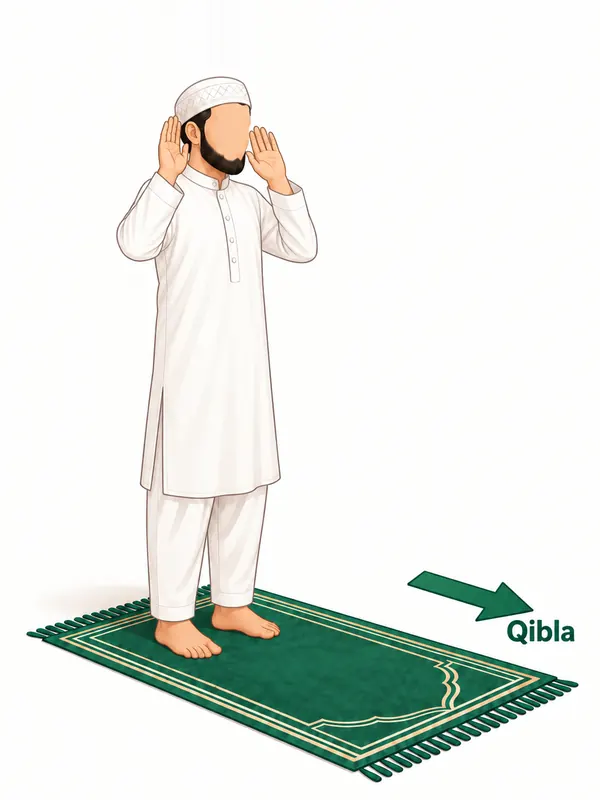
1تکبیر Allāhu akbar: the opening takbir. -
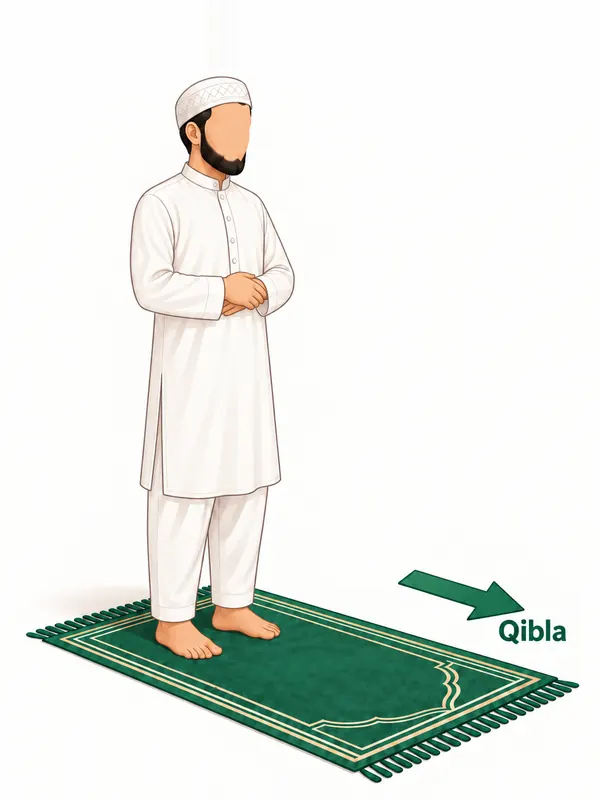
2قیام The opening praise (thana), seeking refuge, Bismillah, al-Fatihah, Amin quietly, then a surah. -
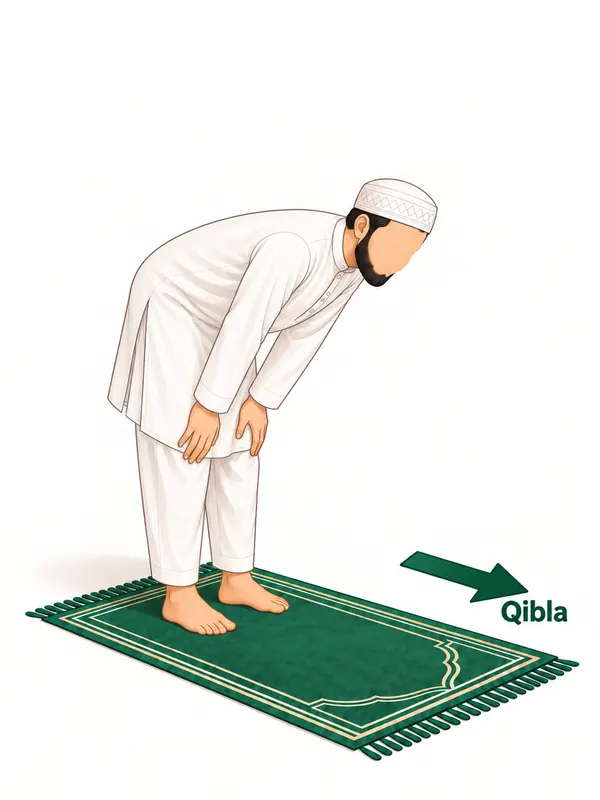
3رکوع Glorify Allah as the Most Great: Subḥāna Rabbiyal-'Aẓīm, three times or more. -
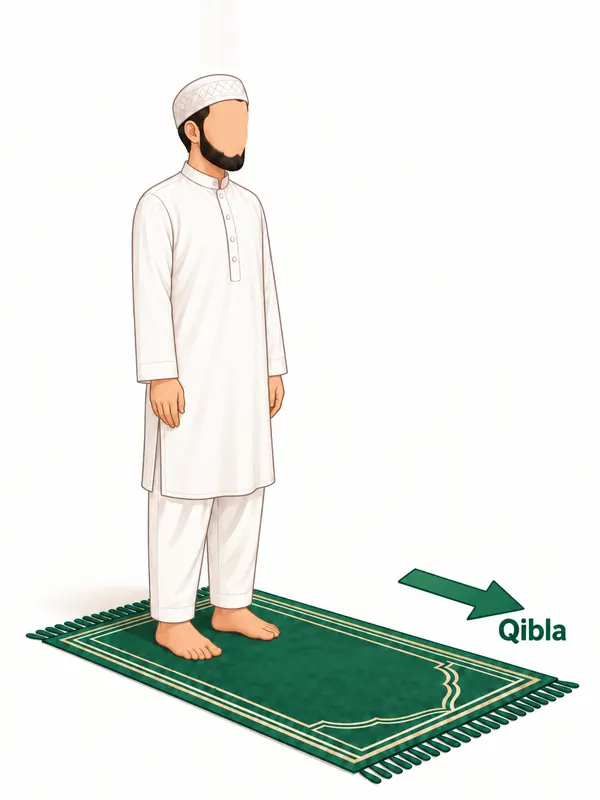
4رکوع سے کھڑا ہونا Rising: Sami'allāhu liman ḥamidah. Standing: Rabbanā lakal-ḥamd. -
5سجدہ Glorify Allah as the Most High: Subḥāna Rabbiyal-A'lā, three times or more. -
6دو سجدوں کے درمیان بیٹھنا Sit calmly. Allāhu akbar as you go down again. -

7دوسرا سجدہ The same glorification in the second prostration. -
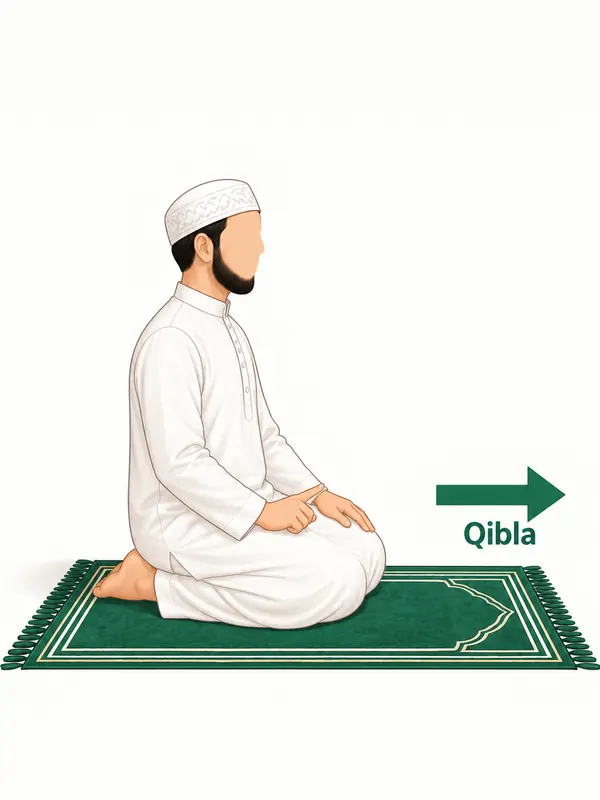
8قعدہ (تشہد) Sitting: the tashahhud. The finger rises at the testimony. -
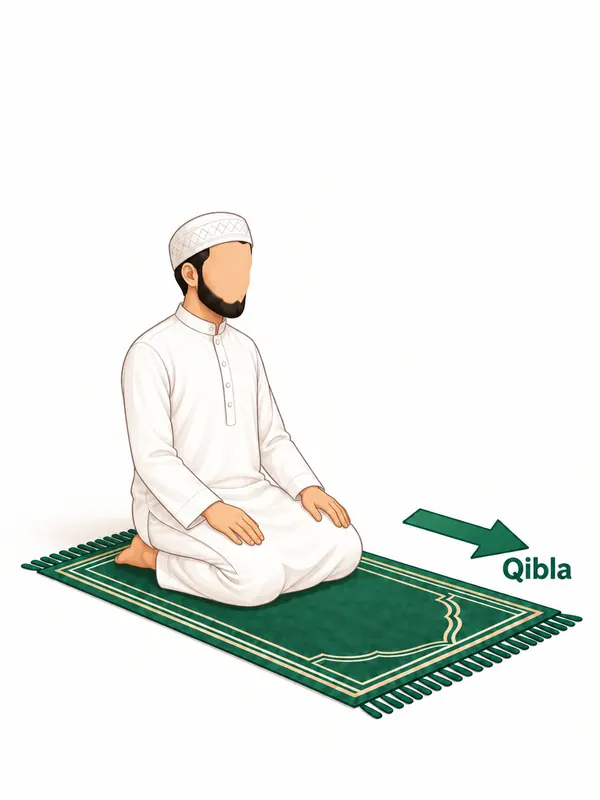
9بیٹھنا، انگلی نیچے Final sitting: the salawat on the Prophet ﷺ, then a dua. -

10دائیں طرف سلام As-salāmu 'alaykum wa raḥmatullāh, to the right. -
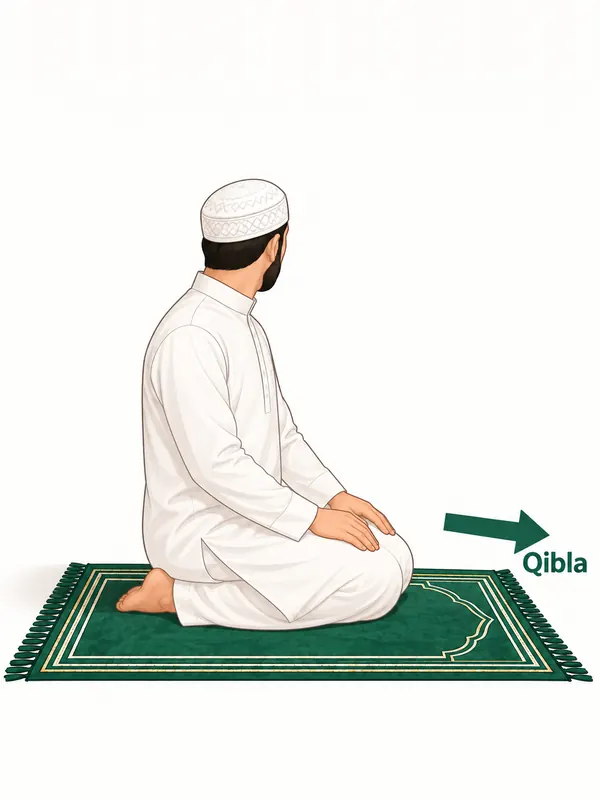
11بائیں طرف سلام And to the left.
Each position carries its own remembrance. Say it calmly, and the position will settle with it.
مشق کریں
The words, position by position, women
-
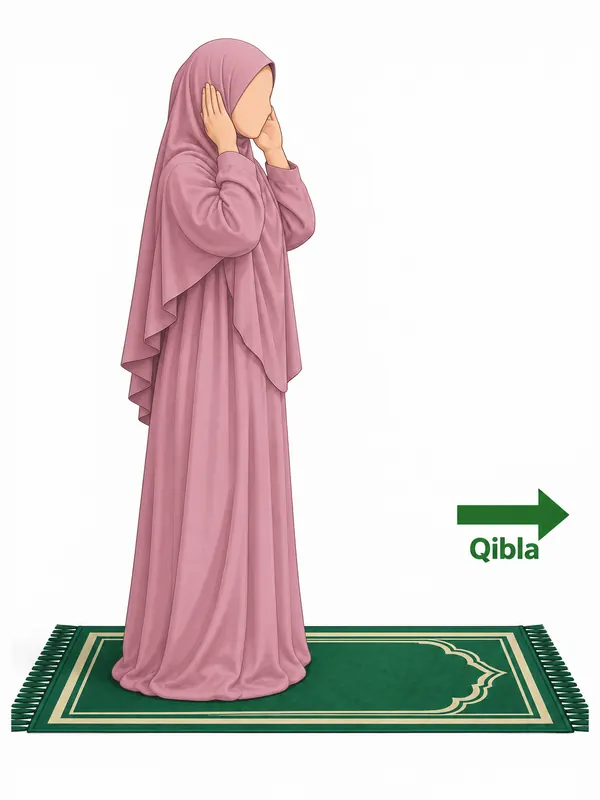
1تکبیر Allāhu akbar: the opening takbir. -
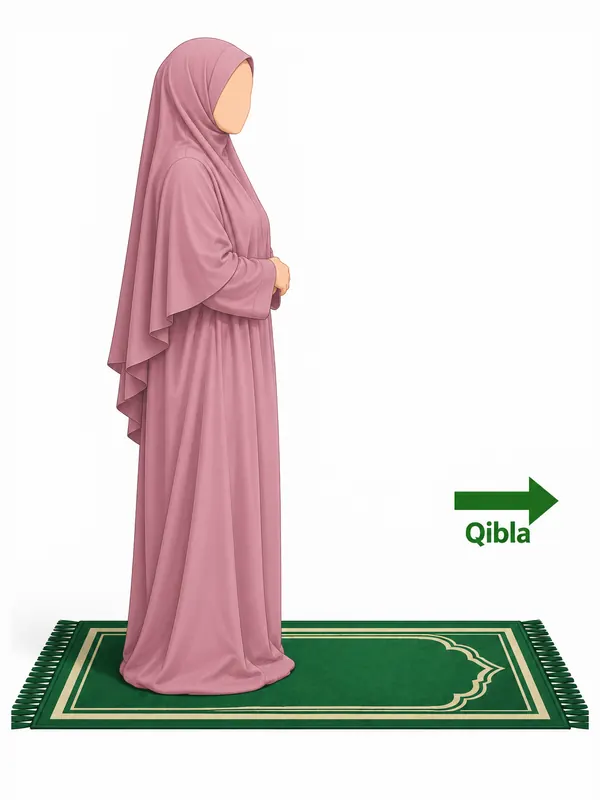
2قیام The opening praise (thana), seeking refuge, Bismillah, al-Fatihah, Amin quietly, then a surah. -
3رکوع Glorify Allah as the Most Great: Subḥāna Rabbiyal-'Aẓīm, three times or more. -
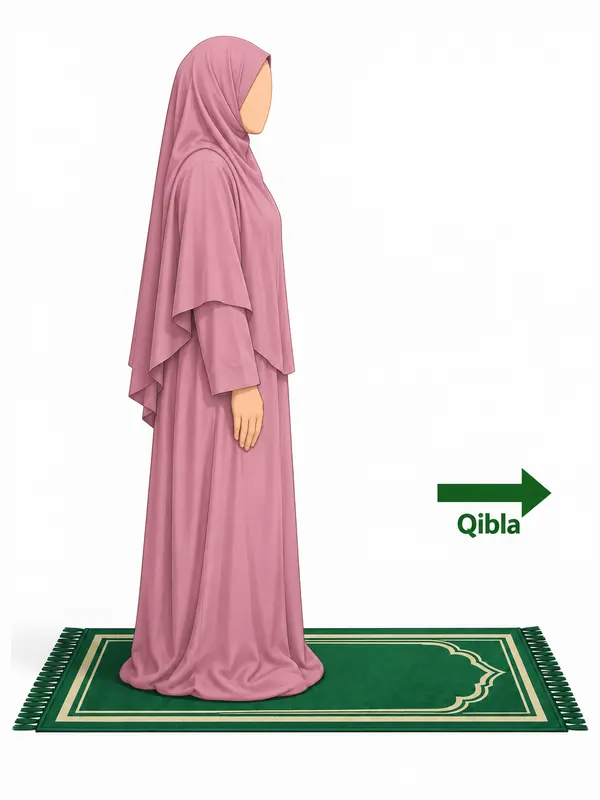
4رکوع سے کھڑا ہونا Rising: Sami'allāhu liman ḥamidah. Standing: Rabbanā lakal-ḥamd. -
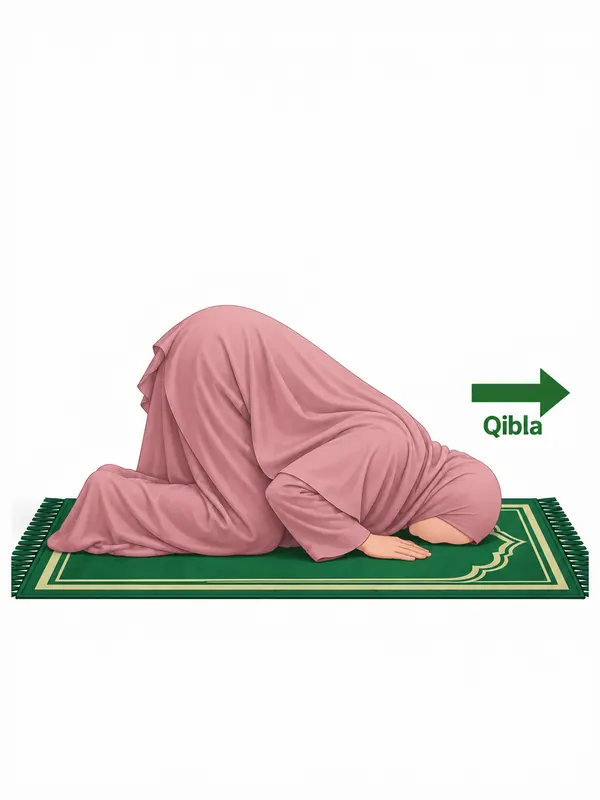
5سجدہ Glorify Allah as the Most High: Subḥāna Rabbiyal-A'lā, three times or more. -
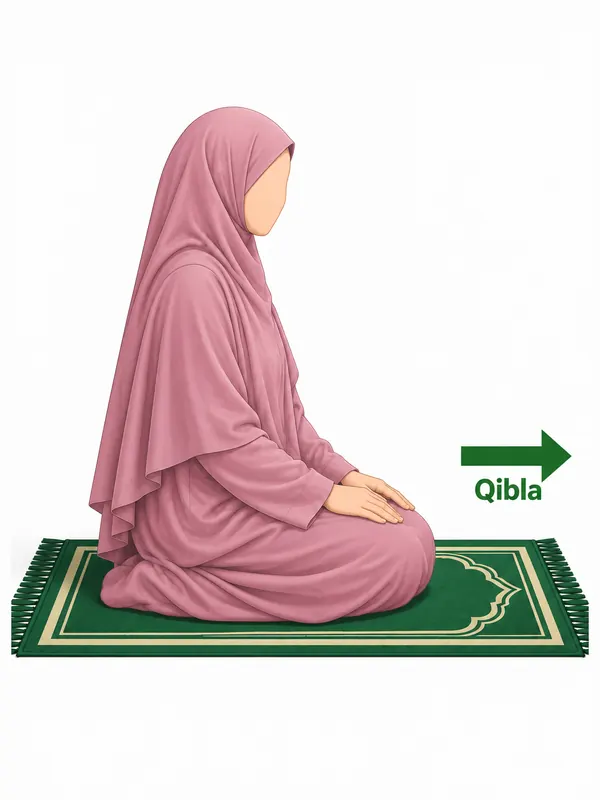
6دو سجدوں کے درمیان بیٹھنا Sit calmly. Allāhu akbar as you go down again. -
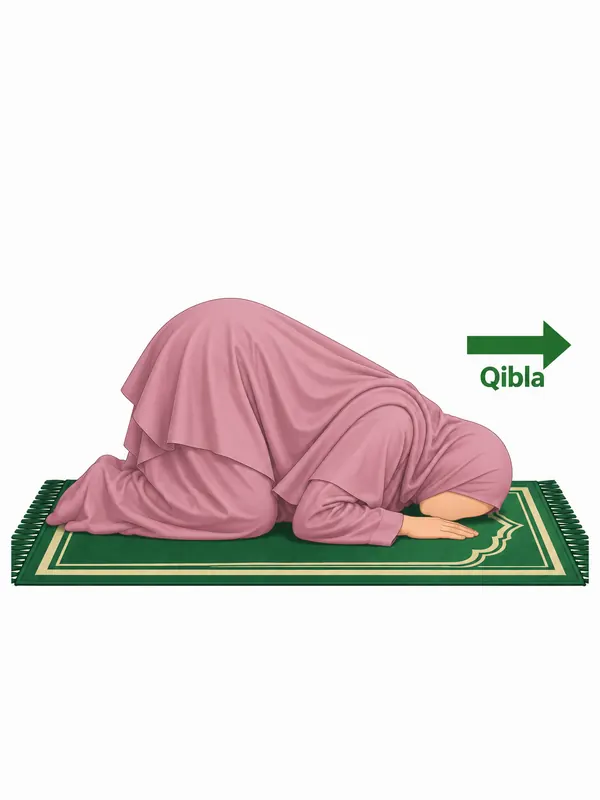
7دوسرا سجدہ The same glorification in the second prostration. -
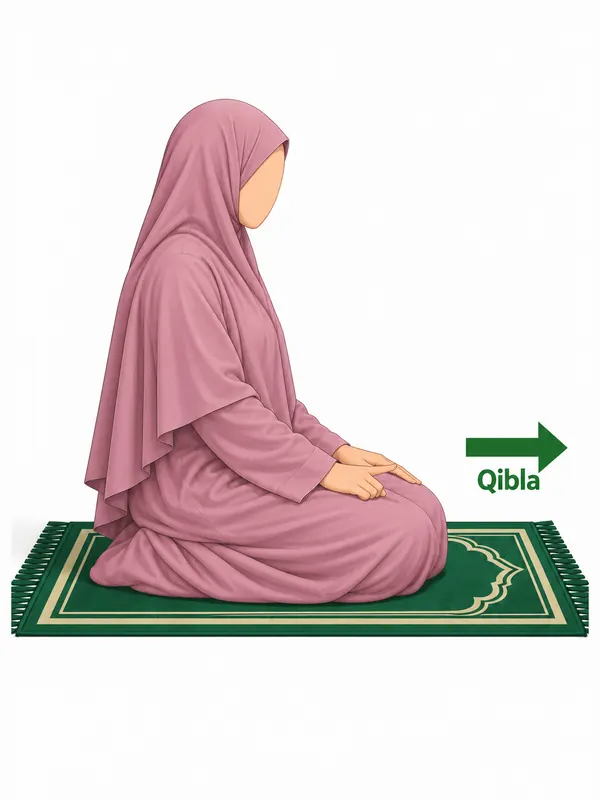
8قعدہ (تشہد) Sitting: the tashahhud. The finger rises at the testimony. -

9بیٹھنا، انگلی نیچے Final sitting: the salawat on the Prophet ﷺ, then a dua. -
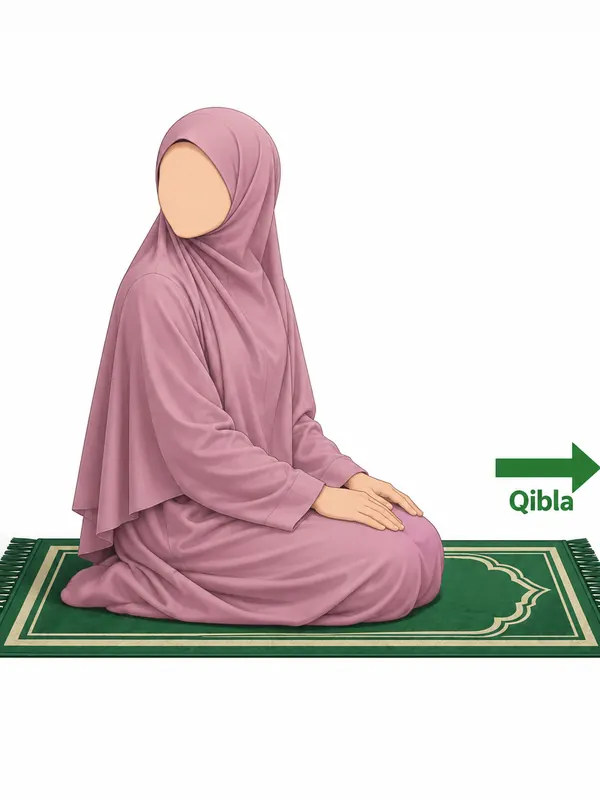
10دائیں طرف سلام As-salāmu 'alaykum wa raḥmatullāh, to the right. -
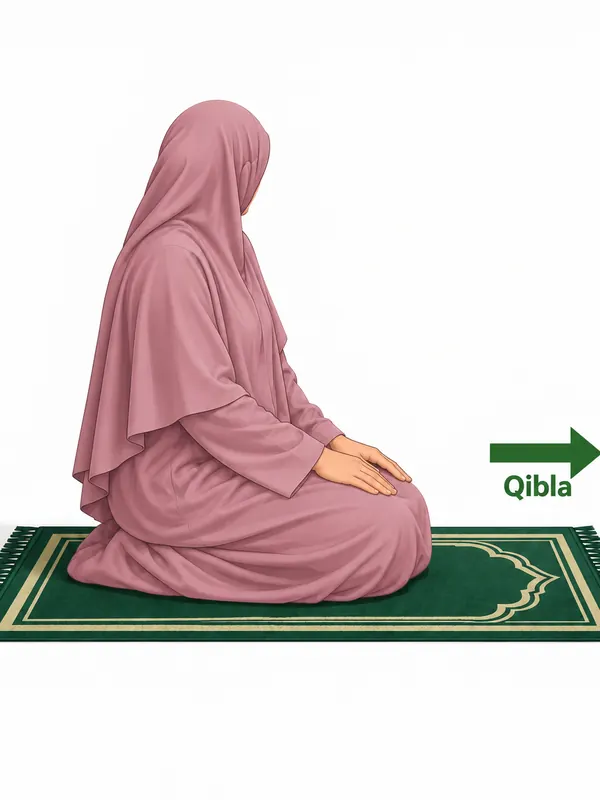
11بائیں طرف سلام And to the left.
Each position carries its own remembrance. Say it calmly, and the position will settle with it.
چنیں Which position?
In which position do you glorify Allah as the Most High?
جواب دکھائیں
Sujood is the lowest position, and there you glorify Allah as the Most High. In ruku He is glorified as the Most Great.
ملائیں
Position and words
ہر ایک کو اس کے جوڑے سے ملائیں۔
- Ruku Glorifying Allah as the Most Great
- Sujud Glorifying Allah as the Most High
- Rising from ruku (imam) Sami'allahu liman hamidah
- Standing after ruku (follower) Rabbana lakal-hamd
جواب دکھائیں
Greatness while bowing, highness while prostrating, praise when rising.
ترتیب دیں
Fard, wajib or Sunnah?
Sort each part of ruku and sujood by its ruling.
Fard
- Bowing in ruku
- Putting the forehead on the ground
Wajib
- Being still in ruku and sujood
- The nose on the ground with the forehead
Sunnah
- Saying the glorifications three times
- The takbir while moving down
ظاہر کریں
Common mistakes
Think of the right answer first, then flip each card.
- "I say subhana rabbiyal-a'la in ruku." Ruku is for the Most Great (al-'Azim); sujood for the Most High (al-A'la).
- "I make long duas in my own language in sujood of the fard." In the fard, keep to the glorifications. Ask in your own words after the salam.
- "The follower says sami'allahu liman hamidah." The imam says it. The follower answers Rabbana lakal-hamd.
- "The takbirs come after I reach the position." Say each takbir while moving, so the word and the movement go together.
اس پر غور کریں
The closest moment
In sujood the servant is nearest to his Lord. What would you like to glorify Allah for in your next sujood?
یہ صرف آپ دیکھ سکتے ہیں۔ یہ اسی ڈیوائس پر محفوظ ہے۔
سبق مکمل
Ruku, sujud and rising
آپ نے اضافہ کیا: ایک رکعت — جائے نماز جو رکعت بہ رکعت بھرتی ہے.
آپ نے کیا سیکھا
- Ruku: subhana rabbiyal-'azim, three times. Sujood: subhana rabbiyal-a'la, three times.
- Imam: sami'allahu liman hamidah; follower: Rabbana lakal-hamd.
- In the fard, the glorifications only; extra duas belong to nafl or after the salam.
- مکمل
- 0
- پہلی بار میں درست
- 0
- دہرانے کے لیے
- 0
آپ کا عمل · آج آزمائیں
In your next prayer, say the glorifications of ruku and sujud three times each, slowly.
جو آپ نے رکھا
سائن اِن کریں تاکہ آپ کی پیش رفت ہر ڈیوائس پر محفوظ رہے۔