
0 رکھا
منظر میں آئیں
The month everyone talks about
Your first Ramadan is coming. Colleagues ask if you will really go without water all day. Your mum worries you will faint. You wonder too.
پڑھیں

Here is the good news: millions of ordinary people do it every year, including office workers, nurses and builders. And the first few days are the hardest.
قرآن سے
Fasting was prescribed for you
يَٰٓأَيُّهَا ٱلَّذِينَ ءَامَنُوا۟ كُتِبَ عَلَيْكُمُ ٱلصِّيَامُ كَمَا كُتِبَ عَلَى ٱلَّذِينَ مِن قَبْلِكُمْ لَعَلَّكُمْ تَتَّقُونَ﴿183﴾
183 O ye who believe! Fasting is prescribed for you, even as it was prescribed for those before you, that ye may ward off (evil);
پڑھیں
Who fasts

Every adult Muslim of sound mind who is healthy and at home fasts Ramadan. Children are taught gently, a few fasts at a time.
Women do not fast during their period or after childbirth, and make those days up later. The ill and travellers may break the fast and make it up. Nobody is asked to harm themselves.
Go deeper: when Ramadan begins
Ramadan begins with the sighting of the new moon, or after thirty days of Sha'ban. Follow your local masjid's announcement, so that you start and end the month with your community.
دیکھیں
Watch: A fasting day
دن بھر
A fasting day
-
Before dawn
Suhur
A light meal and plenty of water before Fajr begins. There is blessing in it.
-
Dawn
Fajr, and the fast begins
From true dawn: no food, no drink, no intimacy until sunset.
-
Daytime
Work and worship
Work as normal. Guard your tongue and temper too.
-
Sunset
Iftar
Break the fast straight away, with dates and water if you have them.
دعا: At the time of opening the fast
اَللّٰهُمَّ لَكَ صُمْتُ وَعَلٰى رِزْقِكَ أَفْطَرْتُ
Allâhumma laka sumtu wa ‘alâ rizqika aftartu.
O Allah (SWT), for You I’ve fasted and I have completed my fast (iftar) on what You have provided.
Behesti Zewar (Part 6, p. 269), citing Abu Dawud -
After sunset
Maghrib
Pray Maghrib, then eat your meal calmly.
-
Night
Isha and taraweeh
The special night prayer of Ramadan at the masjid or at home.
پڑھیں
Suhur, simply
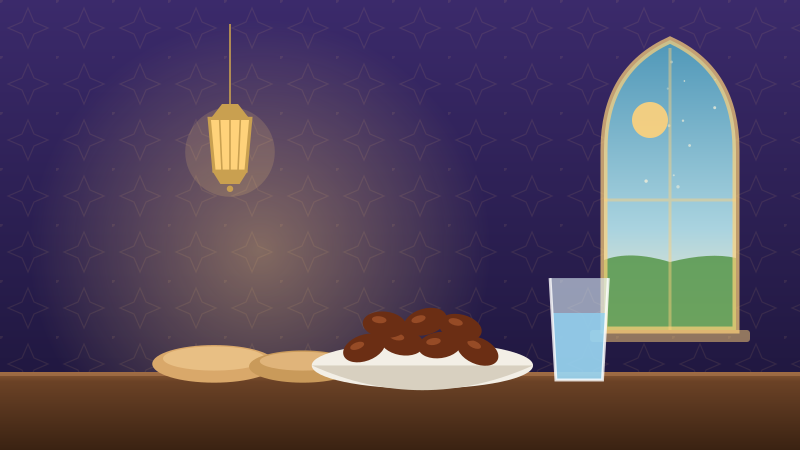
Eat something before dawn, even a date and some water; the Sunnah is to eat late, close to Fajr. Choose slow foods such as oats, eggs, bread and yoghurt, and drink plenty.
Stop when Fajr time begins, not when the adhan ends. The intention is in the heart: knowing you will fast tomorrow is enough.
Go deeper: the intention for Ramadan
For a Ramadan fast, the intention is accepted from the night before until shortly before midday, as long as you have not eaten. For a make-up fast, make the intention before dawn.
حدیث سے
Blessing in suhur
عن أنس، رضي الله عنه قال: قال رسول الله صلى الله عليه وسلم: "تسحروا فإن في السحور بركة" ((متفق عليه))
Anas (May Allah be pleased with him) reported: The Messenger of Allah (ﷺ) said, "Eat Suhur (predawn meal). Surely, there is a blessing in Suhur."
پڑھیں
Sisters in Ramadan

If your period comes during Ramadan, stop fasting until it ends, then make up those days later in the year. You are not missing out: you can still make dhikr and dua, give charity, listen to the Quran and cook an iftar for others.
When the bleeding stops before dawn, make the intention, fast, and make ghusl in time for Fajr.
حدیث سے
Do not delay iftar
عن سهل بن سعد رضي الله عنه أن رسول الله صلى الله عليه وسلم قال: "لا يزال الناس بخير ما عجلوا الفطر" ((متفق عليه))
Sahl bin Sa'd (May Allah be pleased with him) reported: The Messenger of Allah (ﷺ) said, "People will continue to adhere to good as long as they hasten to break the Saum (fasting)."
پڑھیں
Iftar, simply
When the sun has set, break the fast at once: a date, or water, then the dua. Pray Maghrib, then eat your meal.
Do not overeat. A heavy meal makes 'Isha and tarawih hard, and the next day's thirst worse.
پڑھیں
Tarawih

After 'Isha in Ramadan, Muslims pray tarawih: twenty rak'ahs, in pairs, often with the whole Quran recited over the month. It is a strong sunnah.
If twenty is too much at first, pray what you can, at the masjid or at home, and add a little each week.
ترتیب دیں
Put the fasting day in order
انہیں صحیح ترتیب میں لگائیں۔
- Suhur
- Fajr
- Work and daily life
- Iftar at sunset
- Maghrib
- Isha and taraweeh
جواب دکھائیں
The fast runs from true dawn to sunset. Suhur comes before it, iftar right at its end.
ظاہر کریں
Common mistakes
Flip each card.
- Skipping suhur Eat something, even a little. There is blessing in it.
- Eating until the adhan finishes Stop when the time of Fajr begins. Check your timetable.
- Fasting during a period Not allowed. Make the days up after Ramadan.
- "My prayers are weak, so my fast is pointless." Each pillar stands on its own. Fast, and keep working on your prayers.
چنیں Check your understanding
Between which two moments do you fast?
جواب دکھائیں
The fast begins at true dawn, when Fajr time starts, which is well before sunrise. It ends at sunset, the start of Maghrib.
صحیح یا غلط Toothpaste
Brushing your teeth with toothpaste breaks the fast.
جواب دکھائیں
False. It does not break the fast if nothing is swallowed, but toothpaste is disliked while fasting. A miswak or a dry brush is better.
پڑھیں
A moment for the heart
Your first iftar: the sun goes down, you lift a date, and a whole day of patience is done. Many new Muslims say it is the moment they felt part of the ummah.
Across the world, at that same sunset line, millions are lifting a date with you.
ظاہر کریں
In one line
Sum up the lesson in your own words first, then tap to check.
- The lesson in one line Fast from dawn to sunset: suhur before Fajr, iftar at sunset with a date, tarawih at night, and make up any day you had to miss.
سبق مکمل
Your first Ramadan
آپ نے اضافہ کیا: روشنی کی ایک کرن — طلوعِ آفتاب جو ہر سبق کے ساتھ روشن ہوتا ہے.
آپ نے کیا سیکھا
- مکمل
- 0
- پہلی بار میں درست
- 0
- دہرانے کے لیے
- 0
آپ کا عمل · آج آزمائیں
Plan your first suhur: set an alarm for before Fajr and choose what you will eat and drink.
جو آپ نے رکھا
سائن اِن کریں تاکہ آپ کی پیش رفت ہر ڈیوائس پر محفوظ رہے۔