
Juwayriyah and Umm Habibah · ابتدائی · سبق 1/3 Juwayriyah: a blessing for her people

منظر میں آئیں

Al-Muraysi’, the wells of Banu al-Mustaliq, 5 or 6 AH

A captive asks for help

The battle is over. Among the captives is the daughter of the tribe’s chief, and she comes to ask for help with her ransom.

دیکھیں

A captive asks for help

A well in a desert oasis by the coast road, with palms around it

In 5 or 6 AH the Muslims defeated the tribe of Banu al-Mustaliq at the wells of al-Muraysi’, on the coast road. Among the captives was the chief’s daughter, Barrah bint al-Harith.

She had agreed to buy her freedom, and came to the Prophet ﷺ to ask for help with the price.

دیکھیں

Watch: To al-Muraysi’ and back

دیکھیں 0:55

راستہ

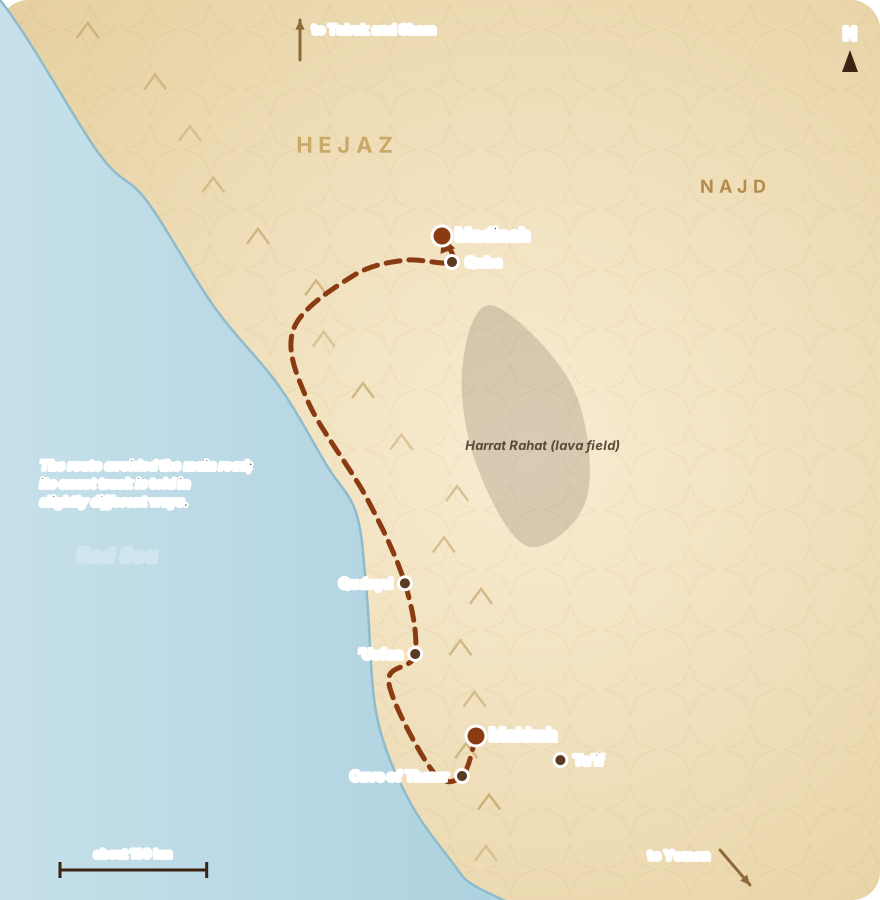
To al-Muraysi’ and back

Map of the Hijrah: Makkah, the cave of Thawr, the coast road, Qudayd, Quba and Madinah
  1. Madinah The army sets out, 5 or 6 AH.
  2. Al-Muraysi’ (near Qudayd) The wells of Banu al-Mustaliq; the place is shown approximately.
  3. Back to Madinah With the captives, Juwayriyah among them.

A short campaign of 5 or 6 AH. On the way back, ’A’ishah’s necklace was lost.

دیکھیں

A better offer

An iron chain lying broken open on the sand at dawn: a slave set free

The Prophet ﷺ offered to pay the whole price and marry her. She accepted. Muslim reports he changed her name from Barrah to Juwayriyah.

When the companions heard, they said the captives were now the Prophet’s ﷺ in-laws, and freed them. About a hundred families went free.

دیکھیں

The most blessed woman for her people

Tent ropes untied and a camp gate open: a whole tribe set free

Abu Dawud reports that ’A’ishah (radiyallahu ’anha) said she knew no woman who brought more blessing to her people than Juwayriyah (radiyallahu ’anha).

Her father and brother later accepted Islam. Her brother ’Amr narrated a hadith about the Prophet’s ﷺ simple estate.

حدیث سے

What he left behind

وعن عمرو بن الحارث أخي الجويرية بنت الحارث أم المؤمنين، رضي الله عنهما، قال: ما ترك رسول الله، صلى الله عليه وسلم، عند موته ديناراً ولا درهماً، ولا عبداً، ولا امة، ولا شيئا إلا بغلته البيضاء التى كان يركبها، وسلاحه، وأرضا جعلها لابن السبيل صدقة" ((رواه البخاري)).

'Amr bin Al-Harith (May Allah be pleased with him) the brother of Juwairiyah (May Allah be pleased with her), the Mother of believers) reported: (When he died) Messenger of Allah (ﷺ) left neither a dinar nor a dirham nor a male slave nor a female slave, nor anything else except his white riding mule, his weapons and his land which he had given in charity to wayfarers..

Related by al-Bukhari (رواه البخاري) · Sahih

اندازہ لگائیں

A people set free

When the companions freed their captives for her sake, about how many households of Banu al-Mustaliq were freed?

جواب دکھائیں

100 households About a hundred households: no woman was a greater blessing for her people, ’A’ishah said.

ترتیب دیں

Juwayriyah’s story

انہیں صحیح ترتیب میں لگائیں۔

  1. Captured at al-Muraysi’
  2. Agrees to buy her freedom
  3. Asks the Prophet ﷺ for help
  4. He pays and marries her
  5. The companions free her people
جواب دکھائیں

She was captured at al-Muraysi', agreed to buy her freedom, asked the Prophet ﷺ for help, and he paid and married her. Then her people were freed: one marriage freed a tribe.

چنیں Check

Why did the companions free the captives of Banu al-Mustaliq?

  • They paid a ransom
  • They had become the Prophet’s ﷺ in-laws
  • They were ordered to
جواب دکھائیں

They had become the Prophet's ﷺ in-laws. Out of respect for him, the companions set them free.

پڑھیں

A new name

Two tents side by side sharing one fire: marriages that built peace

Her name had been Barrah. Muslim reports that the Prophet ﷺ changed it to Juwayriyah (radiyallahu ’anha).

He cared about names: a good name is a gift to a child, and a kindness to the person who carries it.

Go deeper: her father

The reports say her father, al-Harith ibn Abi Dirar, the chief of the tribe, later came to Madinah and accepted Islam. The details differ between the reports.

ظاہر کریں

Common mistakes

Flip each card: what people often get wrong, and what is right.

  • “Juwayriyah was forced into marriage.” She was offered the choice, and accepted.
  • “The Prophet’s ﷺ marriages were about desire.” Many built peace and freed whole peoples, as hers did.
  • “The companions kept the captives for gain.” They freed them all, out of respect for the Prophet’s ﷺ new in-laws.

پڑھیں

Freedom through one family tie

Broken iron shackles on the sand at sunrise: believers bought and set free

When the companions heard of the marriage, they freed the captives of Banu al-Mustaliq, saying these were now the Prophet’s ﷺ in-laws. One woman’s marriage set a whole people free.

پڑھیں

For your life

Tent ropes untied and a camp gate open: a whole tribe set free

Use your connections for others’ good: a reference for a job-seeker, an introduction for a newcomer, a word for someone who is stuck. One link can lift a whole family.

اس پر غور کریں

A heart moment

Juwayriyah went to ask for help for herself and ended up freeing her people. Whose freedom, comfort or chance could your next step open?

یہ صرف آپ دیکھ سکتے ہیں۔ یہ اسی ڈیوائس پر محفوظ ہے۔

پڑھیں

The lesson in three lines

A well in a desert oasis by the coast road, with palms around it

Juwayriyah, daughter of the chief of Banu al-Mustaliq, was among the captives. The Prophet ﷺ paid her price and married her, at her choice. The companions then freed her whole people.

سبق مکمل

Juwayriyah: a blessing for her people

آپ نے اضافہ کیا: ایک ستارہ — ستاروں کا جھرمٹ جو روشن ہوتا ہے، ہر شخص کا ایک ستارہ.

آپ نے کیا سیکھا

  • Juwayriyah’s marriage freed her whole people.

آپ کا عمل · آج آزمائیں

Do one thing today that brings good to a whole group, not just yourself.

سائن اِن کریں تاکہ آپ کی پیش رفت ہر ڈیوائس پر محفوظ رہے۔