
0 رکھا
منظر میں آئیں
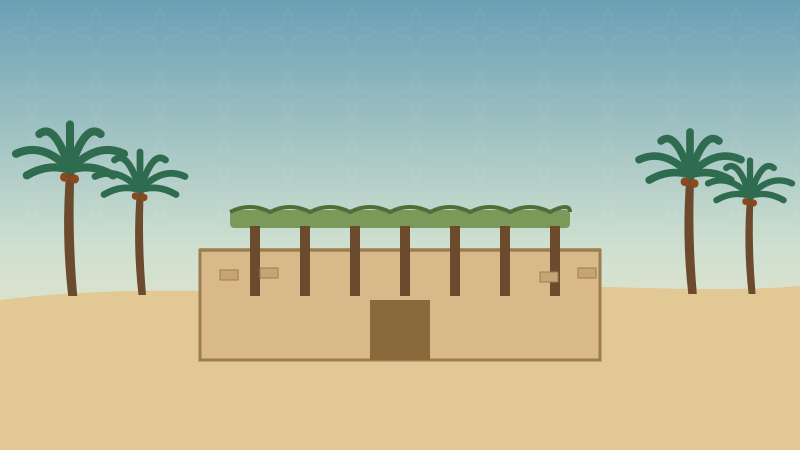
The heart of the oasis, 1 AH
Where the camel knelt
A plot of land with a few palms. Soon it will hold a mosque of mud brick and palm trunks, built by everyone together.
دیکھیں
Bricks, palm trunks and fronds
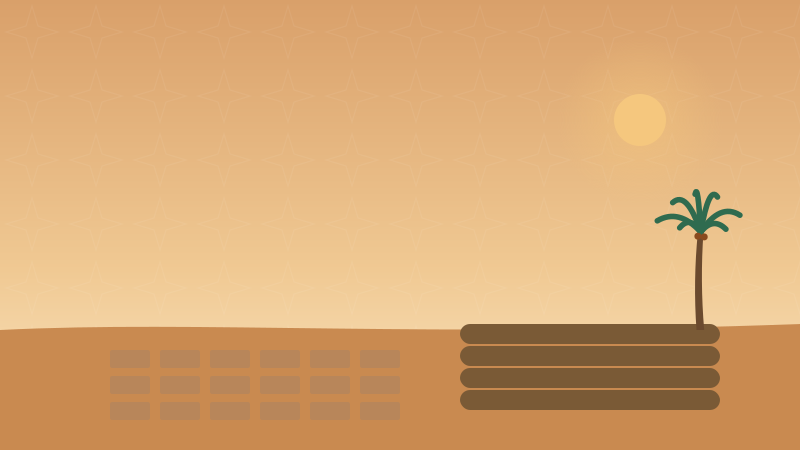
The land where the camel knelt belonged to two orphans. He insisted on paying for it. Then everyone set to work: walls of sun-dried mud brick, pillars of palm trunks, a roof of palm fronds over part of the floor.
He carried bricks himself, the reports say, as the companions sang as they worked. A leader who carries the bricks is followed with love.
دیکھیں
The first mosque
چنیں Check
What did he do while the mosque was being built?
جواب دکھائیں
He carried bricks himself. A leader who works beside his people is followed with love.
دیکھیں
More than a place of prayer
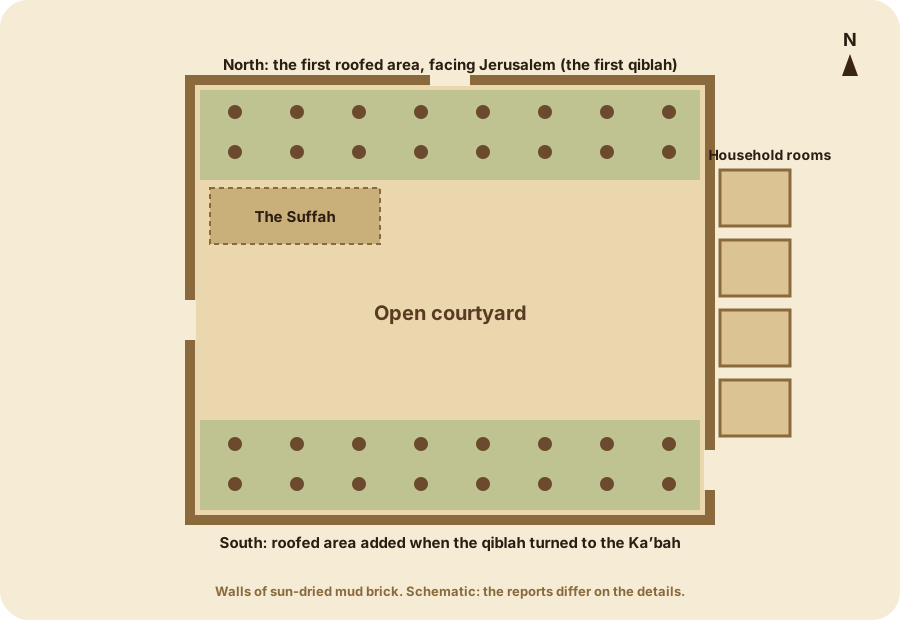
The mosque was the centre of everything. Prayer, of course. But also a school, a meeting hall, a place to receive delegations, and a shelter. Poor emigrants with no home lived in a covered area called the Suffah, and studied there.
His family’s rooms opened onto the mosque on the east side. Today his grave lies where the room of ’A’ishah (radiyallahu ’anha) stood.
ظاہر کریں
Common mistakes
Flip each card: what people often get wrong, and what is right.
- “The first mosque was grand.” It was mud brick, palm trunks and a roof of fronds.
- “The mosque was only for prayer.” It was also a school, a shelter, a council and a meeting hall.
- “The land was given free.” He insisted on paying the two orphans for it.
حدیث سے
Seventy without a cloak
وعنه، رضي الله عنه، قال: لقد رأيت سبعين من أهل الصفة، ما منهم رجل عليه رداء، إما إزار وأما كساء، قد ربطوا في أعناقهم، فمنها ما يبلغ نصف الساقين، ومنها ما يبلغ الكعبين، فيجمعه بيده كراهية أن ترى عورته” ((رواه البخاري)).
Abu Hurairah (May allah be pleased with him) reported: I saw seventy of the people of the Suffah and none of them had a cloak. They had either a lower garment or a blanket which they suspended from their necks. Some (cloaks) reached halfway down to the legs and some to the ankles; and the man would manage to keep it in his hand to avoid exposing his private parts..
پڑھیں
The people of the Suffah
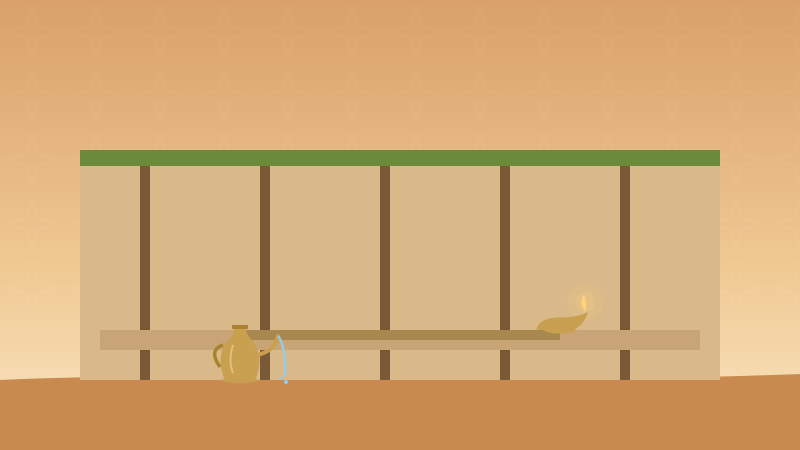
Abu Hurairah (radiyallahu ’anhu) remembered the poor companions of the Suffah: dozens of them, too poor to own a full cloak, each wrapped in a single cloth.
From this poor shelter came some of the greatest teachers of Islam. Abu Hurairah himself lived there and became one of the great narrators of hadith.
تصویر کو دیکھیں بھالیں
The mosque, part by part
- First roofed area Palm-trunk pillars and a roof of fronds, on the side facing Jerusalem.
- Courtyard Open to the sky.
- The Suffah Shelter for poor emigrants and students.
- Household rooms His family’s rooms, opening onto the mosque.
پڑھیں
A trunk that wept
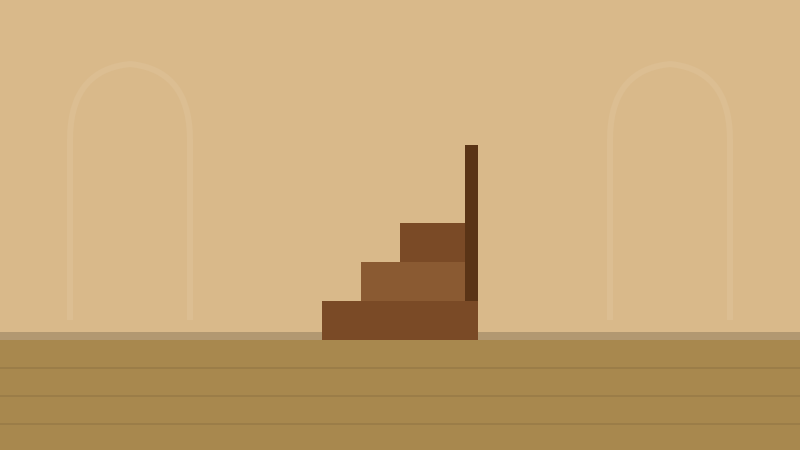
At first he gave his sermons leaning on a palm trunk. Later a simple minbar of three steps was made for him. The sound reports say that when he moved to the minbar, the old trunk cried out like a child, until he came down and put his hand on it.
Even the wood of that mosque loved him.
Go deeper: simple by choice
The mosque stayed plain in his lifetime. Later rulers enlarged and beautified it. Scholars have always taught that a mosque should be clean and well kept, and that decoration should never distract people from their prayer.
صحیح یا غلط Check
It is sunnah to pray two rak‘ahs on entering a masjid, before sitting down.
جواب دکھائیں
This is the prayer of greeting the masjid. It is not prayed at the times when prayer is disliked, such as just after Fajr or Asr.
پڑھیں
Manners of the masjid

Enter with your right foot and a dua, and leave with your left. Pray two rak'ahs before sitting if it is not a disliked time. Keep your voice low and your phone silent.
Come clean, and avoid strong smells such as raw garlic or onion. Leave the place tidier than you found it.
ظاہر کریں
Built from what?
Flip each card to see what the first mosque was made of.
- The walls Mud bricks, carried and laid by the companions, the Prophet ﷺ among them.
- The pillars Trunks of palm trees.
- The roof Palm fronds over part of it, the rest open to the sky.
- The floor Sand and earth.
چنیں Check
Who owned the land where the mosque was built?
جواب دکھائیں
He paid for the land rather than accept it as a gift from orphans.
خالی جگہ پُر کریں Fill the gap
The shelter for poor emigrants in the mosque was called the ______.
جواب دکھائیں
The people of the Suffah lived and studied there.
پڑھیں
For your life
Your masjid can be more than a place to pray and leave. Join a class, help on a cleaning day, bring a friend to an open day, check on the elderly who come alone. The first mosque was built by everyone; yours is kept alive the same way.
اس پر غور کریں
A heart moment
The poor of the Suffah lived in the mosque with almost nothing, and became the teachers of the world. What makes a place rich in your eyes?
یہ صرف آپ دیکھ سکتے ہیں۔ یہ اسی ڈیوائس پر محفوظ ہے۔
ظاہر کریں
The lesson in three lines
Sum up the lesson in your own words first, then tap to check.
- The lesson in one line He bought the orphans' land and built the mosque with the companions, carrying bricks himself. It was mud and palm, and it was the centre of everything: prayer, school, shelter and council. The poor of the Suffah lived and learned there.
سبق مکمل
Building the mosque
آپ نے اضافہ کیا: سفر کا ایک مرحلہ — عرب کے پار ایک سفر.
آپ نے کیا سیکھا
- The first mosque was mud and palm, built together, and it was the centre of the community.
- مکمل
- 0
- پہلی بار میں درست
- 0
- دہرانے کے لیے
- 0
آپ کا عمل · آج آزمائیں
Help with one small thing at your masjid this week: tidy shoes, carry water, set out mats.
جو آپ نے رکھا
سائن اِن کریں تاکہ آپ کی پیش رفت ہر ڈیوائس پر محفوظ رہے۔