
0 kept
Step inside
Not every part weighs the same
Forget the bowing and there is no prayer. Forget the first sitting, and two prostrations at the end fix it. Forget to raise your hands at the takbir, and the prayer is still complete. Why?
Look
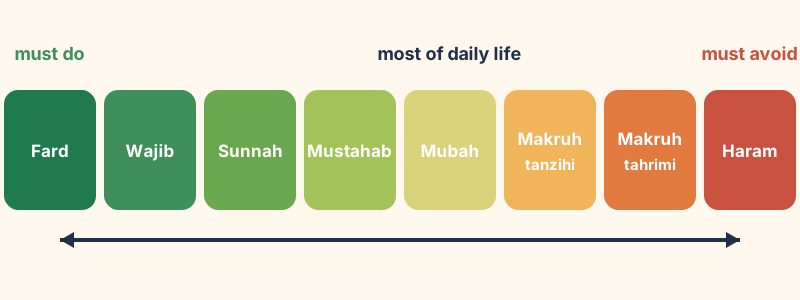
Because scholars sort the acts of salah into three weights: fard, wajib and sunnah.
Read
The fard of the prayer
Inside the prayer, the fard are: the opening takbir, standing, reciting at least a verse, ruku, the two sujuds, and the last sitting for the length of the tashahhud.
Miss one and the prayer does not count, even by mistake. Sajdah sahw cannot fix a missing fard; the prayer is prayed again.
Side by side
Three weights
| Fard (the pillars) | Wajib (the must-dos) | Sunnah (the beauty) | |
|---|---|---|---|
| Examples | The opening takbir, standing, reciting, bowing, both prostrations, the final sitting | Al-Fatihah, adding a surah in the first two rak'ahs, the first sitting, the tashahhud, calmness in each position, the salam | Raising the hands, the opening praise, the tasbih of ruku and sujood, the ṣalawāt |
| Missed by mistake | The prayer is not valid; pray it again | Sajdah sahw at the end makes up for it | The prayer is complete; you missed some reward |
| Missed on purpose | Not valid | The prayer must be repeated | Disliked if made a habit |
Sort it
Which weight?
Sort each card: Fard, or Wajib, or Sunnah?
Fard
- Bowing (ruku)
Wajib
- Reciting al-Fatihah
- The first sitting in a four-rak'ah prayer
Sunnah
- Raising the hands at the takbir
Read
The wajibs to know
Al-Fatihah, and a surah after it, in the first two rak'ahs of a fard and every rak'ah of witr and sunnah; the first sitting; the tashahhud in both sittings; calmness in each position; reciting aloud or quietly in its place; the salam; and the qunut in witr.
Forget one by mistake, and sajdah sahw repairs it.
From the hadith
The first deed judged
وَعَنْ أَبِي هُرَيْرَةَ قَالَ: سَمِعْتُ رَسُولَ اللَّهِ صَلَّى اللَّهُ عَلَيْهِ وَسَلَّمَ يَقُولُ: " إِنَّ أَوَّلَ مَا يُحَاسَبُ بِهِ الْعَبْدُ يَوْمَ الْقِيَامَةِ مِنْ عمله صلَاته فَإِن صلحت فقد أَفْلح وأنجح وَإِنْ فَسَدَتْ فَقَدْ خَابَ وَخَسِرَ فَإِنِ انْتَقَصَ مِنْ فَرِيضَتِهِ شَيْءٌ قَالَ الرَّبُّ تَبَارَكَ وَتَعَالَى: نظرُوا هَلْ لِعَبْدِي مِنْ تَطَوُّعٍ؟ فَيُكَمَّلُ بِهَا مَا انْتَقَصَ مِنَ الْفَرِيضَةِ ثُمَّ يَكُونُ سَائِرُ عَمَلِهِ عَلَى ذَلِكَ ". وَفِي رِوَايَةٍ: «ثُمَّ الزَّكَاةُ مِثْلَ ذَلِك ثمَّ تُؤْخَذ الْأَعْمَال حسب ذَلِك» . رَوَاهُ أَبُو دَاوُد وَرَوَاهُ أَحْمد عَن رجل
Abu Huraira told of hearing God’s Messenger say, “The first of his deeds for which a man will be taken into account on the day of resurrection will be his prayer. If it is sound he will be saved and successful, but if it is unsound he will be unfortunate and miserable. If any deficiency is found in his obligatory prayer the Lord who is blessed and exalted will issue instructions to consider whether His servant has said any voluntary prayers so that what is lacking in the obligatory prayer may be made up by it. Then the rest of his actions will be treated in the same fashion.” In a version it says, “Then zakat will be dealt with like that, and all his actions will be treated on the same principle.” Abu Dawud transmitted it, and Ahmad transmitted it from “a man”
Read
The sunnahs that beautify it

Raising the hands at the first takbir and folding them. The thanāʾ, aʿūdhu and bismillah, and a quiet āmīn. The takbirs of moving and the tasbihs three times. The blessings and dua at the end.
Leaving one does not spoil the prayer. But a habit of leaving them is a loss, and these are the parts that make the prayer feel like yours.
Read
Calm in every position
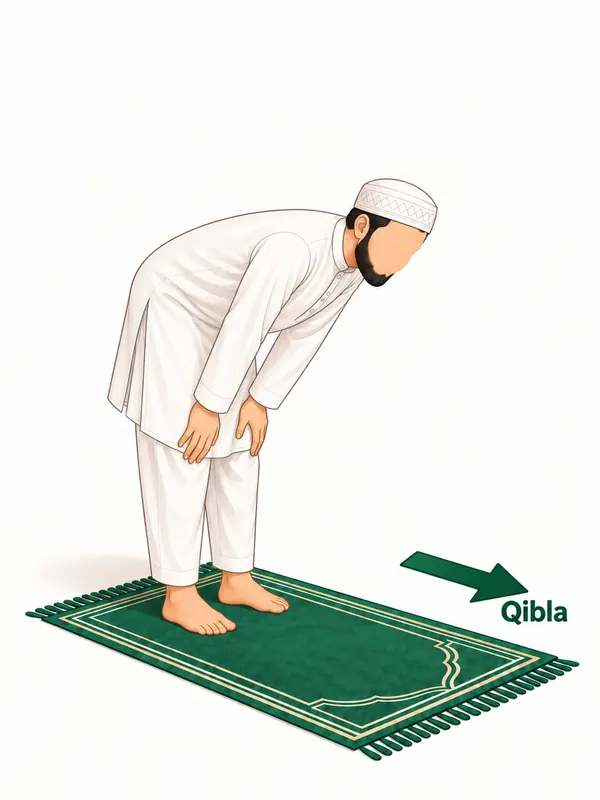
One wajib is often missed: calmness (ta'dīl al-arkān). Each position should settle for at least a moment before the next. Pecking up and down from sujood, or bobbing out of ruku without standing straight, is a mistake many people make when they rush.
A simple rule: in every position, let your body come to rest, then move on.
Go deeper: when a part is missed
Miss a fard part and the prayer does not count: pray it again. Miss a wajib part by mistake and sajdah sahw at the end repairs it. Leave a wajib on purpose and the prayer should be repeated.
A sunnah missed does not harm the prayer’s validity, but it takes away some of its beauty and reward.
True or false Forgot a wajib?
If you forget a wajib part of salah by mistake, the prayer is lost and must be prayed again.
Show the answer
False. A wajib missed by mistake is repaired with sajdah sahw at the end. Only a missed fard part, or a wajib left on purpose, means praying again.
Read
Disliked, but not spoiled

Some acts are disliked (makrūh) without spoiling the prayer: looking around, cracking knuckles, playing with clothes or a phone, yawning without covering the mouth, and praying while you badly need the toilet or while food you crave is waiting.
Remove the distraction first, then pray. The prayer deserves your whole attention.
Reveal
Common mistakes
Flip each card.
- "Any mistake means praying again." Only a missed fard, or a wajib left on purpose. A forgotten wajib is repaired with sajdah sahw.
- Sajdah sahw for a missed sunnah Not needed. A missed sunnah needs nothing.
- Racing through the positions Calmness is wajib. Settle in each position.
Choose Check your understanding
Amina forgets to recite a surah after al-Fatihah in the first rak'ah of Dhuhr. What should she do?
Show the answer
Adding a surah in the first two rak'ahs of a fard prayer is wajib. Missed by mistake, it is made up with sajdah sahw.
Read
A moment for the heart
The scale of fard, wajib and sunnah is a mercy. It tells you which mistakes matter and which do not, so you can pray without fear.
Allah did not make the prayer a trap. He made it a meeting, with clear rules and simple repairs, so that a forgetful servant can still stand before Him every day.
Reveal
In one line
Sum up the lesson in your own words first, then tap to check.
- The lesson in one line Fard parts make the prayer, wajib parts are repaired with sajdah sahw if forgotten, and sunnah parts make it beautiful.
Lesson finished
Fard, wajib and sunnah in salah
You added a ray of light to a sunrise that brightens lesson by lesson.
What you learnt
- done
- 0
- right first time
- 0
- to review
- 0
Your deed · Try it today
In your next prayer, focus on one wajib: be still in ruku and in sujood for a full, calm breath.
What you kept
Sign in to keep your progress on every device.