
0 kept
Step inside
The last prayer of the night
After Isha, before you sleep or before dawn, there is one more prayer: witr, the "odd" prayer. It is wajib: below the fard, above every sunnah. It is the seal on your night.
From the hadith
Make witr your last prayer at night
وعن ابن عمر رضي الله عنهما، عن النبي صلى الله عليه وسلم: " اجعلوا آخر صلاتكم بالليل وترًا". ((متفق عليه))
Ibn 'Umar (May Allah be pleased with them) reported: The Prophet (ﷺ) said, "Make Witr prayer the last of your Salat at night."
Look
Three rak'ahs, one salam
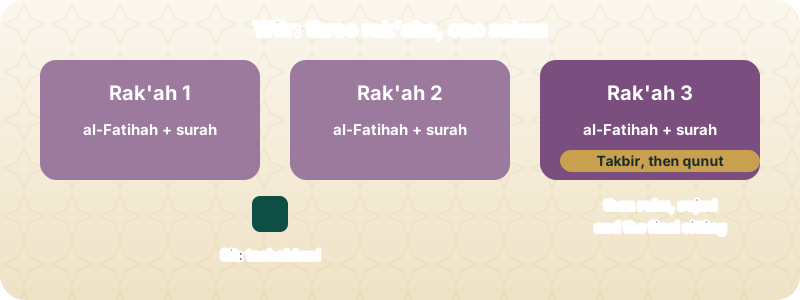
Three rak'ahs, one salam, with a sitting after the second: if you can pray Maghrib, you already know its frame. What changes is inside: a surah after al-Fatihah in all three rak'ahs, and in the third a takbir with raised hands, then the qunut, before you bow.
Read
When witr is prayed

Witr's time begins after the fard of Isha and lasts until true dawn. It is always prayed after Isha, never before it.
If you are sure you will wake before Fajr, it is best to delay witr to the end of the night, after tahajjud. If you are not sure, pray it after Isha, before you sleep. Either way, it closes your night's prayer.
So a student who sleeps at midnight and wakes only for Fajr prays witr straight after Isha. A parent who is up at 4 am with a baby may keep it for then, after two rak'ahs of tahajjud.
Look
How the witr differs
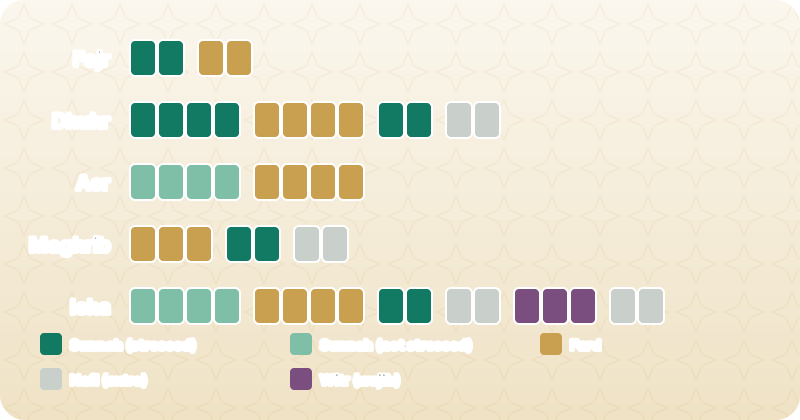
- Three rak'ahs with one salam at the end.
- Sit for the tashahhud after the second rak'ah, then stand.
- Recite al-Fatihah and a surah in all three rak'ahs.
- In the third, after the surah, raise the hands with a takbir, fold them, and recite Dua-e-Qunoot, then bow.
Watch
Watch: witr with the qunut
Practise
The third rak'ah of witr, men
-
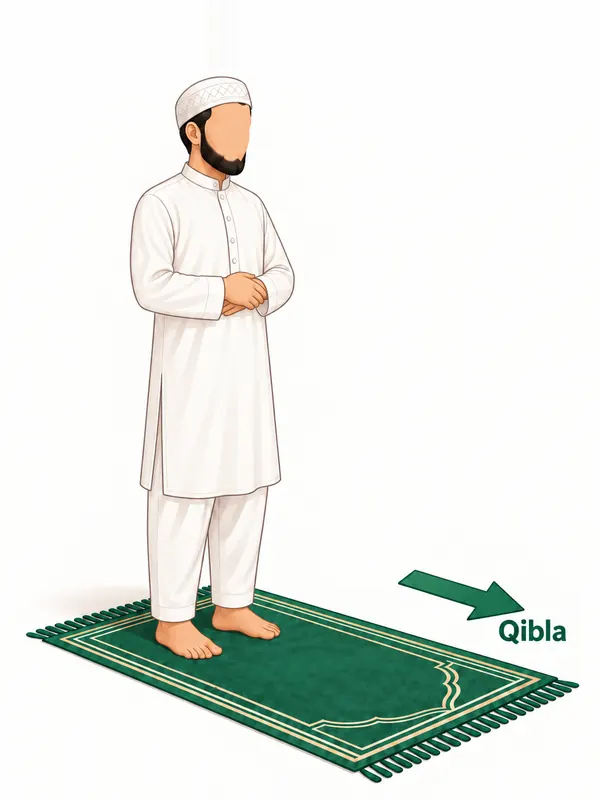
1Standing Rak'ah 3 of witr: al-Fatihah and a surah, as in the first two. -
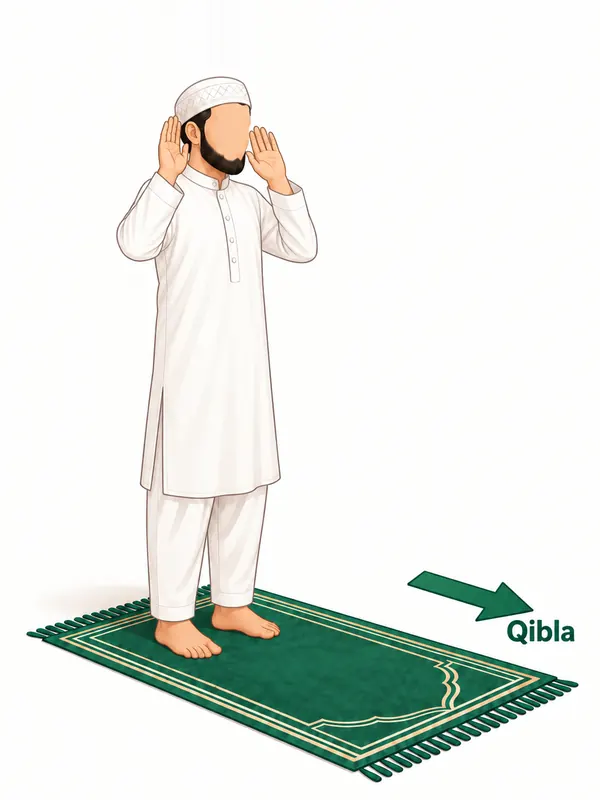
2Takbir Before bowing, say Allāhu akbar and raise the hands, thumbs near the earlobes. -
3Standing Fold the hands again and recite Dua-e-Qunoot quietly. -
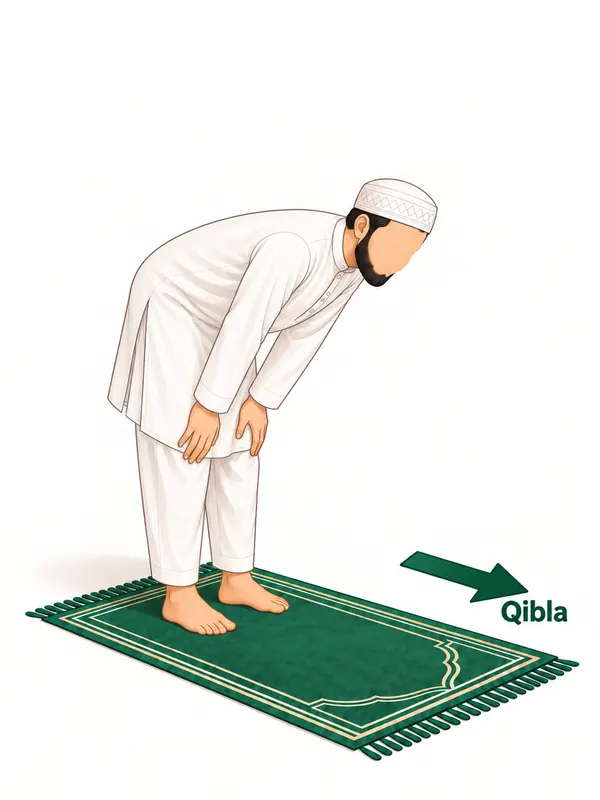
4Bowing (ruku') Allāhu akbar: bow. -
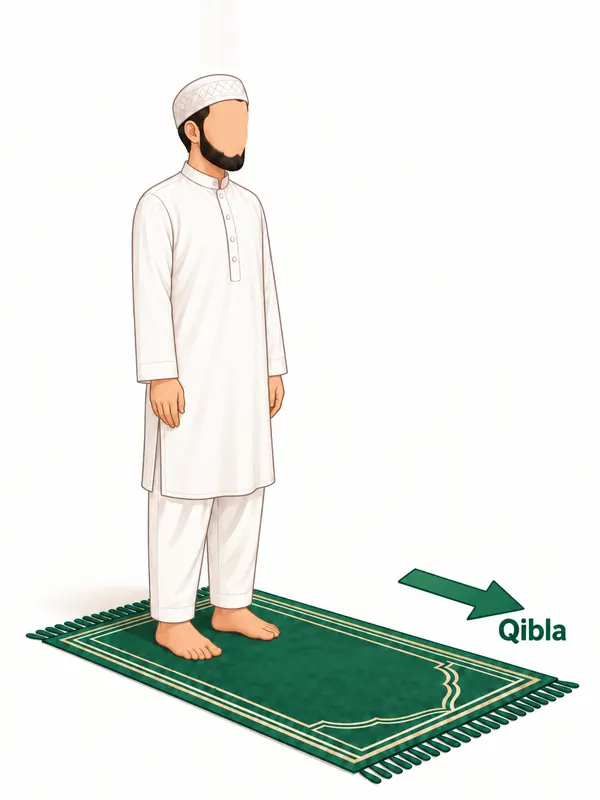
5Standing up Rise and stand still. -
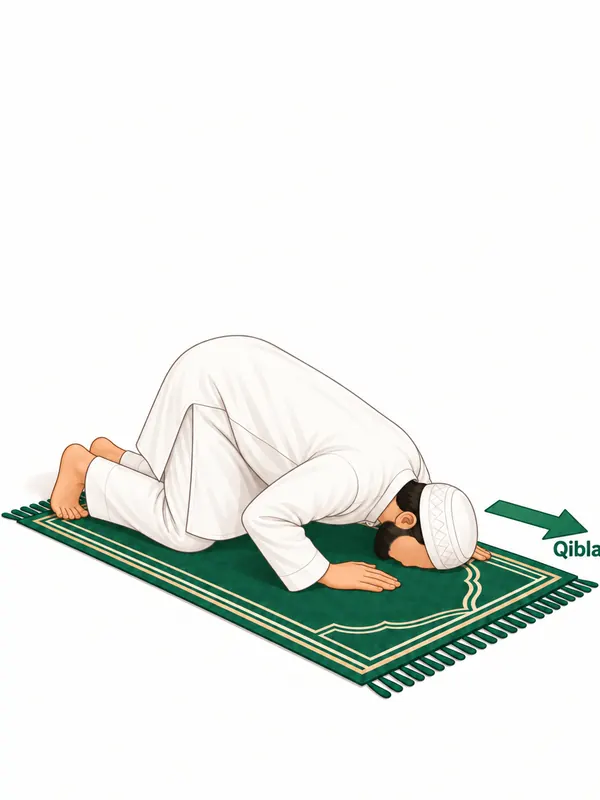
6Prostration (sajdah) The two prostrations, with the sitting between. -
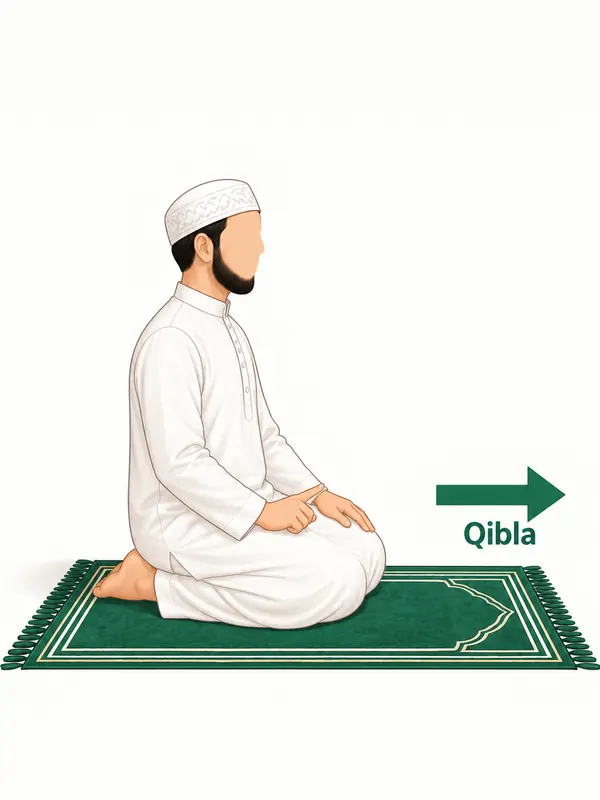
7Sitting (tashahhud) Final sitting: tashahhud. -
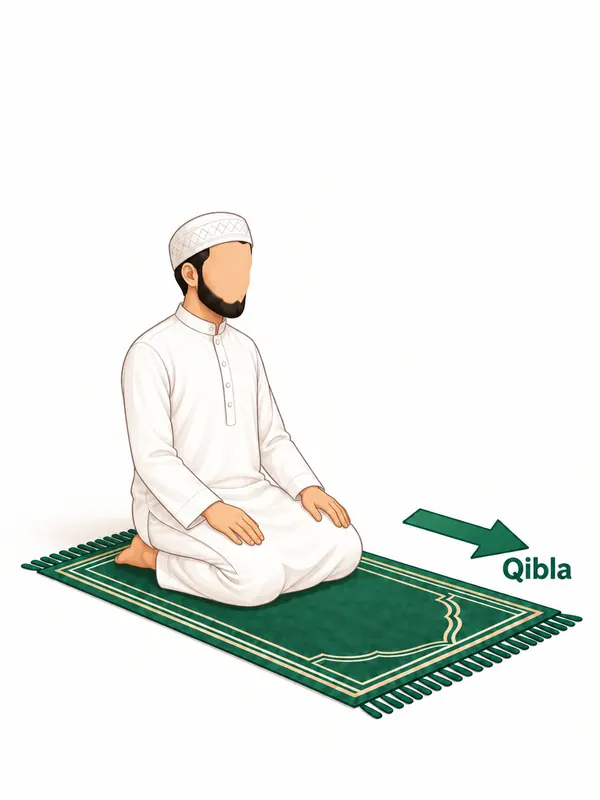
8Sitting, finger lowered The salawat on the Prophet ﷺ and a dua. -

9Salam to the right Salam to the right. -
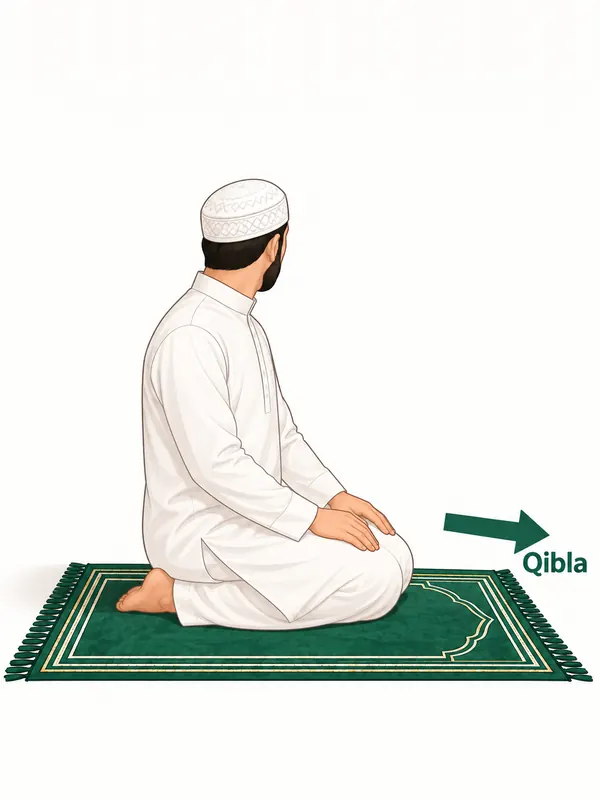
10Salam to the left Salam to the left. Witr is complete.
The new step is the takbir with raised hands after the surah, then the qunut before ruku.
Practise
The third rak'ah of witr, women
-
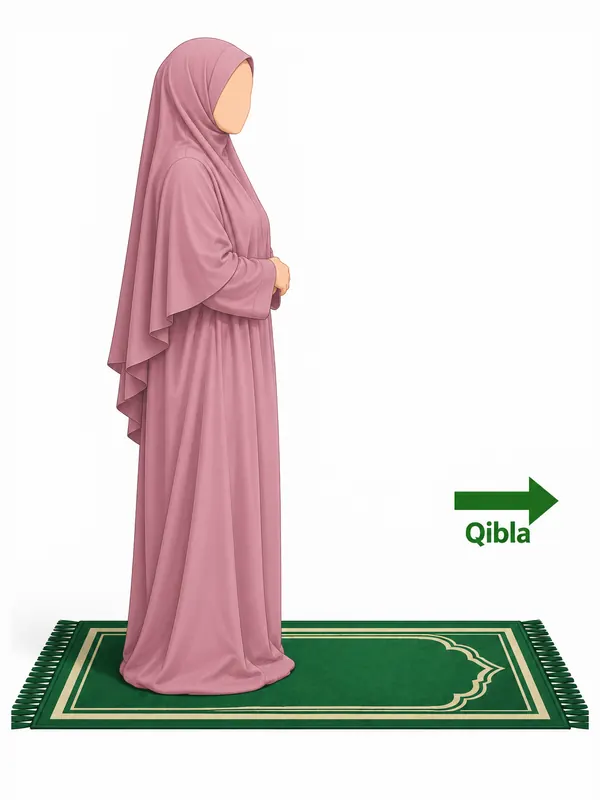
1Standing Rak'ah 3 of witr: al-Fatihah and a surah, as in the first two. -
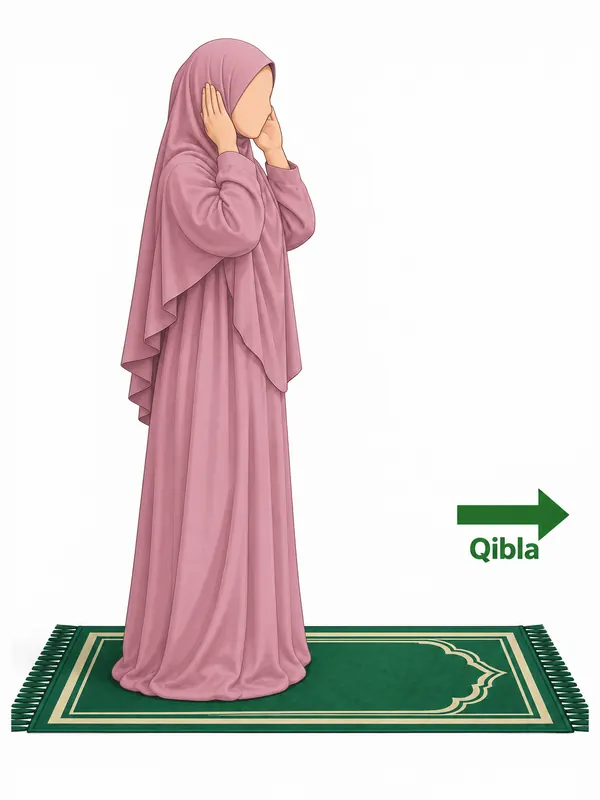
2Takbir Before bowing, say Allāhu akbar and raise the hands, hands to the shoulders. -
3Standing Fold the hands again and recite Dua-e-Qunoot quietly. -
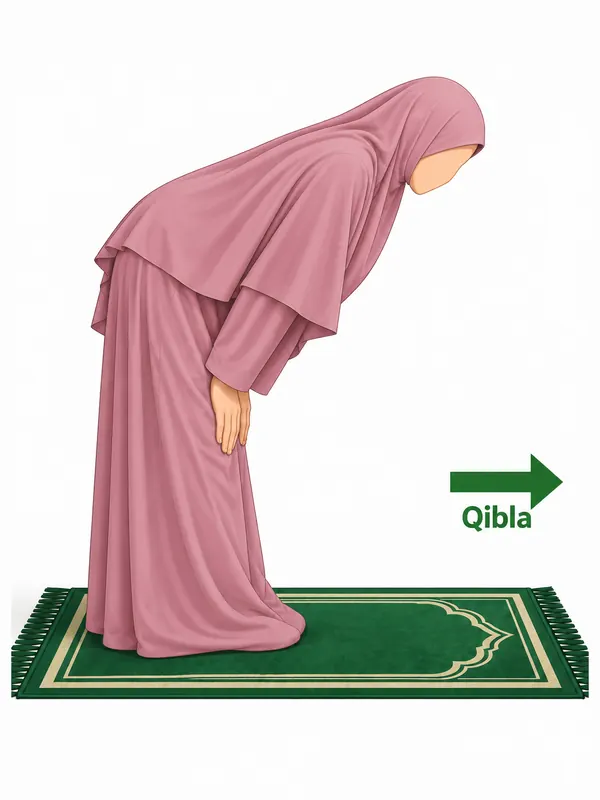
4Bowing (ruku') Allāhu akbar: bow. -
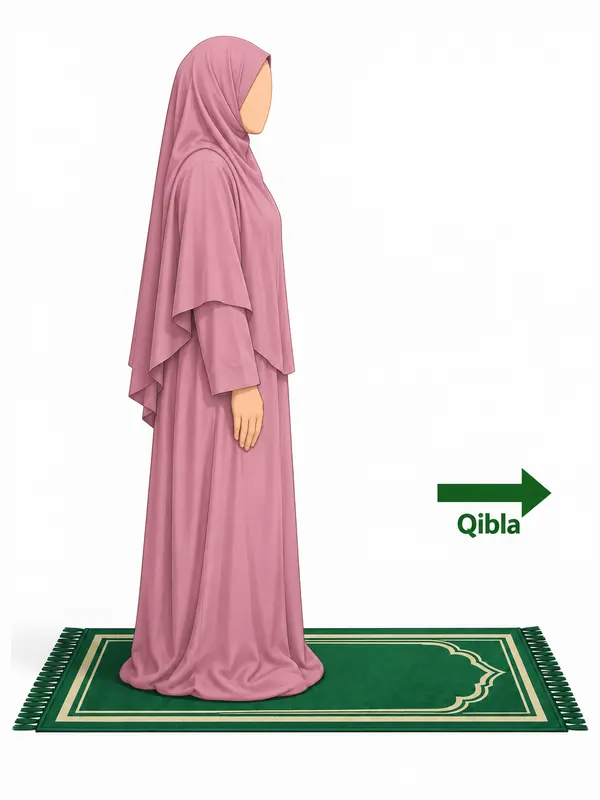
5Standing up Rise and stand still. -
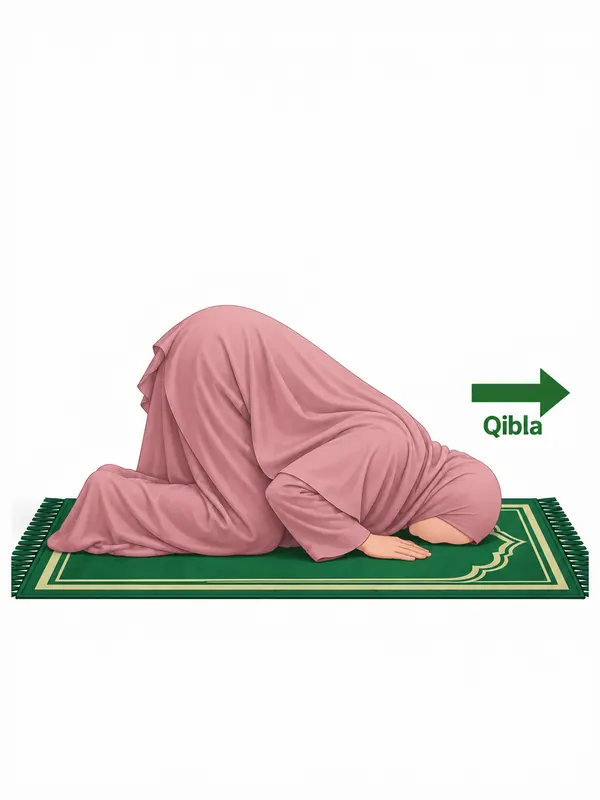
6Prostration (sajdah) The two prostrations, with the sitting between. -
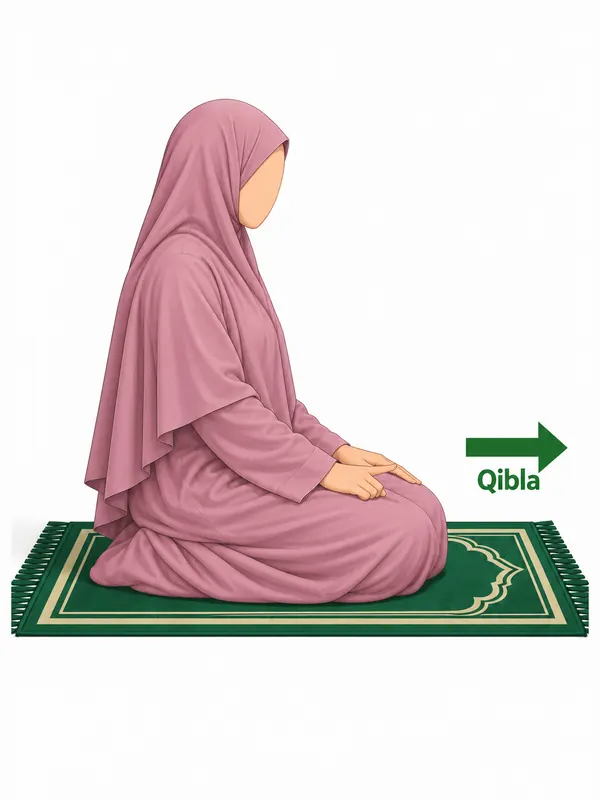
7Sitting (tashahhud) Final sitting: tashahhud. -

8Sitting, finger lowered The salawat on the Prophet ﷺ and a dua. -
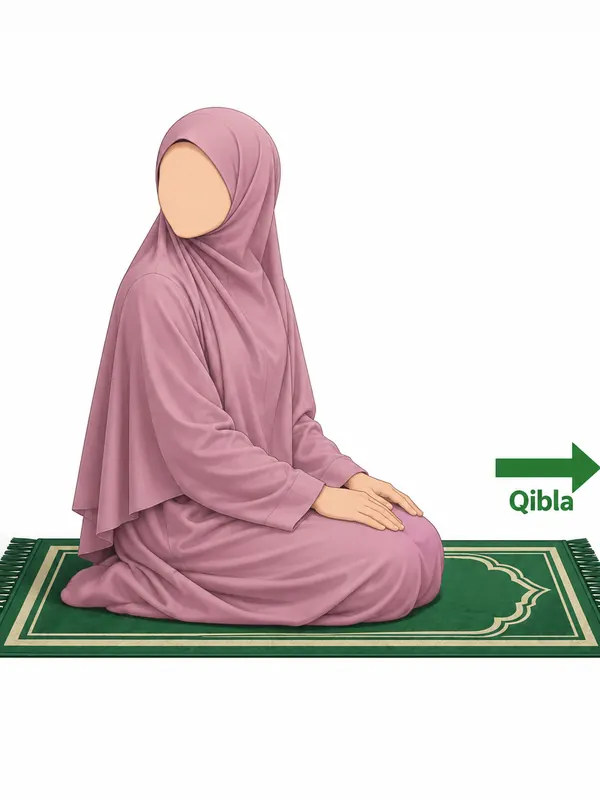
9Salam to the right Salam to the right. -
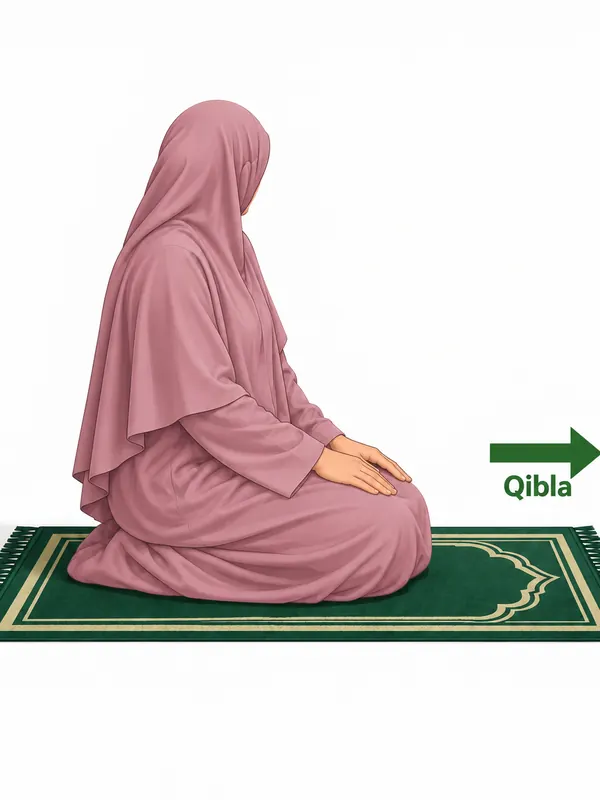
10Salam to the left Salam to the left. Witr is complete.
The same steps, with the women's raising of the hands and compact postures.
Read
The qunut moment
In rak'ah 3, after al-Fatihah and the surah, say Allāhu akbar and raise your hands as for the opening takbir (men to the earlobes, women to the shoulders). Fold them again and recite Dua-e-Qunoot quietly. Then bow for ruku.
The qunut and the takbir before it are wajib. Missed by mistake, sajdah sahw repairs them.
The qunut is a dua of trust: asking Allah's help and forgiveness, praising Him, and promising to worship Him alone. Learn its meaning with its words, a line a day, so that it is a conversation and not only a sound.
Dua
Dua-e-Qunoot
Recited in the third raka'ah of Witr prayer
اللَّهُمَّ إِنَّا نَسْتَعِينُكَ وَنَسْتَغْفِرُكَ، وَنُؤْمِنُ بِكَ وَنَتَوَكَّلُ عَلَيْكَ، وَنُثْنِي عَلَيْكَ الْخَيْرَ كُلَّهُ، نَشْكُرُكَ وَلَا نَكْفُرُكَ، وَنَخْلَعُ وَنَتْرُكُ مَنْ يَفْجُرُكَ
Allāhumma innā nasta'īnuka wa nastaghfiruk, wa nu'minu bika wa natawakkalu 'alayk, wa nuthnī 'alaykal-khayra kullahu, nashkuruka wa lā nakfuruk, wa nakhla'u wa natruku man yafjuruk
O Allāh, we seek Your help and ask Your forgiveness, and we believe in You and have trust in You. We praise You in the best way, we thank You and are not ungrateful, and we forsake and turn away from the one who disobeys You.
Reveal
What is this dua for?
Think about it first, then open the card.
- Still learning the qunut? Keep learning it, a line a day. Meanwhile, in its place, many teachers advise reciting a short Quranic dua such as the one below, or asking Allah's forgiveness three times. Your witr is valid.
From the Quran
A dua to use while you learn
وَمِنْهُم مَّن يَقُولُ رَبَّنَآ ءَاتِنَا فِى ٱلدُّنْيَا حَسَنَةًۭ وَفِى ٱلْءَاخِرَةِ حَسَنَةًۭ وَقِنَا عَذَابَ ٱلنَّارِ﴿201﴾
201 And of them (also) is he who saith: "Our Lord! Give unto us in the world that which is good and in the Hereafter that which is good, and guard us from the doom of Fire."
Read
Witr in Ramadan

In Ramadan, witr is prayed in congregation after taraweeh, the imam reciting aloud. Outside Ramadan, gathering people for witr in congregation as a regular practice is disliked; pray it on your own.
If you plan to pray tahajjud at home in Ramadan, you may leave the congregation's witr and pray it yourself at the end of the night.
The qunut in a Ramadan congregation is said quietly by everyone, the imam included.
Go deeper: if you slept through witr
Witr is wajib, so a missed witr is made up, as a qada, at any time except the forbidden moments. Someone who keeps the order of their prayers makes it up before the next Fajr's fard.
Build it
The third rak'ah of witr
Tap the pictures in order.
- Al-Fatihah and a surah
- Takbir with raised hands
- Dua-e-Qunoot
- Ruku
- Two prostrations
Choose Where does the qunut go?
In the witr, which position do you take straight before reciting the qunut?

Show the answer
You raise the hands with a takbir, then fold them and recite the qunut, all before ruku.
Fill the gap Fill the gap
Witr is ______.
Show the answer
Witr is wajib: leaving it is a serious matter, and a missed witr must be made up.
Reveal
Common mistakes
Think of the right answer first, then flip each card.
- "Witr is optional; I skip it when tired." Witr is wajib. Pray it before sleep if you may not wake.
- "The qunut comes after ruku." In the witr it comes before ruku, after a takbir with raised hands.
- "Only the third rak'ah has a surah." All three rak'ahs of witr have al-Fatihah and a surah.
- "I can pray witr before Isha to save time." Witr comes after the fard of Isha.
Think about it
The last word of the night
Witr is the last prayer of your day. What would you like your last words to Allah to be tonight?
Only you can see this. It is kept on this device.
Lesson finished
Witr, step by step
You added a rak'ah to a prayer mat that fills, rak'ah by rak'ah.
What you learnt
- Witr: wajib, three rak'ahs, one salam, a sitting after two.
- A surah in every rak'ah; in the third, a takbir with raised hands and the qunut before ruku.
- After Isha until dawn; at the end of the night if you are sure to wake.
- done
- 0
- right first time
- 0
- to review
- 0
Your deed · Try it today
Pray witr tonight. If you do not know Dua-e-Qunoot yet, read it from the lesson, or use the Quran dua while you learn.
What you kept
Sign in to keep your progress on every device.