
0 kept
Step inside

The valley of Makkah, midday
A rock on his chest
The sun stands high over the hills and the stones burn. In the valley, a man is being tested for saying that Allah is One.
Look
A rock on his chest
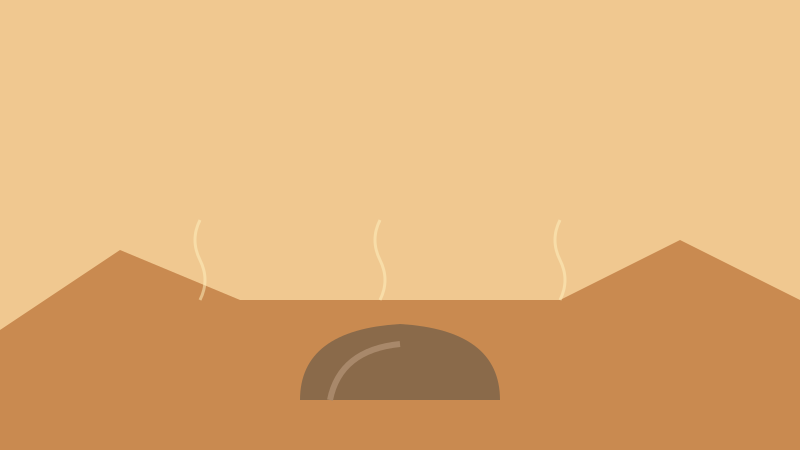
Midday in Makkah. The stones of the valley burn like a stove. A slave lies on his back, a heavy rock pressed on his chest. His master, Umayyah ibn Khalaf, wants him to deny Allah.
Bilal ibn Rabah (radiyallahu ’anhu) answers with one word, again and again: Ahad, Ahad, “One, One”. Allah is One.
Look
Look
Bought and set free

Abu Bakr (radiyallahu ’anhu) bought Bilal from Umayyah and set him free, for Allah alone.
Bilal was from Abyssinia, dark-skinned and a slave. In Islam he became one of the most honoured men of all, the first to call the adhan.
From the hadith
A free man and a slave
وعن أبي نجيح عمرو بن عبسة -بفتح العين والباء- السلمي، رضي الله عنه ، قال: كنت وأنا في الجاهلية أظن أن الناس على ضلالة، وأنهم ليسوا على شئ، وهم يعبدون الأوثان، فسمعت برجل بمكة يخبر أخباراً، فقعدت على راحلتى، فقدمت عليه، فإذا رسول الله ، صلى الله عليه وسلم مستخفياً، جرءاء عليه قومه ، فتلطف حتى دخلت عليه بمكة، فقلت له : ما أنت؟ قال: "أنا نبي" قلت: وما نبي ؟ قال: "أرسلني الله" قلت: وبأي شئ أرسك؟ قال "أرسلني بصلة الأرحام، وكسر الأوثان وأن يوحد الله لا يشرك به شئ: قلت: فمن معك على هذا؟ قال: "حر وعبد" ومعه يومئذ أبو بكر وبلال، رضي الله عنهما، قلت: إني متبعك، قال: "إنك لن تستطيع ذلك يومك هذا، ألا ترى حالي وحال الناس؟ ولكن ارجع إلى أهلك فإذا سمعت بي قد ظهرت فأتني" قال: فذهبت إلى أهلي وقدم رسول الله صلى الله عليه وسلم، المدينة، وكنت في أهلي، فجعلت أتخبر الأخبار، واسأل الناس حين قدم المدينة حتى قدم نفر من أهلي المدينة، فقلت: ما فعل هذا الرجل الذي قدم المدينة؟ فقالوا: الناس إليه سراع، وقد أراد قومه قتله، فلم يستطيعوا ذلك، فقدمت المدينة، فدخلت عليه، فقلت: يا رسول الله أتعرفني؟ قال: "نعم أنتالذي لقيتني بمكة" قال: فقلت يا رسول الله أخبرني عما علمك الله وأجهله، أخبرنى عن الصلاة؟ قال :” صل صلاة الصبح، ثم أقصر عن الصلاة حتى ترتفع الشمس قيد رمح، فإنه تطلع حين تطلع بين قرني شيطان، وحينئذ يسجد لها الكفار، ثم صل فإن الصلاة مشهودة محضورة حتى يستقل الظل بالرمح، ثم أقصر عن الصلاة، فإنه حينئذ تسجر جهنم؛ فإذا أقبل الفيء فصل؛ فإن الصلاة مشهودة محضورة حتى تصلي العصر، ثم اقصر عن الصلاة حتى تغرب الشمس ، فإنها تغرب بين قرني شيطان، وحينئذ يسجد لها الكفار" قال: فقلت: يا نبى الله ؛ فالوضوء حدثنى عنه؟ فقال: "ما منكم رجل يقرب وضوءه، فيتمضمض ويستنشق فينتثر، إلا خرت خطايا وجهه وفيه وخياشيمه، ثم إذا غسل وجهه كما أمره الله ، إلا خرت خطايا وجهه من أطراف لحيته مع الماء، ثم يغسل يديه إلى المرفقين، إلا خرت خطايا يديه من أنامله مع الماء ثم يمسح رأسه، إلا خرت خطايا يديه من أنامله مع الماء، ثم يغسل يديه إلى المرفقين ، إلاخرت خطايا يديه من أنامله مع الماء، ثم يمسح رأسه، إلا خرت خطايا رأسه من أطراف شعره مع الماء، ثم يغسل قديمه إلى الكعبين إلا خرت خطايا رجليه من أنامله مع الماء، فإن هو قام فصلى، فحمد الله تعالى، وأثنى عليه ومجده بالذي هو له أهل ، وفرغ قلبه لله تعالى، إلا انصرف من خطيئته كهيئته يوم ولدته أمه". فحدث عمرو بن عبسة بهذا الحديث أبا أمامة صاحب رسول الله، فقال له أبو أمامة: يا عمرو بن عبسة، انظر ما تقول! في مقام واحد يعطى هذا الرجل؟ فقال عمرو: يا أبا أمامة لقد كبرت سني، ورق عظمي ، واقترب أجلي، وما بي حاجة أن أكذب على الله تعالى، ولا على رسول الله، صلى الله عليه وسلم، لو لم اسمعه من رسول الله، صلى الله عليه وسلم إلا مرة أو مرتين أو ثلاثاً، حتى عد سبع مرات، ماحدثت أبداً به، ولكني سمعته أكثر من ذلك ((رواه مسلم)).
Abu Najih 'Amr bin 'Abasah (May Allah be pleased with him) reported: In the Pre-Islamic Period of Ignorance, I used to think that people who used to worship idols, were deviated and did not adhere to the true religion. Then I heard of a man in Makkah who was preaching a message. So I mounted my camel and went to him. I found that (this man who was) Messenger of Allah (ﷺ) remained hidden because of the persecution by his people. I had entered Makkah stealthily and when I met him I asked him, "Who are you?" He (ﷺ) said, "I am a Prophet." I asked; "What is a Prophet?" He said, "Allah has sent me (with a message)". I asked, "With what has He sent you?" He said, "He sent me to strengthen the ties of kinship, to destroy idols so that Allah alone should be worshipped and nothing should be associated with Him". I asked, "Who has followed you in this?" He said, "A freeman and a slave". (At that time only Abu Bakr and Bilal (May Allah be pleased with her) were with him). I said, "I shall follow you". He said, "You can not do that now. Do you not see my situation and that of the people? Go to your people, and when you hear that my cause has prevailed, come to me". So I went back to my people, and while I was with my people, Messenger of Allah (ﷺ) emigrated to Al-Madinah. I continued to ask people about him till some of my people visited Al- Madinah. On their return, I asked them, "How is that man who has arrived in Al-Madinah faring?" They said, "People are hastening to him. His own people had planned to kill him but did not succeed." Then I went to Al-Madinah and came to him and said, "O Messenger of Allah, do you recognize me?" He (ﷺ) said, "Yes, you are the one who met me in Makkah." I said, "O Messenger of Allah, tell me of that which Allah has taught you and of which I am unaware. Tell me about Salat first." He (ﷺ) replied, "Perform the Fajr (morning) Salat, then stop Salat until the sun has risen up to the height of a lance, for when it rises, it rises up between the horns of the devil, and the infidels prostrate themselves before it at that time. Then perform Salat, for Salat is witnessed and angels attend it, until the shadow becomes equal to the length of its object; then stop Salat, for at that time Jahannam (Hell) is heated up. Then pray when the shadow becomes longer, for the prayer is witnessed and angels attend it, until you perform 'Asr prayer; then stop Salat till sun sets, for it sets between the horns of a devil. At that time the infidels prostrate themselves before it." I then asked the Messenger of Allah to tell me about Wudu', and he (ﷺ) said, "When a person begins the Wudu' and washes his mouth and nose, the sins committed by his face, mouth and nostrils are washed out. Then when he washes his face as commanded by Allah, the sins of his face are washed out with the water from the sides of his beard. Then when he washes his hands up to elbows, the sins of his hands are washed out through his fingers with water. Then he passes his wet hands over his head and the sins of the head are washed out through the ends of his hair with water. Then he washes his feet up to the ankles, the sins of his feet are washed out through his toes with water. Then, if he stands up for Salat and praises Allah, glorifies Him, proclaims His Greatness as He deserves and devotes his heart wholly to Allah, he emerges sin free as the day he was born".When 'Amr bin 'Abasah (May Allah be pleased with him) narrated this Hadith to Abu Umamah (May Allah be pleased with him) a Companion of the Prophet (ﷺ), the latter said to him, "Watch what you are saying. O 'Amr bin 'Abasah, a man will be getting all of this in one shot?" 'Amr (May Allah be pleased with him) replied, "O Abu Umamah, I have attained old age, my bones have become dry, my death is approaching and there is no need for me to tell lies concerning Allah and His Messenger (ﷺ). Had I not heard this from the Messenger of Allah only once, twice, thrice (and he counted up to seven) I would never have reported it. Indeed I have heard this frequently"..
Read
Why “One” was the answer

Bilal did not make a long speech. His torturers wanted one thing: that he add partners to Allah. So he gave them one word back, and that word held all of tawhid.
Under pressure, the shortest truth is often enough.
Go deeper: where he came from
Bilal was born in Makkah to an Abyssinian mother, Hamamah, a slave of the clan of Jumah. The reports differ on the price Abu Bakr paid and on whether he bought him while the torture was going on.
Choose Check your understanding
Why did Bilal’s “One, One” matter so much?
Show the answer
They wanted him to worship others with Allah. “One” refused exactly that.
Reveal
Common mistakes: myth or fact?
Decide, then flip each card.
- Bilal’s family came from Abyssinia. Fact. He was of Abyssinian descent, born into slavery in Makkah.
- The Prophet ﷺ bought and freed him. Myth. Abu Bakr bought him from Umayyah ibn Khalaf and set him free.
- He gave in under the torture. Myth. Under the torture Bilal kept repeating that Allah is One.
Read
“Our master”

Al-Bukhari reports that ’Umar used to say: Abu Bakr is our master, and he freed our master, meaning Bilal.
The Abyssinian slave of Umayyah became a man the caliph of Islam called "master". In Islam, honour comes from faith, not from colour, family or wealth.
True or false True or false?
Bilal was one of the very first believers.
Show the answer
The stored report names a free man and a slave as the first followers: Abu Bakr and Bilal.
Choose Check
What did Bilal repeat while he was tortured?
Show the answer
Ahad, Ahad: One, One. Even under a rock in the burning sun, Bilal kept declaring that Allah is One.
Read
For your life
Racism and class pride still divide Muslims: by colour, country, caste or accent. Bilal, a former slave from Abyssinia, was called "our master" by ’Umar.
Check your words, your welcome at the masjid and your choices about marriage. Does faith decide, or background?
Think about it
A heart moment
When you are pushed to compromise your faith, what is your "One, One"? What short truth will you hold on to?
Only you can see this. It is kept on this device.
Read
The lesson in three lines
Bilal, a slave in Makkah, held to "One, One" under a rock in the burning sun. Abu Bakr bought him and set him free for Allah. ’Umar later called him "our master".
Lesson finished
Bilal: “One, One”
You added a star to a constellation that lights up, one star per person.
What you learnt
- Bilal held to “One, One” under torture, and was freed by Abu Bakr.
- done
- 0
- right first time
- 0
- to review
- 0
Your deed · Try it today
Say “Allah is One” in your heart when you face pressure today.
What you kept
Sign in to keep your progress on every device.