
 First steps
Go further
Purity: Wudu and Ghusl
Clean and pure for prayer: the toilet, wudu and ghusl step by step with pictures, what breaks them, and the special cases, all.
The dua for the toilet, and purity from the start.
Step inside
Nobody sees you in the bathroom, and that is exactly why it shows your faith. The way a Muslim uses the toilet keeps the body clean for prayer and follows the Prophet ﷺ even in private.
Look
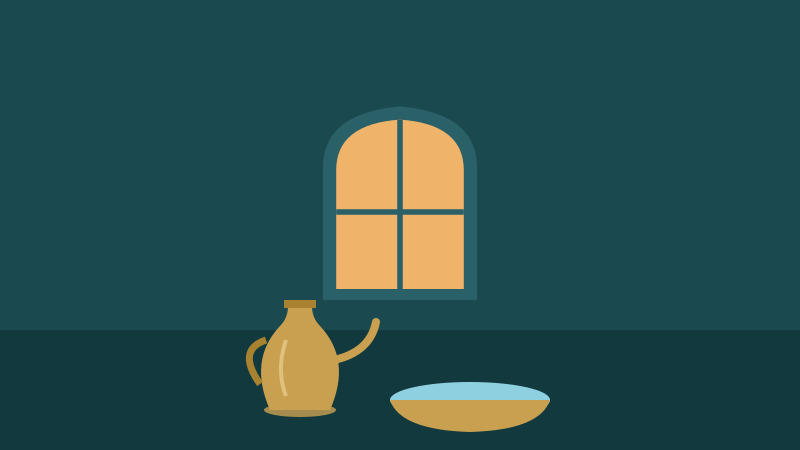
This lesson goes deeper than the duas: the direction you face, cleaning properly, and making sure nothing is left.
From the hadith
وعن ابن عباس رضي الله عنهما أن رسول الله صلى الله عليه وسلم مر بقبرين فقال: “إنهما يعذابان ، وما يعذبان في كبير! بلى إنه كبير: أما أحدهما ، فكان يمشي بالنميمة، وأما الآخر فكان لا يستتر من بوله ((متفق عليه وهذا لفظ إحدى روايات البخاري)). قال العلماء: معنى "وما يعذبان في كبير" أي كبير في زعمهما وقيل: كبير تركه عليهما.
Ibn 'Abbas (May Allah be pleased with them) said: The Messenger of Allah (ﷺ) passed by two graves and said, "Both of them (the persons in these graves) are being tortured, and they are not being tortured for a cardinal sin. But indeed they are great sins. One of them used not to save himself from being soiled with his urine, and the other one used to go about with calumnies (among the people to rouse hostilities, e.g., one goes to a person and tells him that so-and-so says about him such and such evil things)."
Reveal
Think about it first, then open the card.
Read

Facing the qiblah, or turning your back to it, while relieving yourself is makrūh taḥrīmī: close to forbidden. The school applies this inside buildings as well as outdoors.
If the toilet you have faces the qiblah, turn your body away from it as much as possible. If you are fitting or moving a toilet, set it sideways. It costs nothing once, and it is respect every day.
The dislike holds everywhere, even inside a building, out of respect for the qiblah. Where it cannot be avoided, turning away as far as possible is enough.
Choose Which layout is right?
You are fitting a new toilet. Which way should it face?

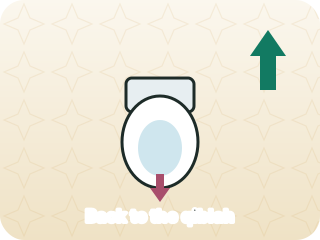
It is strongly disliked to face the qiblah or turn your back to it while relieving yourself, indoors and outdoors. Sideways is right. If a toilet already faces the qiblah, turn your body a little away.
Look

Another course
First steps
Go further
Clean and pure for prayer: the toilet, wudu and ghusl step by step with pictures, what breaks them, and the special cases, all.
The dua for the toilet, and purity from the start.
Put in order
Put these in the right order.
Waiting until the flow has stopped (istibra') comes before cleaning. Washing with water after tissue is the most complete way.
Read
Look

Cleaning with tissue alone is allowed when the impurity stays at the exit. If it spreads around it by more than the size of a dirham, washing with water is required, not just better.
Drops that come after wudu break the wudu. That is why istibra' matters: a calm wait now saves a repeated wudu later.
Fill the gap Fill the gap
Waiting until the urine has fully stopped before cleaning is called ______.
Istibra' is making sure the flow has stopped. Istinja is the cleaning itself. Istikharah is the prayer for guidance, nothing to do with the toilet.
Read
Choose Check your understanding
You are travelling and there is only a toilet that faces the qiblah. What do you do?
Avoid facing the qiblah where you can. When a building leaves you no choice, turn your body slightly. Holding it in for hours harms you, and Islam does not ask that.
Read
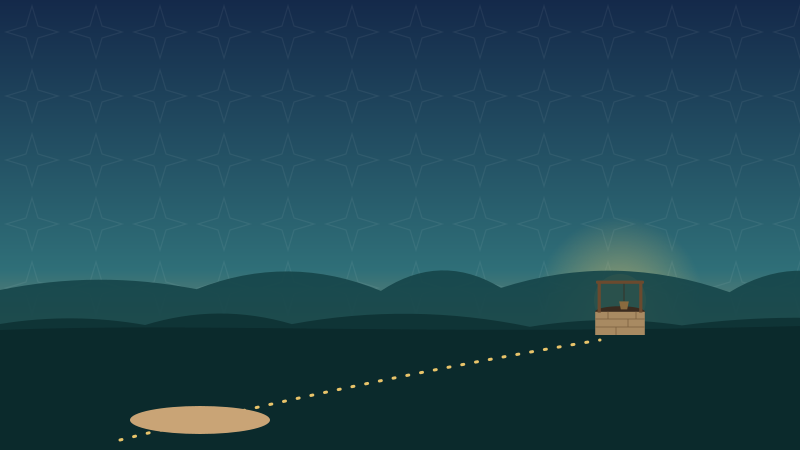
Hiking, camping or on a long road, the same care applies, with a few more manners:
Reveal
Think of the right answer first, then flip each card.
From the Quran
لَا تَقُمْ فِيهِ أَبَدًۭا ۚ لَّمَسْجِدٌ أُسِّسَ عَلَى ٱلتَّقْوَىٰ مِنْ أَوَّلِ يَوْمٍ أَحَقُّ أَن تَقُومَ فِيهِ ۚ فِيهِ رِجَالٌۭ يُحِبُّونَ أَن يَتَطَهَّرُوا۟ ۚ وَٱللَّهُ يُحِبُّ ٱلْمُطَّهِّرِينَ﴿108﴾
108 Never stand (to pray) there. A place of worship which was found upon duty (to Allah) from the first day is more worthy that thou shouldst stand (to pray) therein, wherein are men who love to purify themselves. Allah loveth the purifiers.
Lesson finished
You added a rak'ah to a prayer mat that fills, rak'ah by rak'ah.
Keep a water bottle or jug by the toilet at home and at work, ready for istinja.
Sign in to keep your progress on every device.