
0 kept
Step inside
Madinah
A room beside the mosque
A small room of mud brick and palm branches opens straight onto the mosque. From here a young woman will learn and teach for half a century.
Read
Abu Bakr’s daughter
’A’ishah (radiyallahu ’anha) was the daughter of Abu Bakr and Umm Ruman. The marriage contract was made in Makkah. She moved to the Prophet’s ﷺ home in Madinah in 1 or 2 AH.
The reports in al-Bukhari give her age as six at the contract and nine on moving to his home; some later writers argue she was older. Either way, she grew up with him and became the most learned woman of the ummah.
Explore the picture
Her room
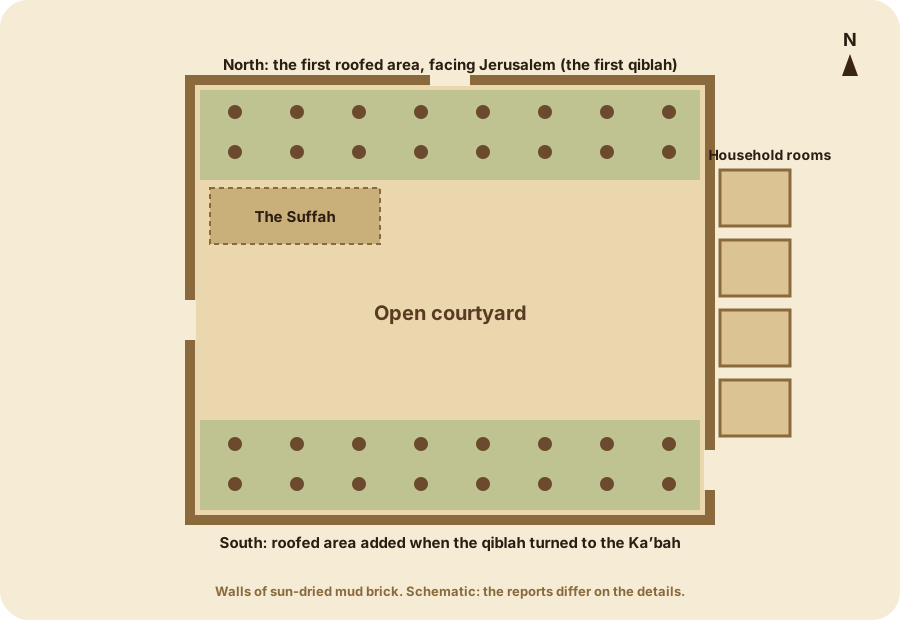
- Household rooms The rooms of his wives opened onto the mosque on the east side. ’A’ishah’s was one of them.
- The courtyard She could see the mosque from her doorway.
- The Suffah Where the poor emigrants lived.
From the hadith
A greeting from Jibril
وعن عائشة رضي الله عنه قالت: قال لي رسول الله صلى الله عليه وسلم: “هذا جبريل يقرأ عليك السلام" قالت: قلت: "وعليه السلام ورحمة الله وبركاته" ((متفق عليه)) وهكذا وقع في بعض روايات الصحيحين: "وبركاته" وفي بعضها بحذفها وزيادة الثقة مقبولة
'Aishah (May Allah be pleased with her) reported: The Messenger of Allah (ﷺ) said to me, "This is Jibril (Gabriel) who is conveying you greetings of peace." I responded: "Wa 'Alaihis-Salamu wa Rahmatullahi wa Barakatuhu (May peace be upon him and the Mercy of Allah and His Blessings)."
Look
Rooms of palm and clay
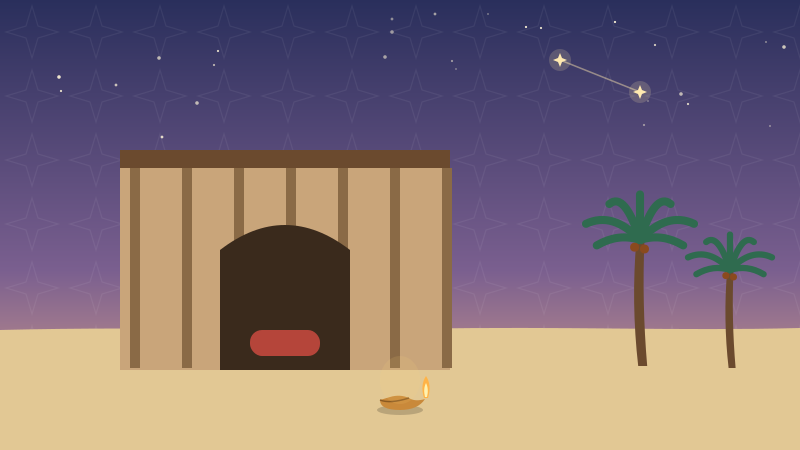
Her room was small, of mud brick and palm branches. When she slept across the space where the Prophet ﷺ prayed at night, she pulled her legs in when he went into sujud.
A great life does not need a great house.
From the hadith
Months without a cooking fire
وعن عروة عن عائشة، رضي الله عنها، أنها كانت تقول: والله يا ابن اختي إن كنا لننظر إلى الهلال، ثم الهلال: ثلاثة أهلة في شهرين، وما أوقد في أبيات رسول صلى الله عليه وسلم ، نار. قلت: يا خالة فما كان يعيشكم؟ قالت: الأسودان: التمر والماء، إلا أنه قد كان لرسول الله صلى الله عليه وسلم جيران من الأنصار، وكانت لهم منائح وكانوا يرسلون إلى رسول الله من ألبانها فيسقينا. ((متفق عليه)).
'Urwah from 'Aishah (May Allah be pleased with her) reported that she used to say to Urwah (May Allah be pleased with him): "O son of my sister, by Allah, I used to see the new moon, then the new moon, then the new moon, i.e., three moons in two months, and a fire was not kindled in the house of Messenger of Allah (ﷺ). "I ('Urwah) said, "O my aunt, what were your means of sustenance?" She said; "Dates and water. But it (so happened) that Messenger of Allah (ﷺ) had some Ansar neighbours who had milch animals. They used to send Messenger of Allah (ﷺ) some milk of their (animals) and he gave that to us to drink."
Find them
Explore the map
Find the places around her room.
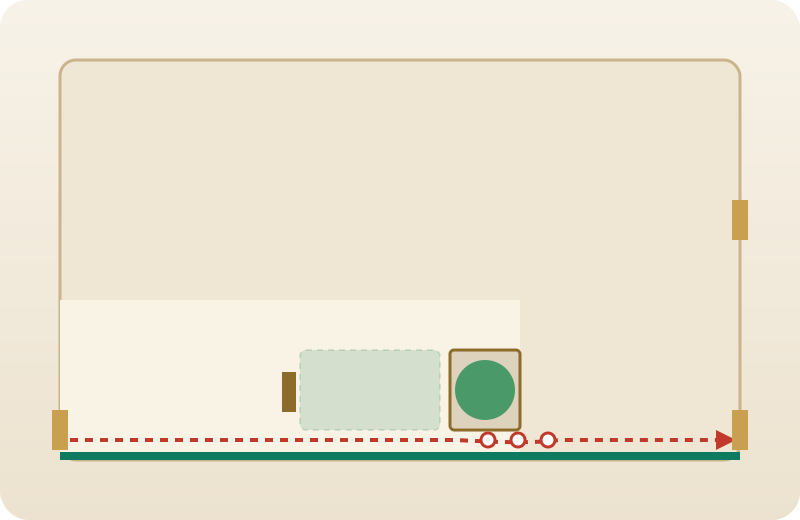
- The room of ’A’ishah Her small room, opening onto the mosque.
- The Rawdah Between his room and his minbar, a garden of Jannah, he said.
- The minbar The pulpit he stood on to speak.
True or false True or false?
’A’ishah’s room opened onto the Prophet’s ﷺ mosque.
Show the answer
The rooms of his wives stood on its east side.
Choose Check
Who was ’A’ishah’s father?
Show the answer
Abu Bakr as-Siddiq. 'A'ishah was the daughter of his closest friend.
Read
A sharp mind

’A’ishah (radiyallahu ’anha) had a remarkable memory. She knew poetry, the family lines of the Arabs and much medicine, and she remembered what she saw and heard in the Prophet’s ﷺ home.
That memory became a gift to the whole ummah.
Go deeper: her kunya
She had no children. The Prophet ﷺ gave her the kunya Umm ’Abdillah, after her nephew ’Abdullah ibn az-Zubayr, Abu Dawud reports.
Reveal
Common mistakes
Flip each card: what people often get wrong, and what is right.
- “The Prophet’s ﷺ rooms were grand.” They were small rooms of mud brick and palm branches.
- “’A’ishah lived apart from the community.” Her door opened onto the mosque, the heart of Madinah.
- “Having no children made her less.” She became the teacher of the ummah, a mother to every believer.
Read
A simple life
She reported months passing without a cooking fire in the Prophet’s ﷺ homes, living on dates and water. They chose this simplicity; it was not forced on them.
Read
For your life

Try a simpler week: one less purchase, a simple meal, an evening without screens. The most blessed home in history was a small room.
Think about it
A heart moment
Her room was small, yet revelation came there. What makes your home a blessed place, whatever its size?
Only you can see this. It is kept on this device.
Read
The lesson in three lines
’A’ishah, daughter of Abu Bakr, lived in a small room beside the mosque. She had a sharp memory and a simple life. From that room came knowledge for the whole ummah.
Lesson finished
’A’ishah beside the mosque
You added a star to a constellation that lights up, one star per person.
What you learnt
- ’A’ishah lived in a simple room beside the mosque, at the heart of the community.
- done
- 0
- right first time
- 0
- to review
- 0
Your deed · Try it today
Find time today for a simple life: one meal or evening with less.
What you kept
Sign in to keep your progress on every device.