
0 kept
Step inside
The 4:30 alarm
The alarm goes at 4:30. You stumble to the kitchen, eat porridge and dates, drink two glasses of water, and watch the clock. At 5:12 the timetable says sehri ends. From that minute until sunset, you are fasting.
Read
The fast in one line
The fast runs from true dawn (subh sadiq, when light spreads along the horizon and Fajr time begins) until sunset. In that time you do not eat, drink or have intimacy, and you have the intention to fast.
Intention: it is in the heart. For a Ramadan fast it may be made from sunset the night before until before the middle of the fasting day, as long as you have eaten nothing since dawn. Getting up for sehri is itself an intention.Watch
Watch: a fasting day, sehri to taraweeh
Tap the spot Where does the fast begin?
Tap the moment the fast begins.
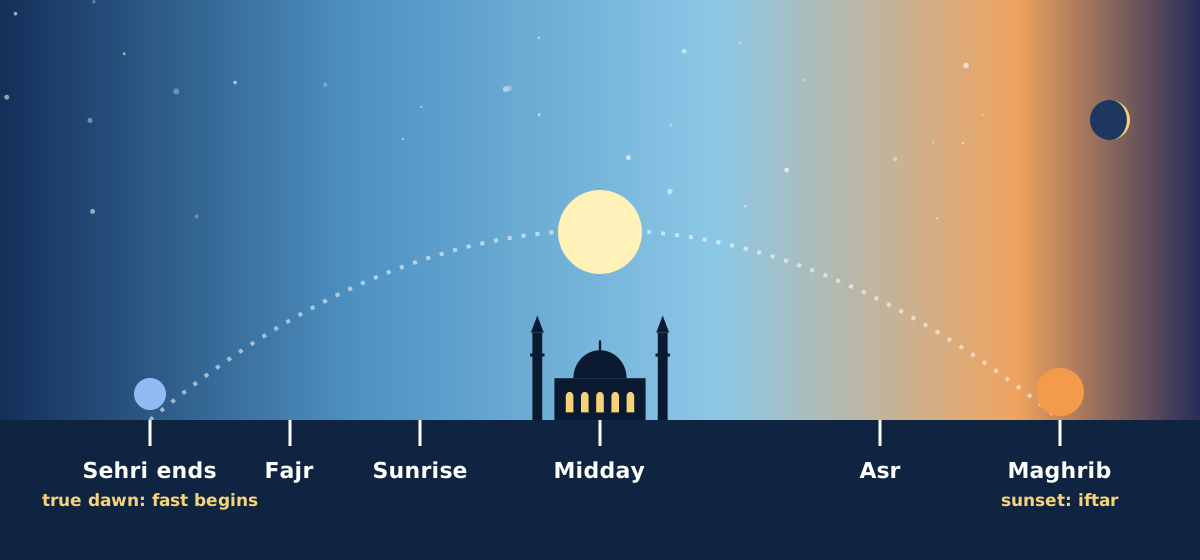
Show the answer
The fast begins at true dawn, the start of Fajr time, which your timetable calls the end of sehri. It is not sunrise: by sunrise you have been fasting for over an hour.
From the hadith
Blessing in sehri
عن أنس، رضي الله عنه قال: قال رسول الله صلى الله عليه وسلم: "تسحروا فإن في السحور بركة" ((متفق عليه))
Anas (May Allah be pleased with him) reported: The Messenger of Allah (ﷺ) said, "Eat Suhur (predawn meal). Surely, there is a blessing in Suhur."
Reveal
What is the lesson for you?
Think about it first, then open the card.
- Make sehri count Do not skip sehri, even if you are not hungry: a few dates and water carry its blessing. The Sunnah is to eat it late, close to dawn, but stop by the time your timetable gives. If the masjid's adhan for Fajr is called a few minutes after dawn, the time on the timetable is what counts.
From the hadith
Opening the fast
وعن سلمان بن عامر الضبي الصحابي، رضي الله عنه عن النبي صلى الله عليه وسلم قال: "إذا أفطر أحدكم، فليفطر على تمر فإن لم يجد فليفطر على ماء فإنه طهور" ((رواه أبو داود، والترمذي وقال: حديث حسن صحيح)).
Salman bin 'Amir (May Allah be pleased with him) reported: I heard the Prophet (ﷺ) saying, "When one of you breaks his Saum (fasting), let him break it on dates; if he does not have any, break his fast with water for it is pure."
Dua
The dua at iftar
At the time of opening the fast
اَللّٰهُمَّ لَكَ صُمْتُ وَعَلٰى رِزْقِكَ أَفْطَرْتُ
Allâhumma laka sumtu wa ‘alâ rizqika aftartu.
O Allah (SWT), for You I’ve fasted and I have completed my fast (iftar) on what You have provided.
Through the day
A Ramadan weekday
-
4:30
Sehri
Eat, drink plenty of water, renew your intention
-
5:15
Fajr
Pray, then a few minutes of Quran before sleep or work
-
9:00
Work or college
Guard your tongue: a fast is more than an empty stomach
-
13:00
Dhuhr
Pray, rest if you can, read a page
-
16:45
Asr
Help prepare iftar; the time before sunset is a good time for dua
-
18:40
Maghrib: iftar
Open with dates or water, then pray Maghrib
The dua: At the time of opening the fast
اَللّٰهُمَّ لَكَ صُمْتُ وَعَلٰى رِزْقِكَ أَفْطَرْتُ
Allâhumma laka sumtu wa ‘alâ rizqika aftartu.
O Allah (SWT), for You I’ve fasted and I have completed my fast (iftar) on what You have provided.
Behesti Zewar (Part 6, p. 269), citing Abu Dawud -
20:15
Isha and taraweeh
Pray in the masjid or at home
Put in order
Put the evening in order
Put these in the right order.
- Open the fast with dates or water
- Say the dua at iftar
- Pray Maghrib
- Eat the main meal
- Pray Isha, then taraweeh
Show the answer
The Sunnah is to open the fast quickly at sunset with something light, then pray Maghrib, and eat the main meal afterwards. A huge meal before Maghrib often makes people late for the prayer.
Read
Timing, simply

Choose Check your understanding
Your timetable says sehri ends at 5:12. The masjid calls the Fajr adhan at 5:20. You are still eating at 5:15. What happened?
Show the answer
Dawn, not the adhan, is the limit. Eating after it by mistake means you make up that day (qada), but there is no kaffarah because you did not mean to break the fast. Keep fasting the rest of the day out of respect for Ramadan.
Think about it
Pause and think
What one change will make your next Ramadan fast more than hunger?
Only you can see this. It is kept on this device.
Reveal
Common mistakes
Think of the right answer first, then flip each card.
- "Eat until the adhan finishes." Stop at true dawn, the start of Fajr.
- "Wait a while after sunset to be safe." Hurrying iftar is the Sunnah.
- "Skip sehri to lose weight." Sehri is a blessed Sunnah; even a date and water.
Lesson finished
From sehri to iftar
You added a month to a moon that waxes through the months.
What you learnt
- Sehri until true dawn.
- Iftar as soon as the sun sets.
- A date and water, then Maghrib.
- done
- 0
- right first time
- 0
- to review
- 0
Your deed · Try it today
Set your sehri alarm for the next fast, and plan dates and water for iftar.
What you kept
Sign in to keep your progress on every device.