
0 kept
Step inside
The core and the beauty
A house has walls that hold it up and paint that makes it beautiful. Wudu is the same. Some parts are fard (obligatory): miss one and there is no wudu.
Read

Others are sunnah: the Prophet's ﷺ way, rewarded and beautiful, but wudu still counts without them.
Read
The four fard
- Wash the whole face once.
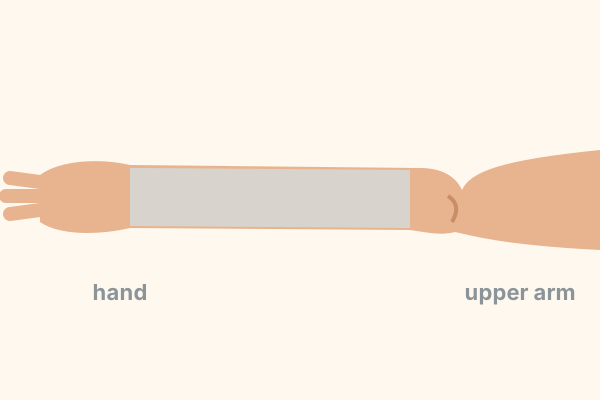
- Wash both arms, including the elbows, once.
- Wipe a quarter of the head.
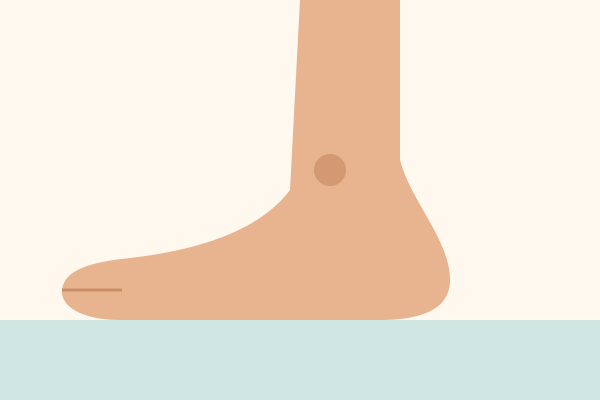
- Wash both feet, including the ankles, once.
These four come straight from the verse of wudu (5:6). Everything else you learned (intention, Bismillah, hands, mouth, nose, three times each, the order, the ears and neck) is sunnah or recommended.
Go deeper: why a quarter of the head?
The verse asks for the head to be wiped. Scholars take the least from the Prophet’s ﷺ own practice of wiping the front of his head, about a quarter of it.
Wiping the whole head is sunnah, so do it when you can.
Tap the spot Where must the water reach?
Tap the furthest point the water must reach when you wash your arm.
Show the answer
The elbow itself must be washed: 'up to the elbows' includes them. A dry elbow means the fard was missed.
Read
A quarter of the head

The fard is to wipe at least a quarter of the head with wet hands. The sunnah is to wipe the whole head once: wet hands from the front to the back, then the ears with the water left on your hands.
Wiping hair that hangs below the head, such as the end of a long plait, does not count. Wipe the hair on the head itself.
Tap the spot And the feet?
Tap the ankle bone that must be washed.
Show the answer
The ankle bones are included. Rushed wudu often leaves the heels and ankles dry.
Read
What "fard" means for you

If a fard part is missed, there is no wudu, and a prayer made with it does not count: redo the wudu and the prayer.
If a sunnah is missed, the wudu stands, but you lose some of its reward and beauty. Leaving a sunnah out of habit is disliked, so learn them, and make them yours. A wudu with every sunnah takes only a minute longer than a hurried one.
From the hadith
Mind your heels
وَعَن عبد الله بن عَمْرو قَالَ: رَجَعْنَا مَعَ رَسُولِ اللَّهِ صَلَّى اللَّهُ عَلَيْهِ وَسَلَّمَ مِنْ مَكَّةَ إِلَى الْمَدِينَةِ حَتَّى إِذا كُنَّا بِمَاء بِالطَّرِيقِ تعجل قوم عِنْد الْعَصْر فتوضؤوا وهم عِجَال فَانْتَهَيْنَا إِلَيْهِم وَأَعْقَابُهُمْ تَلُوحُ لَمْ يَمَسَّهَا الْمَاءُ فَقَالَ رَسُولُ اللَّهِ صَلَّى اللَّهُ عَلَيْهِ وَسَلَّمَ: «وَيْلٌ لِلْأَعْقَابِ من النَّار أَسْبغُوا الْوضُوء» . رَوَاهُ مُسلم
‘Abdallah b. ‘Amr said: We returned from Mecca to Medina with God’s messenger, and when we came to some water on the way some of the people hurriedly performed ablution at the time of the afternoon prayer; but they were too hasty, and when we reached them their heels were dry, no water having touched them. God’s messenger therefore said, “Woe to the heels because of hell! Complete the ablution.” Muslim transmitted it.
Read
Getting the edges right
Most invalid wudus are missed edges: the heels, the back of the elbow, the line beside the ear, a dry patch under a ring or a watch strap.
Run your hand over each part as you wash. That rubbing, called dalk, is sunnah, and it catches what the eye misses. A thin beard is washed to the skin; a thick one on its surface. Under a cast or a deep plaster, follow the next level's rules for wiping over dressings.
From the hadith
Sins washed away
وعن عثمان بن عفان رضي الله عنه قال: قال رسول الله صلى الله عليه وسلم: "من توضأ فأحسن الوضوء، خرجت خطاياه من جسده حتى تخرج من تحت أظفاره" ((رواه مسلم)).
'Uthman bin 'Affan (May Allah be pleased with him) reported: The Messenger of Allah (ﷺ) said, "He who performs the Wudu' perfectly (i.e., according to Sunnah), his sins will depart from his body, even from under his nails."
Read
A moment for the heart

In this hadith, wudu washes away sins: with the water from the face, the hands and the feet.
Imagine making wudu five times a day for a year: hundreds of fresh starts. Few gifts are so simple, so free, and so near at hand.
Dua
A dua at the start of wudu
When starting wuḍū', after Bismillāh
اَللّٰهُمَّ اغْفِرْ لِيْ ذَنْبِيْ، وَوَسِّعْ لِيْ فِيْ دَارِيْ، وَبَارِكْ لِيْ فِيْ رِزْقِيْ
Allahummaghfirli dhanbi wa wassi’ li fi dâri wa barik li fi rizqi.
O Allah (SWT), forgive my sin, grant me expansion in my home and bless my livelihood.
Sort it
Fard or sunnah?
Sort each card: Fard, or Sunnah?
Fard
- Washing the face
- Wiping a quarter of the head
Sunnah
- Rinsing the mouth
- Washing three times
Read
The order and the flow

Keeping the order of the verse (face, arms, head, feet) and not pausing so long that a washed part dries are both sunnah. A wudu done out of order still counts.
But the order is the way of the verse and of the Prophet ﷺ, so make it your habit. It also stops you forgetting a part.
Go deeper: the other schools
The Shafi'i and Hanbali schools make the order fard, and the Maliki and Hanbali schools make continuity fard. Each school's wudu is valid for its followers. Follow the Hanafi rulings you have learned, and do not worry if a friend of another school does it slightly differently.
Reveal
Common mistakes
Flip each card.
- Taking fresh water for the ears Sunnah is to wipe the ears with the water left from wiping the head.
- A dry patch under a ring Move the ring, or turn it, so water reaches the skin.
- Wiping a plait instead of the head Wipe the hair on the head itself: at least a quarter of it.
Choose Check your understanding
Ali washes each part once, quickly, but his heels stay dry. Is his wudu valid?
Show the answer
Washing once is enough for the fard, but the whole foot, ankles included, must be wet. A dry patch means the fard was missed.
Challenge
Wudu with care
7 days · one small thing a day
Make one wudu a day slowly, with every sunnah and the dua after it.
- Day 1
- Day 2
- Day 3
- Day 4
- Day 5
- Day 6
- Day 7
Sins fall away with the water of a careful wudu. A week of one careful wudu a day changes how every wudu feels.
Reveal
In one line
Sum up the lesson in your own words first, then tap to check.
- The lesson in one line Four fard make wudu: the face, the arms with the elbows, a quarter of the head, and the feet with the ankles; the Sunnah adds the beauty, and the edges need care.
Lesson finished
Fard and sunnah of wudu
You added a ray of light to a sunrise that brightens lesson by lesson.
What you learnt
- done
- 0
- right first time
- 0
- to review
- 0
Your deed · Try it today
In your next wudu, check the four fard: the whole face, the arms past the elbows, a quarter of the head, and the feet with the ankles.
What you kept
Sign in to keep your progress on every device.