
0 kept
Step inside

Madinah
A lamp in a simple room
A small lamp burns on a straw mat. Those who lived with him for years were asked to describe him in one word.
Look
One word to describe him
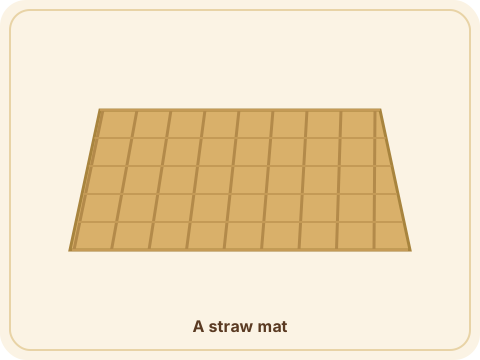
If you had to describe someone in one word after ten years of living with them, what would it be? His companions, who lived with him day and night, kept coming back to one thing: his character, his khuluq.
This course is the shama’il: his manners, habits and ways, drawn from the sound reports. It is the Seerah in close-up.
Word by word
A tremendous character
- وَإِنَّكَ waʾinnaka indeed, truly (adds certainty to a sentence)
- لَعَلَىٰ laʿalā on, upon, over; against; (with a duty) incumbent on
- خُلُقٍ khuluqin creation, what is created · خلق
- عَظِيمٍۢ ʿaẓīmin great, tremendous, mighty · عظم
And lo! thou art of a tremendous nature.
From the hadith
The best of people
وعن أنس رضي الله عنه قال: كان رسول الله صلى الله عليه وسلم أحسن الناس خلقاً ((متفق عليه)).
Anas (May Allah be pleased with him) reported: The Messenger of Allah (ﷺ) was the best of all the people in behaviour..
Choose Guess first
When ‘A’ishah was asked about his character, what do you think she answered?
Show the answer
She said his character was the Quran. The hadith is next.
From the hadith
His character was the Quran
وَعَن سعد بن هِشَام قَالَ انْطَلَقْتُ إِلَى عَائِشَةَ فَقُلْتُ يَا أُمَّ الْمُؤْمِنِينَ أَنْبِئِينِي عَنْ خُلُقِ رَسُولِ اللَّهِ صَلَّى اللَّهُ عَلَيْهِ وَسَلَّمَ قَالَتْ: أَلَسْتَ تَقْرَأُ الْقُرْآنَ؟ قُلْتُ: بَلَى. قَالَتْ: فَإِنَّ خُلُقَ نَبِيِّ اللَّهِ صَلَّى اللَّهُ عَلَيْهِ وَسَلَّمَ كَانَ الْقُرْآنَ. قُلْتُ: يَا أُمَّ الْمُؤْمِنِينَ أَنْبِئِينِي عَنْ وَتْرِ رَسُولَ اللَّهِ صَلَّى اللَّهُ عَلَيْهِ وَسَلَّمَ فَقَالَتْ: كُنَّا نُعِدُّ لَهُ سِوَاكَهُ وَطَهُورَهُ فَيَبْعَثُهُ اللَّهُ مَا شَاءَ أَنْ يَبْعَثَهُ مِنَ اللَّيْلِ فَيَتَسَوَّكُ وَيَتَوَضَّأُ وَيُصَلِّي تِسْعَ رَكَعَاتٍ لَا يَجْلِسُ فِيهَا إِلَّا فِي الثَّامِنَةِ فَيَذْكُرُ اللَّهَ وَيَحْمَدُهُ وَيَدْعُوهُ ثُمَّ يَنْهَضُ وَلَا يُسَلِّمُ فَيُصَلِّي التَّاسِعَةَ ثُمَّ يَقْعُدُ فَيَذْكُرُ اللَّهَ وَيَحْمَدُهُ وَيَدْعُوهُ ثُمَّ يُسَلِّمُ تَسْلِيمًا يُسْمِعُنَا ثُمَّ يُصَلِّي رَكْعَتَيْنِ بَعْدَمَا يُسَلِّمُ وَهُوَ قَاعد فَتلك إِحْدَى عشرَة رَكْعَة يابني فَلَمَّا أَسَنَّ صَلَّى اللَّهُ عَلَيْهِ وَسَلَّمَ وَأَخَذَ اللَّحْمَ أَوْتَرَ بِسَبْعٍ وَصَنَعَ فِي الرَّكْعَتَيْنِ مِثْلَ صَنِيعِهِ فِي الْأُولَى فَتِلْكَ تِسْعٌ يَا بُنَيَّ وَكَانَ نَبِيُّ اللَّهِ صَلَّى اللَّهُ عَلَيْهِ وَسَلَّمَ إِذَا صَلَّى صَلَاةً أَحَبَّ أَنْ يُدَاوِمَ عَلَيْهَا وَكَانَ إِذَا غَلَبَهُ نَوْمٌ أَوْ وَجَعٌ عَنْ قِيَامِ اللَّيْلِ صَلَّى مِنَ النَّهَارِ ثِنْتَيْ عَشْرَةَ رَكْعَةً وَلَا أَعْلَمُ نَبِيَّ اللَّهِ صَلَّى اللَّهُ عَلَيْهِ وَسَلَّمَ قَرَأَ الْقُرْآنَ كُلَّهُ فِي لَيْلَةٍ وَلَا صَلَّى لَيْلَةً إِلَى الصُّبْحِ وَلَا صَامَ شهرا كَامِلا غير رَمَضَان. رَوَاهُ مُسلم
Sa‘d b. Hisham said: I went to ‘A’isha and said, “Mother of the faithful, tell me about the nature of God’s Messenger.” She asked, “Do you not recite the Qur’an?” On my replying that I certainly did, she said, “The Prophet’s nature was the Qur’an.”* I said, “Mother of the faithful, tell me about the witr of God’s Messenger.” She replied, “I used to prepare his toothstick and his water for ablution, and God would rouse him to the extent He wished during the night. He would use the toothstick, perform ablution, and pray nine rak'as, sitting only during the eighth of them, then he would make mention of God, praise and supplicate Him, then he would get up without uttering the salutation and pray the ninth. After that he would sit, make mention of God, praise and supplicate Him, then utter a salutation loud enough for me to hear. He would then pray two rak'as sitting after uttering the salutation, and that made eleven rak'as, sonny. But when God’s Messenger grew old and became fleshy he observed a witr of seven, doing in the two rak'as, as he had done formerly, and that made nine, sonny. When God’s prophet prayed a prayer he liked to keep on observing it, but when sleep or pain made it impossible for him to get up during the night; he prayed twelve rak'as during the day. I am not aware of God’s prophet having recited the whole Qur’an in a night, or praying through a whole night till morning, or fasting a complete month, except Ramadan.” *i.e. the good characteristics included in the Qur’an were shown by the Prophet in his own life. Muslim transmitted it.
Read
A walking Quran

Asked about his character, ’A’ishah (radiyallahu ’anha) asked the questioner whether he recited the Quran. He did. Then, she said, his character was the Quran.
Everything the Quran asks, patience, honesty, mercy, humility, justice, he lived. To know his character, read the Quran; to see the Quran lived, read his life.
Think about it
A heart moment
His character was the Quran lived. Which teaching of the Quran would you most like people to see in you, without your saying a word?
Only you can see this. It is kept on this device.
Look
A lamp that gives light
Word by word
A lamp spreading light
- وَدَاعِيًا wadāʿiyan
- إِلَى ilā to, towards, until
- ٱللَّهِ allāhi Allah, God: the proper name of the One God
- بِإِذْنِهِۦ biʾidhnihī permission · أذن
- وَسِرَاجًۭا wasirājan
- مُّنِيرًۭا munīran
And as a summoner unto Allah by His permission, and as a lamp that giveth light.
Read
What good character means
An early scholar, 'Abdullah ibn al-Mubarak, summed up good character in three things: a cheerful face, doing good to people, and holding back harm from them.
It is how you treat people when no one is watching and nothing is in it for you. And it is heavy: the Prophet ﷺ taught that nothing weighs more on the scale on the Day of Judgement.
Go deeper: can character change?
Yes. He himself asked Allah in his dua to make his character beautiful. Scholars say character is trained like a muscle: you act patiently until patience becomes you. Start with one habit and keep it.
Sort it
Common mistakes
Sort each statement: right, or a common mistake?
Right
- Character can be trained by practice
A common mistake
- Good character is just being polite
- Worship matters; character is an extra
- Good character means never saying no
Reveal
In one word
Flip each card to see how he was described.
- What Makkah called him before Islam Al-Amin: the trustworthy.
- How ’A’ishah described his character His character was the Quran.
- What the Quran calls him in 33:46 A lamp spreading light.
What would you do?
Pause and choose
Which of his qualities do you most need this week?
- Patience
- Gentleness
- Honesty
- Generosity
- Humility
Match
Words for his character
Match each one with its pair.
- Khuluq Character, nature
- Shama’il Books of his manners and habits
- Akhlaq Good manners and morals
- Uswah hasanah The beautiful example
Show the answer
Khuluq is character, shama'il are the books of his habits, akhlaq are good morals, and uswah hasanah is the beautiful example. These words help you talk about his character.
Choose Check
What did ’A’ishah say his character was?
Show the answer
The Quran. He lived what it teaches, so his life shows us the Quran in action.
Read
For your life
Pick the quality you chose in the poll and plan it: where will you practise it this week, and with whom? A cheerful face at breakfast, holding back a sharp reply at work, a kind word to a stranger. Character is built in small, ordinary moments.
Reveal
The lesson in three lines
Sum up the lesson in your own words first, then tap to check.
- The lesson in one line Those who lived with him kept coming back to one thing: his character. 'A'ishah said his character was the Quran. Good character is a cheerful face, doing good and holding back harm, and it can be learned.
Lesson finished
A tremendous character
You added a stage of the journey to a journey across Arabia.
What you learnt
- His character was the Quran: a lamp that gives light.
- done
- 0
- right first time
- 0
- to review
- 0
Your deed · Try it today
Practise the quality you chose once today, on purpose.
What you kept
Sign in to keep your progress on every device.