
0 kept
Step inside
A row of back gardens
Over the fence
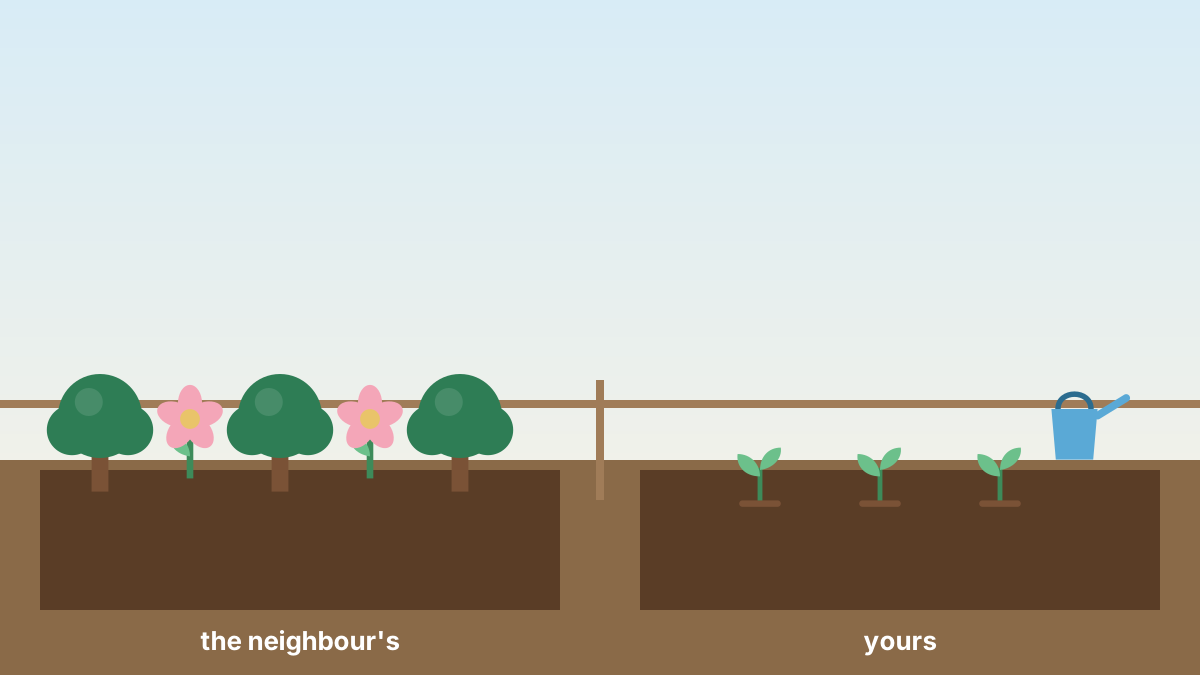
Your neighbour's garden is full of roses. Yours has a few brave daisies. You lean on the fence and look for a long time.
Look
Two gardens over the fence
From the hadith
Two cases
وعن ابن مسعود رضي الله عنه عن النبي صلى الله عليه وسلم قال: "لا حسد إلا فى اثنتين: رجل آتاه الله مالاً، فسلطه على هلكته فى الحق، ورجل آتاه الله حكمة، فهو يقضي بها ويعلمها" ((متفق عليه)).
Ibn Mas'ud (May Allah be pleased with him) reported: The Prophet (ﷺ) said, "Envy is permitted only in two cases: A man whom Allah gives wealth, and he disposes of it rightfully, and a man to whom Allah gives knowledge which he applies and teaches it."
Read
What the hadith teaches
The only "envy" allowed is wishing for good like someone else's, without wanting it taken from them. Scholars call this ghibtah. The hadith names two people worth wishing to be like: one who spends wealth rightly, and one who has knowledge, acts on it and teaches it.
Read
Turning envy into ghibtah
When you feel the sting, turn it in five steps:
- Notice the feeling.
- Bless them: "May Allah bless it for them."
- Ask: how did they get there? What did they do?
- Make dua for them, and for yourself.
- Take one step towards that good in your own life.
The neighbour's roses become a reason to plant your own.
Go deeper: ghibtah in worldly things
Wishing for a lawful worldly thing like someone else's, without wanting theirs gone, is allowed. The scholars still say that contentment is better in worldly things. Ghibtah is most praised in the deen: knowledge, Quran, charity, good character.
Side by side
Hasad or ghibtah?
| Feeling | Hasad (envy) | Ghibtah (healthy wish) |
|---|---|---|
| About their blessing | Wish it gone from them | Wish the same for yourself |
| What you do | Criticise, avoid, hope they fail | Ask Allah, work for it, learn from them |
| About the person | Grudge | Love and dua |
| Result | Burns your good deeds | Can become a good deed |
Choose Which garden?
Which is ghibtah?
-
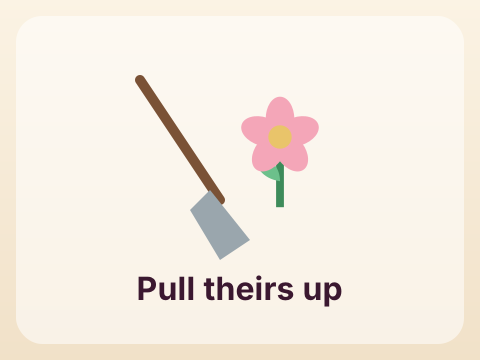 Wanting your neighbour's flowers pulled up
-
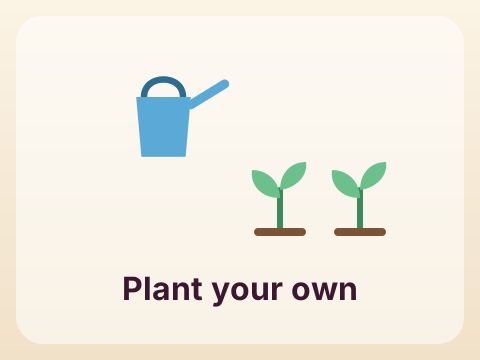 Planting your own because you admire theirs
-
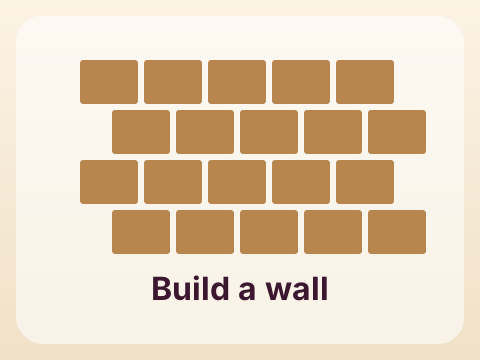 Building a wall so you never see them
Show the answer
Ghibtah plants your own garden; envy wants theirs destroyed.
Conversation
A friend who memorises fast
A friend from your Quran class who is ahead of you
-
Alhamdulillah, I finished Juz 5 today!
- Mabruk! How do you revise? I'd love to learn from you. Ghibtah turns admiration into learning. You wish for the same good without wanting hers taken away.
- You must have lots of free time. A dig hides the sting of envy, and it spoils your friend's happy moment.
-
I revise after Fajr for twenty minutes. Want to join me?
- Yes, let's do it together. The wish became a good deed for both of you.
- No, I'm fine. Not wrong, but you lost a chance to grow.
True or false True or false?
Wishing for a car like your friend's, without wanting his taken away, is envy.
Show the answer
That is a healthy wish (ghibtah). Envy is wanting his blessing gone.
Tap the spot Your own garden
Ghibtah means tending your own garden. Tap the garden you should water.
Show the answer
Your own, with the seedlings and the watering can. Admire the neighbour's garden, then work on yours: that is ghibtah.
What would you do?
Honestly
Whose good news is hardest for you to celebrate?
- A brother or sister
- A close friend
- A colleague
- Someone I only know online
Reveal
Common mistakes
Think of the right answer first, then flip each card.
- "Ghibtah means I must have exactly what they have." Admire the good, then take your own step. Your path may look different.
- Only admiring people for money and looks The best ghibtah is for knowledge, Quran and good character.
- Hiding admiration because it feels like envy Tell them, and ask how they did it. That is ghibtah.
Read
A moment for the heart
When you see someone further along in their deen, it is a sign from Allah that the road is walkable.
Let their light show you the way, not dim your own.
Lesson finished
Envy or a healthy wish?
You added a leaf to a tree whose leaves grow.
What you learnt
- Ghibtah: wishing for good like theirs, without wanting it taken from them.
- The best ghibtah is for knowledge, wealth spent rightly, and good deeds.
- Turn envy in five steps: notice, bless, ask, dua, act.
- done
- 0
- right first time
- 0
- to review
- 0
Your deed · Try it today
Name one person you admire for their deen, and ask them one question about how they do it.
What you kept
Sign in to keep your progress on every device.