
0 kept
Step inside
A home of the Ansar, Madinah
Arriving with nothing
A lamp is lit in a small house. Tonight a stranger from Makkah will share this family’s food and roof.
Look
Arriving with nothing

Imagine moving to a new city with only the clothes you wear. The emigrants had left houses, shops and money in Makkah. How could they live?
He paired each emigrant with one of the Ansar as brothers, the mu’akhah. The Ansar shared their homes, food and work with their new brothers.
Word by word
The Ansar’s welcome
- وَٱلَّذِينَ walladhīna those who (masculine plural)
- تَبَوَّءُو tabawwaʾū
- ٱلدَّارَ ad-dāra home, abode · دور
- وَٱلْإِيمَٰنَ walʾīmāna faith, belief · أمن
- مِن min from, of, out of, some of
- قَبْلِهِمْ qablihim before · قبل
- يُحِبُّونَ yuḥibbūna to love, to like · حبب
- مَنْ man who, whoever, the one who
- هَاجَرَ hājara
- إِلَيْهِمْ ilayhim to, towards, until
- وَلَا walā no, not; (before a command) do not
- يَجِدُونَ yajidūna to find · وجد
- فِى fī in, inside; about, concerning
- صُدُورِهِمْ ṣudūrihim chest, breast; heart (plural sudur) · صدر
- حَاجَةًۭ ḥājatan
- مِّمَّآ mimmā from, of, out of, some of
- أُوتُوا۟ ūtū to give · أتي
- وَيُؤْثِرُونَ wayuʾthirūna
- عَلَىٰٓ ʿalā on, upon, over; against; (with a duty) incumbent on
- أَنفُسِهِمْ anfusihim soul, self, person; (anfusahum) themselves · نفس
- وَلَوْ walaw if (only), even if (for what did not or will not happen)
- كَانَ kāna to be, was; (kana yaf'al) used to do · كون
- بِهِمْ bihim they, them (as a word of its own or joined to the end of a word)
- خَصَاصَةٌۭ khaṣāṣatun
- وَمَن waman who, whoever, the one who
- يُوقَ yūqa
- شُحَّ shuḥḥa
- نَفْسِهِۦ nafsihī soul, self, person; (anfusahum) themselves · نفس
- فَأُو۟لَٰٓئِكَ faʾulāʾika those
- هُمُ humu they, them (as a word of its own or joined to the end of a word)
- ٱلْمُفْلِحُونَ al-mufliḥūna
Those who entered the city and the faith before them love those who flee unto them for refuge, and find in their breasts no need for that which hath been given them, but prefer (the fugitives) above themselves though poverty become their lot. And whoso is saved from his own avarice - such are they who are successful.
Look
Preferring others

This verse praises the people already settled in the faith in Madinah. They love those who emigrate to them, feel no envy for what is given to them, and prefer them over themselves even when they are in need.
Sa’d ibn ar-Rabi’ (radiyallahu ’anhu), the reports say, offered his brother ’Abd ar-Rahman ibn ’Awf half his wealth. ’Abd ar-Rahman thanked him and asked only to be shown the market. He was soon trading on his own.
True or false Check
‘Abd ar-Rahman ibn ‘Awf accepted half of Sa‘d’s wealth.
Show the answer
He thanked Sa‘d and asked to be shown the market instead. He wanted to earn his own living.
From the hadith
Brothers in practice
وعن أبي جحيفة وهب بن عبد الله رضي الله عنه قال: آخى النبي صلى الله عليه وسلم بين سلمان وأبى الدرداء ، فزار سلمان أبا الدرداء، فرأى أم الدرداء متبذلة فقال: ما شأنك قالت: أخوك أبو الدرداء ليس له حاجة في الدنيا، فجاء أبو الدراداء فصنع له طعاماً، فقال له: كل فإنى صائم، قال: ما أنا بآكل حتى تأكل، فأكل، فلما كان الليل ذهب أبو الدرداء يقوم فقال له: نم، فنام، ثم ذهب يقوم فقال له : نم، فلما كان من آخر الليل قال سلمان: قم الآن: فصليا جميعاً، فقال له سلمان: إن لربك عليك حقاً، وإن لنفسك عليك حقاً، ولأهلك عليك حقاً، فأعط كل ذى حق حقه، فأتى النبي صلى الله عليه وسلم فذكر ذلك له، فقال النبي صلى الله عليه وسلم "صدق سلمان" ((رواه البخاري)).
Abu Juhaifah (May Allah be pleased with him) reported: The Prophet (ﷺ) made a bond of brotherhood between Salman and Abud-Darda'. Salman paid a visit to Abud-Darda' and found Umm Darda' (his wife) dressed in shabby clothes and asked her why she was in that state. She replied: "Your brother Abud-Darda' is not interested in (the luxuries of) this world. In the meantime Abud-Darda' came in and prepared a meal for Salman. Salman requested Abud-Darda' to eat (with him) but Abud-Darda' said: "I am fasting." Salman said: "I am not going to eat unless you eat." So, Abud-Darda' ate (with Salman). When it was night and (a part of the night passed), Abud-Darda' got up (to offer the night prayer) but Salman asked him to sleep and Abud-Darda' slept. After some time Abud-Darda' again got up but Salman asked him to sleep. When it was the last hours of the night, Salman asked him to get up and both of them offered (Tahajjud) prayer. Then Salman told Abud-Darda': "You owe a duty to your Rubb, you owe a duty to your body; you owe a duty to your family; so you should give to every one his due. Abud-Darda' came to the Prophet (ﷺ) and reported the whole story. Prophet (ﷺ) said, "Salman is right"..
Read
A brother who tells you the truth

Here Salman al-Farisi visits his brother Abu ad-Darda’ and finds him neglecting his family and his own body for worship. Salman tells him that his Lord, his body and his family all have rights over him. The Prophet ﷺ agreed with Salman.
Brotherhood is not only sharing food. It is caring enough to give honest advice.
Choose Check
What did Salman remind Abu ad-Darda’ of?
Show the answer
Salman did not tell him to stop worship, but to give each its right. The Prophet ﷺ agreed.
From the hadith
Like a building
وعن أبي موسى رضي الله عنه قال: قال رسول الله صلى الله عليه وسلم " المؤمن للمؤمن كالبنيان يشد بعضه بعضًا" وشبك بين أصابعه . ((متفق عليه)) .
Abu Musa (May Allah be pleased with him) reported: Messenger of Allah (ﷺ) said, "The relationship of the believer with another believer is like (the bricks of) a building, each strengthens the other." He (ﷺ) illustrated this by interlacing the fingers of both his hands..
Read
Brothers who inherited

The bond was so close that at first the paired brothers inherited from each other. After Badr, the Quran returned inheritance to blood relatives, and the brothers stayed brothers in love, help and advice.
The reports differ on the number of pairs; many say about forty-five, ninety men in all.
Reveal
Common mistakes
Flip each card: what people often get wrong, and what is right.
- “Brotherhood meant only sharing money.” It meant homes, work, time and honest advice too.
- “The emigrants lived on charity.” Many found work and traded; ‘Abd ar-Rahman asked for the market.
- “Brothers in faith still inherit from each other.” That was early on; the Quran later gave inheritance to relatives.
Read
Help that builds dignity
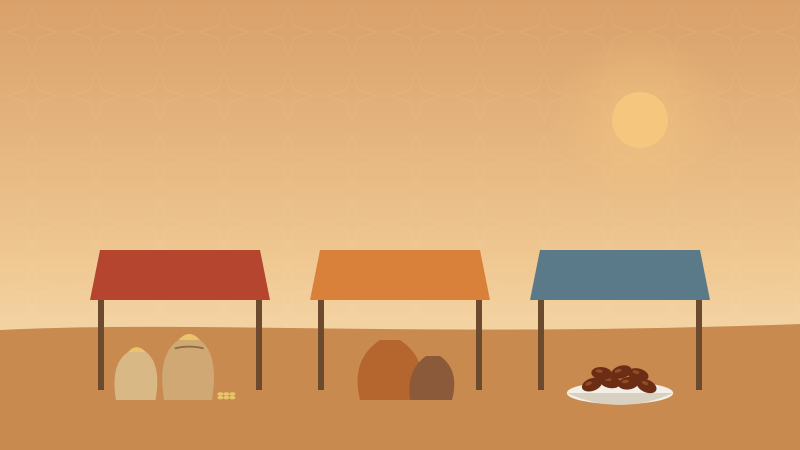
Sa'd's offer was generous, and 'Abd ar-Rahman's answer was wise. He took help to start, not to live on. Within a short time he had his own trade, and later he gave more in charity than almost anyone in Madinah.
The best help gives people a way to stand on their own feet.
Go deeper: helping someone start
Zakat may be given to a poor person, who may use it to buy the tools of a trade or stock for a small shop. A loan with no interest, qard hasan, is another way the Sunnah encourages. Both help a person stand rather than wait.
Guess
How many brothers?
He joined emigrants and Ansar as brothers in pairs. About how many pairs, by the reports?
Show the answer
45 pairs About forty-five pairs, some say fifty: ninety or a hundred men made brothers.
Match
The brothers
Match each one with its pair.
- Sa’d ibn ar-Rabi’ Offered half his wealth
- ’Abd ar-Rahman ibn ’Awf Asked to be shown the market
- Salman Advised his brother to give each its right
- Abu ad-Darda’ Salman’s brother in faith
Show the answer
Sa'd offered half his wealth, 'Abd ar-Rahman asked to be shown the market, and Salman advised his brother to give each right its due. The brotherhood joined strangers into family.
True or false Check
The Ansar shared their homes and food with the emigrants.
Show the answer
The Quran praises them for preferring the emigrants over themselves.
Read
For your life
Pick one person to be a brother or sister to in practice: a new Muslim, a student far from home, a widow, a refugee family. Help them find work, a doctor, a school, a friend. And be the friend who gives honest advice gently, as Salman did.
Think about it
A heart moment
The Ansar shared their homes with strangers and felt no envy. Is there anything you hold back from others that you could share this week?
Only you can see this. It is kept on this device.
Reveal
The lesson in three lines
Sum up the lesson in your own words first, then tap to check.
- The lesson in one line He paired each emigrant with one of the Ansar as brothers. The Ansar shared homes and wealth, and the emigrants worked to stand on their own. Brotherhood meant food, work and honest advice.
Lesson finished
Brothers in faith
You added a stage of the journey to a journey across Arabia.
What you learnt
- Brotherhood in faith turned strangers into family who shared homes and truth.
- done
- 0
- right first time
- 0
- to review
- 0
Your deed · Try it today
Do one practical favour today for a Muslim brother or sister who is new or alone.
What you kept
Sign in to keep your progress on every device.