
0 gardé
Entre dans la scène
From two to four
Once you can pray Fajr, Dhuhr is the same prayer with two more rak'ahs added. The new parts are a short first sitting after two rak'ahs, and two more rak'ahs in which, in a fard prayer, you recite only al-Fatihah.
Lire
What changes from two to four
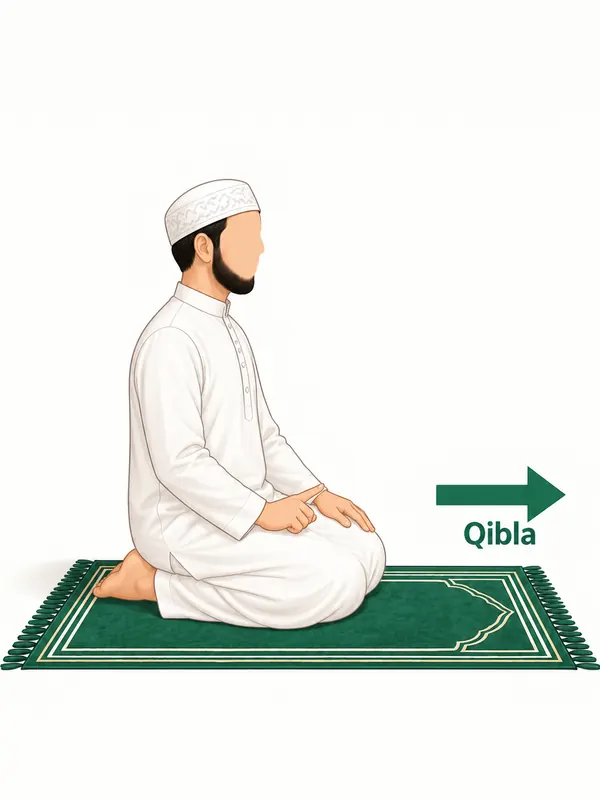
Rak'ahs one and two are as in Fajr. After the second sujud of rak'ah two, sit for the first tashahhud only, up to ʿabduhu wa rasūluh, then stand with Allāhu akbar.
In rak'ahs three and four of a fard, recite al-Fatihah only, with no surah. Then the last sitting: tashahhud, blessings, dua and salam.
Go deeper: four-rak‘ah sunnah prayers
In a sunnah or voluntary prayer of four rak'ahs, recite a surah after al-Fatihah in all four. The first sitting is still kept.
Regarder
Watch: a four-rak'ah prayer
Mettre en ordre
Build a four-rak'ah prayer
Mettez-les dans le bon ordre.
- Rak'ah 1: al-Fatihah and a surah, ruku, two sujood
- Rak'ah 2: al-Fatihah and a surah, ruku, two sujood
- First sitting: at-Tahiyyāt only, then stand
- Rak'ah 3: al-Fatihah only, ruku, two sujood
- Rak'ah 4: al-Fatihah only, ruku, two sujood
- Final sitting: at-Tahiyyāt, the ṣalawāt, a dua
- Salam to the right, then to the left
Voir la réponse
Maghrib follows the same plan with one rak'ah after the first sitting instead of two.
Lire
Maghrib: three
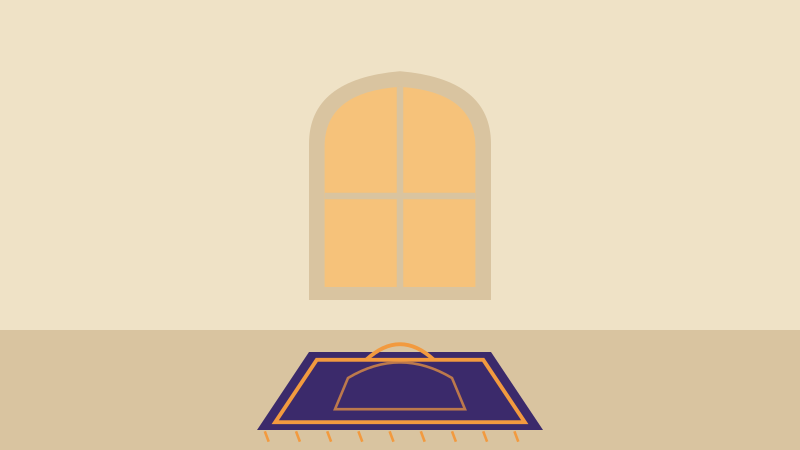
Maghrib follows the same pattern with three rak'ahs: the first sitting after two, then one more rak'ah with al-Fatihah only, then the last sitting.
Once you can pray Fajr, Maghrib and Dhuhr, you can pray all five: 'Asr and 'Isha have the shape of Dhuhr.
Dua
The opening praise (thanā')
At the beginning of prayer (Thanā')
سُبْحَانَكَ اللَّهُمَّ وَبِحَمْدِكَ، وَتَبَارَكَ اسْمُكَ، وَتَعَالَى جَدُّكَ، وَلَا إِلَهَ غَيْرُكَ
SubḥānakaLlāhumma wa biḥamdik, wa tabārakasmuK, wa ta'ālā jadduk, wa lā ilāha ghayruk
Glory be to You O Allāh and all praise, blessed is Your name, exalted is Your majesty, and there is no god but You.
Du hadith
The tashahhud (at-Tahiyyāt) of Ibn Mas'ud
وَعَنْ عَبْدِ اللَّهِ بْنِ مَسْعُودٍ قَالَ: كُنَّا إِذَا صَلَّيْنَا مَعَ النَّبِيِّ صَلَّى اللَّهُ عَلَيْهِ وَسَلَّمَ قُلْنَا السَّلَامُ عَلَى اللَّهِ قبل عباده السَّلَام على جِبْرِيل السَّلَام على مِيكَائِيل السَّلَام على فلَان وَفُلَان فَلَمَّا انْصَرَفَ النَّبِيُّ صَلَّى اللَّهُ عَلَيْهِ وَسَلَّمَ أَقْبَلَ عَلَيْنَا بِوَجْهِهِ قَالَ: «لَا تَقُولُوا السَّلَامُ عَلَى اللَّهِ فَإِنَّ اللَّهَ هُوَ السَّلَامُ فَإِذَا جَلَسَ أَحَدُكُمْ فِي الصَّلَاةِ فَلْيَقُلِ التَّحِيَّاتُ لِلَّهِ وَالصَّلَوَاتُ وَالطَّيِّبَاتُ السَّلَامُ عَلَيْكَ أَيُّهَا النَّبِيُّ وَرَحْمَةُ اللَّهِ وَبَرَكَاتُهُ السَّلَامُ عَلَيْنَا وَعَلَى عِبَادِ اللَّهِ الصَّالِحِينَ فَإِنَّهُ إِذَا قَالَ ذَلِكَ أَصَابَ كُلَّ عَبْدٍ صَالِحٍ فِي السَّمَاءِ وَالْأَرْضِ أَشْهَدُ أَنْ لَا إِلَهَ إِلَّا اللَّهُ وَأَشْهَدُ أَنَّ مُحَمَّدًا عَبْدُهُ وَرَسُولُهُ ثُمَّ لْيَتَخَيَّرْ مِنَ الدُّعَاءِ أَعْجَبَهُ إِلَيْهِ فيدعوه»
‘Abdallah b. Mas'ud said: When we prayed with the Prophet we said,* “Peace be to God before it is supplicated for His servants; peace be to Gabriel; peace be to Michael; peace be to so and so.” When the Prophet finished he turned his face to us and said: Do not say, “Peace be to God”, for God Himself is Peace. When one of you sits during the prayer he should say, “The adorations of the tongue, acts of worship and all good things are due to God. Peace be upon you, O Prophet, and God’s mercy and blessings. Peace be upon us and upon God’s upright servants (for when he says that it reaches every upright servant in heaven and earth). I testify that there is no god but God, and I testify that Muhammad is His servant and Messenger.” Then he may choose any supplication which pleases him and offer it. * I.e. at the tashahhud. (Bukhari and Muslim.)
Lire
Learning the tashahhud
The tashahhud is the longest thing you learn for salah. Break it into five short pieces and learn one a day, saying it in every sitting as you go.
It is the version of Ibn Mas'ud radiyallahu 'anhu, shown above. Learn it from a teacher or a recording so that the words are right.
Révéler
What does the hadith teach?
Think about it first, then open the card.
- The tashahhud we recite Scholars recite the tashahhud taught by 'Abdullah ibn Mas'ud radiyallahu 'anhu, shown above from the stored hadith. Learn it a line at a time with your teacher or the Salah course audio.
Lire
Aloud or quietly?

In Fajr, and the first two rak'ahs of Maghrib and 'Isha, the imam recites aloud. In Dhuhr and 'Asr, and in every rak'ah after the second, the recitation is quiet.
Praying alone, a man may recite aloud or quietly in the loud prayers. A woman recites quietly in all of them.
Du hadith
The ṣalawāt on the Prophet ﷺ
وَعَن أبي حميد السَّاعِدِيِّ قَالَ: قَالُوا: يَا رَسُولَ اللَّهِ كَيْفَ نصلي عَلَيْك؟ فَقَالَ رَسُولُ اللَّهِ صَلَّى اللَّهُ عَلَيْهِ وَسَلَّمَ: " قُولُوا: اللَّهُمَّ صلى الله عَلَيْهِ وَسلم عَلَى مُحَمَّدٍ وَأَزْوَاجِهِ وَذُرِّيَّتِهِ كَمَا صَلَّيْتَ عَلَى آلِ إِبْرَاهِيمَ وَبَارِكْ عَلَى مُحَمَّدٍ وَأَزْوَاجِهِ وَذُرِّيَّتِهِ كَمَا بَارَكْتَ عَلَى آلِ إِبْرَاهِيمَ إِنَّكَ حُمَيْدٌ مجيد "
Abu Humaid as-Sa‘idi said that when some people asked God’s Messenger how they should invoke blessings on him he told them to say, “O God, bless Muhammad, his wives and his offspring as Thou didst bless Abraham; and grant favours to Muhammad, his wives and his offspring as Thou didst grant favours to the family of Abraham. Thou art indeed praiseworthy and glorious.” (Bukhari and Muslim.)
Du hadith
A dua before the salam
وعن أبي بكر الصديق رضي الله عنه أنه قال لرسول الله صلى الله عليه وسلم: علمني دعاء أدعو به في صلاتي، قال: "قل: اللهم إني ظلمت نفسي ظلمًا كثيرًا، ولا يغفر الذنوب إلا أنت، فاغفر لي مغفرة من عندك، وارحمني، إنك أنت الغفور الرحيم" ((متفق عليه)). وفي رواية: "وفي بيتي" وروي: "ظلمًا كثيرًا" وروي "كبيرًا" بالثاء المثلثة وبالباء الموحدة، فينبغي أن يجمع بينهما، فقال: كثيرًا كبيرًا.
Abu Bakr As-Siddiq (May Allah be pleased with him) reported: I requested the Messenger of Allah (ﷺ) to teach me a supplication which I could recite in my Salat (prayer). Thereupon he said, "Recite: 'Allahumma inni zalamtu nafsi zulman kathiran, wa la yaghfirudh- dhunuba illa Anta, faghfir li maghfiratan min 'indika, warhamni, innaka Antal-Ghafur-ur-Rahim (O Allah! I have considerably wronged myself. There is none to forgive the sins but You. So grant me pardon and have mercy on me. You are the Most Forgiving, the Most Compassionate)."'
Lire
The blessings and the dua
In the last sitting, after the tashahhud, send blessings on the Prophet ﷺ with the words shown above. Then make a short dua in Arabic, such as the one taught to Abu Bakr radiyallahu 'anhu.
Then give the salam. If you do not know these yet, the prayer is still valid; learn them next, a line at a time.
Lire
The first sitting, kept short
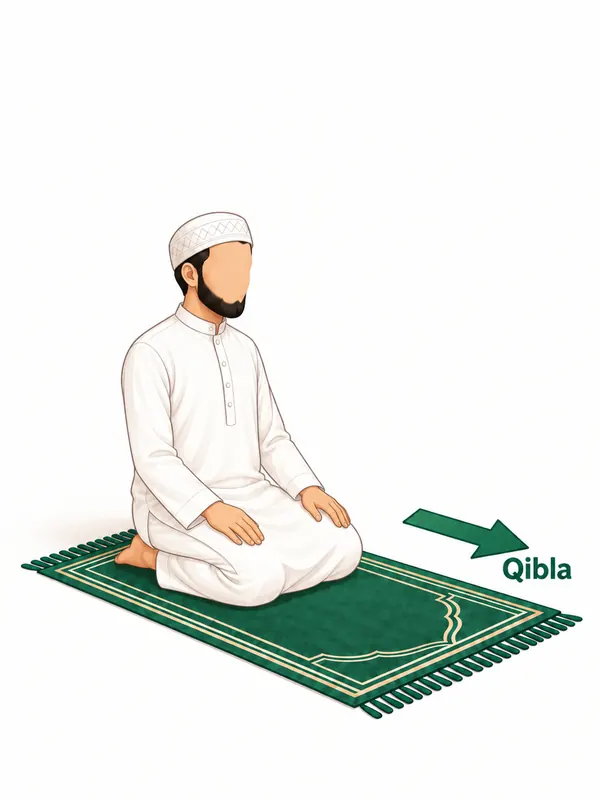
In the first sitting, stop after the tashahhud and stand. If you carry on into the blessings on the Prophet ﷺ by mistake, you have delayed a wajib, and sajdah sahw is needed at the end.
A good habit: as soon as you reach ʿabduhu wa rasūluh in the first sitting, say Allāhu akbar and rise.
Trie
A surah after al-Fatihah?
Place each rak‘ah.
Al-Fatihah and a surah
- Rak‘ah 1 of the fard of Dhuhr
- Rak‘ah 2 of Maghrib
- Rak‘ah 3 of witr
- Rak‘ah 3 of a four-rak‘ah sunnah
Al-Fatihah only
- Rak‘ah 3 of the fard of 'Isha
- Rak‘ah 4 of the fard of 'Asr
Révéler
Common mistakes
Flip each card.
- A surah in rak'ah three of a fard Not needed, and if it happens by mistake no sajdah sahw is due.
- The blessings in the first sitting Delays the standing: sajdah sahw at the end.
- Losing count of the rak‘ahs Glance at your fingers or a counter at first; the next level shows what to do when you are unsure.
Choisir Check your understanding
In the third rak'ah of the fard of Asr, what do you recite in the standing?
Voir la réponse
In the third and fourth rak'ahs of a fard prayer, al-Fatihah alone is recited.
Choisir The first sitting
In the first sitting of a four-rak'ah prayer, what do you recite?
Voir la réponse
The first sitting is short: the tashahhud only. The ṣalawāt and dua belong to the final sitting.
Révéler
In one line
Sum up the lesson in your own words first, then tap to check.
- The lesson in one line Four rak'ahs: two as in Fajr, a short first sitting, two more with al-Fatihah only, then the last sitting and salam; Maghrib has three.
Leçon terminée
Four rak'ahs and what you recite
Vous avez ajouté un rayon de lumière à un lever de soleil qui s'éclaire leçon après leçon.
Ce que vous avez appris
- faits
- 0
- juste du premier coup
- 0
- à revoir
- 0
Votre action · Essayez aujourd'hui
Learn one line of the tashahhud today, and say it in the sitting of your next prayer.
Ce que vous avez gardé
Connectez-vous pour garder votre progression sur tous vos appareils.