
0 guardado
Entra en la escena
A museum gallery of Islamic art
An empty frame
In a busy museum, one gallery is quiet: carpets, bowls, tiles, books. Thousands of objects, and almost none of them show a face.
Mira
Two kinds of picture
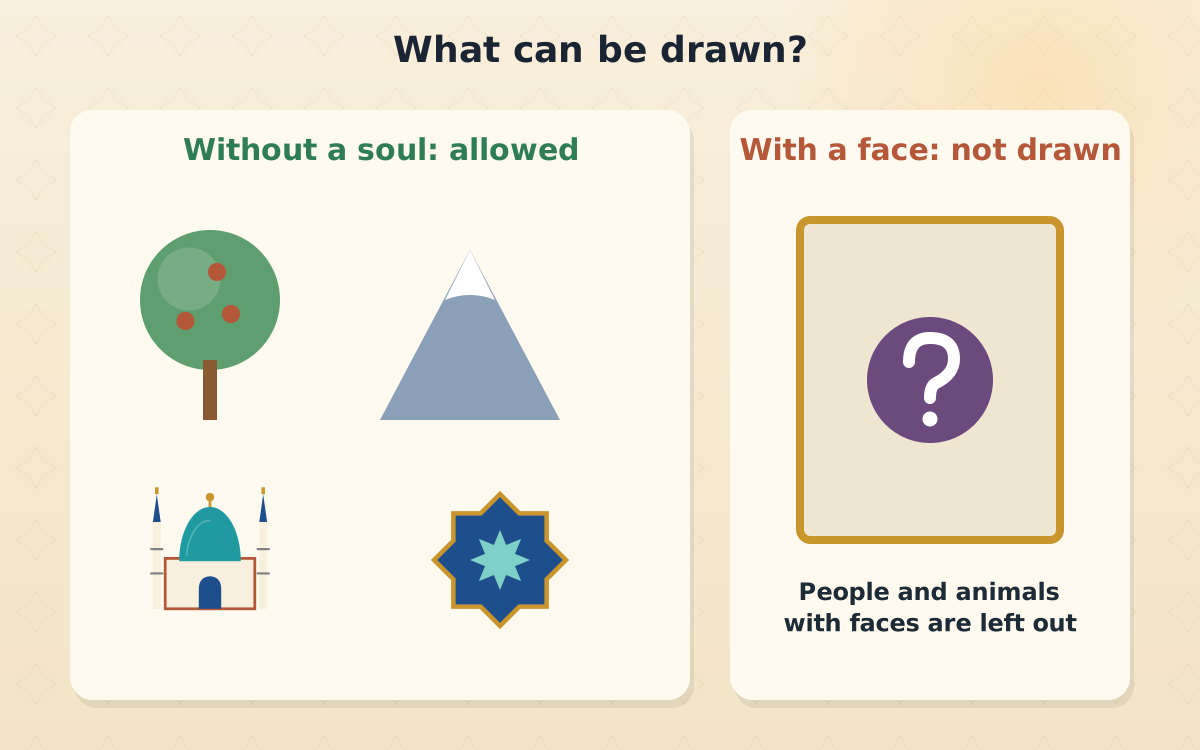
Muslim scholars draw a line between two kinds of picture. Things without a soul, such as trees, mountains, buildings and patterns, may be drawn. Living beings, people and animals with their faces, are not drawn or carved.
This line, more than anything else, is why Islamic art looks the way it does.
Del hadiz
Let them make a grain of barley
وعن أبي هريرة رضي الله عنه قال: سمعت رسول الله صلى الله عليه وسلم يقول: "قال الله تعالى: {ومن أظلم ممن ذهب يخلق كخلقي! فليخلقوا ذرة أو ليخلقوا حبة، أو ليخلقوا شعيرة" ((متفق عليه)).
Abu Hurairah (May Allah be pleased with him) said: The Messenger of Allah (ﷺ) said, "The Almighty Allah said: 'Who is more an oppressor than him who goes to create like My creation? Let him make an ant or a grain of corn or a grain of barley."'
Elige Check
In this hadith, what are image-makers challenged to create?
Ver la respuesta
Only Allah gives life. The challenge teaches humility.
Mira
Only Allah gives life
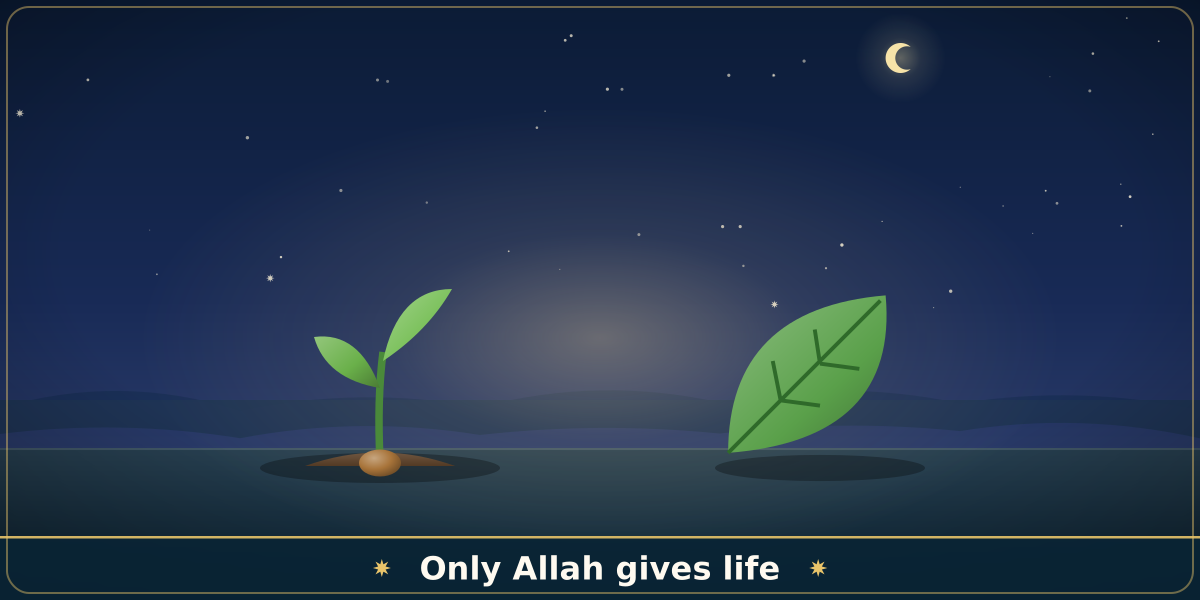
In this stored hadith, Allah asks who could be more wrong than one who tries to create as He creates. He challenges them to make even the smallest living thing, or a single grain. The point is humility: a painter can copy a shape, but only Allah gives life.
So the Muslim maker leaves living faces to their Maker, and puts their skill into what can be made without that claim.
Del hadiz
Draw trees instead
وعن ابن عباس رضي الله عنهما قال: سمعت رسول الله صلى الله عليه وسلم يقول: "كل مصور في النار يجعل له بكل صورة صورها نفس فيعذبه في جهنم" قال ابن عباس: فإن كنت لابد فاعلا، فاصنع الشجر وما لا ورح فيه" ((متفق عليه)).
Ibn 'Abbas (May Allah be pleased with them) said: I heard the Messenger of Allah (ﷺ) saying, "Every painter will go to Hell, and for every portrait he has made, there will be appointed one who will chastise him in the Hell." Ibn 'Abbas said: If you have to do it, draw pictures of trees and other inanimate things..
Revelar
Tap to reveal
Tap each card: what does this stored hadith add?
- The warning The Prophet ﷺ warned the makers of pictures of living beings in the strongest words.
- The advice of Ibn ‘Abbas, radiyallahu ‘anhuma If you must draw, draw trees and things that have no soul.
- What artists did They turned to trees, flowers, stars and letters, and made them glorious.
Clasifica
Sort them
Allowed to draw, or not?
Allowed
- A cypress tree
- A snowy mountain
- A masjid with two minarets
- A star pattern
Not drawn
- A portrait with a face
Verdadero o falso True or false?
Muslims avoid pictures of living beings because they think beauty is wrong.
Ver la respuesta
Not at all: Allah loves beauty. The reason is that giving form and life belongs to Allah, and pictures of living beings were once the doorway to idols.
Lee
What artists did instead
Muslim makers turned to stars, letters, vines, buildings and landscapes, and filled the world with them.
History is honest here: some royal courts, in Persia and Mughal India above all, did paint people and animals in books. The scholars did not approve, and the masjids never used them.
Go deeper: lighter cases
Scholars treat some cases more lightly: a picture cut so that it no longer looks alive, or one on a rug that is walked on. Such details are for your scholar; the rule for making and displaying stays.
Piénsalo
Reflect
What do you feel when you look at a great star pattern with no faces in it? Write a few words.
Solo tú puedes verlo. Se guarda en este dispositivo.
Revelar
Common mistakes
Flip each card: what people often get wrong, and what is right.
- “Every Muslim court kept this rule.” Some courts painted figures; the scholars did not approve.
- “Trees and mountains are not allowed either.” Things without a soul may be drawn.
- “The rule is only about statues.” It covers pictures of living beings too.
Lee
For your life
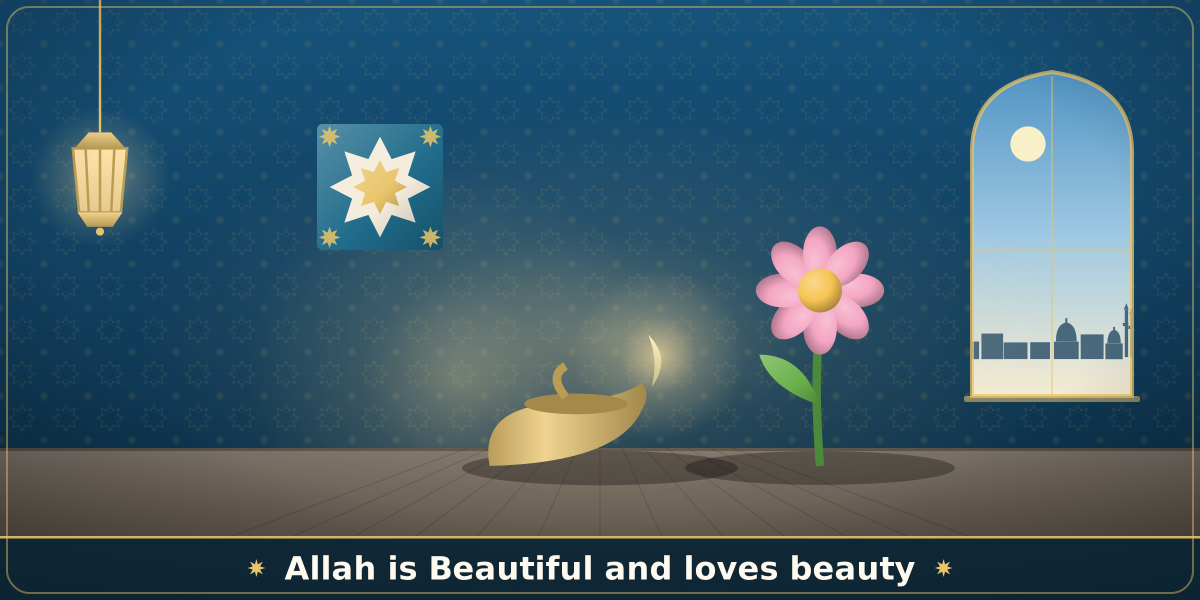
When you buy art or a gift, choose patterns, calligraphy, landscapes or buildings. They are beautiful, lasting and free of doubt.
Revelar
The lesson in three lines
Sum up the lesson in your own words first, then tap to check.
- The lesson in one line Scholars divide pictures into two kinds: living beings, which are not made or displayed, and things without a soul, which are open to the artist. Only Allah gives life. Artists turned to stars, letters and gardens instead.
Lección terminada
What the art leaves out
Has añadido un siglo a un mapa cuyas fronteras cambian.
Lo que aprendiste
- Living faces are left to their Maker; trees, stars and letters are open to the artist.
- hechos
- 0
- bien a la primera
- 0
- para repasar
- 0
Tu obra · Pruébalo hoy
Notice one picture of a living being in your home today and ask yourself whether it needs to be on display.
Lo que guardaste
Inicia sesión para guardar tu progreso en todos tus dispositivos.