
0 guardado
Entra en la escena
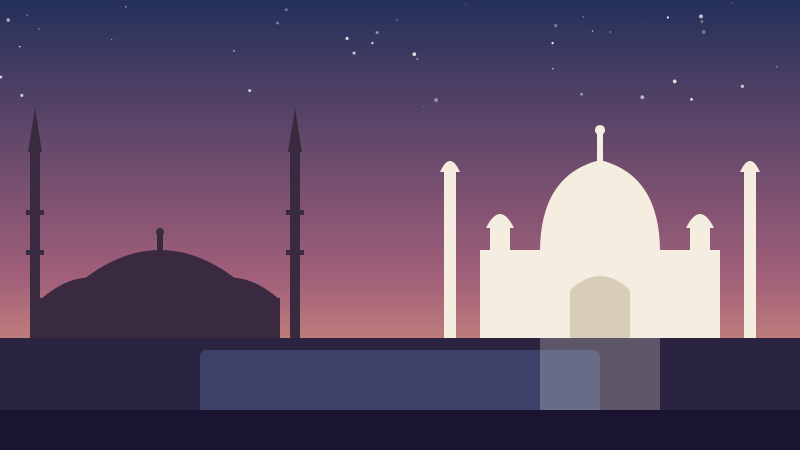
From Anatolia to Agra
Anatolia, about 1300
Domes and pencil minarets at dusk beside a white marble tomb. Three great empires are about to rise.
Mira
Anatolia, about 1300

On the edge of the Byzantine world, in north-west Anatolia, a Turkish chief named Osman leads a small band of horsemen. His state is one of many little emirates left after the Seljuks and the Mongols.
His descendants, the Osmanli, Ottomans, would rule for more than six hundred years.
Mira
Watch: the Ottomans, Safavids and Mughals
Línea del tiempo
The Ottoman rise
-
about 1299
Osman
A small frontier state in Anatolia.
⌖ Söğüt -
1326
Bursa
The first great Ottoman capital.
⌖ Bursa -
about 1361–1369
Edirne
The Ottomans cross into Europe.
⌖ Edirne -
1402
Ankara
Timur defeats Sultan Bayezid I; the state nearly falls apart.
⌖ Ankara -
1453
Constantinople
Mehmed II, aged 21, takes the city.
⌖ Istanbul -
1516–1517
Syria, Egypt, the Hijaz
Selim I defeats the Mamluks.
⌖ Cairo -
1520–1566
Suleyman
The empire at its height.
⌖ Istanbul
Lee
29 May 1453

After a siege of about seven weeks, Mehmed II entered Constantinople. As was the custom of war then, the city was plundered for a time. Then Mehmed made it his capital, Istanbul, and brought people back to live in it.
The great church of Hagia Sophia became a mosque. Mehmed also named a new Orthodox patriarch and let the Christians keep their church organisation.
Mira

Elige Check
What did Mehmed II do with the city after 1453?
Ver la respuesta
He rebuilt and repeopled it, and it stayed the Ottoman capital for nearly five centuries.
Lee
Mehmed’s Istanbul
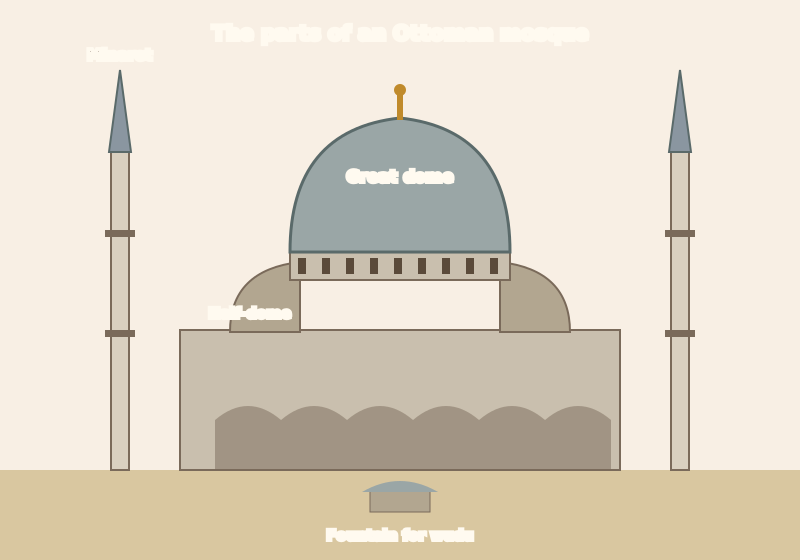
Mehmed was twenty-one when he took the city. He named a new Orthodox patriarch to lead the Christians, invited Jews, Armenians and Muslims to settle, and built a great mosque with schools, a hospital and a soup kitchen.
Outside the walls he built a mosque at the tomb of Abu Ayyub al-Ansari (radiyallahu ’anhu), the companion who had died during an early Muslim siege of the city.
Go deeper: the Arab lands join
In 1516 and 1517 Selim I defeated the Mamluks and took Syria, Egypt and the Hijaz. From then on the Ottoman sultans held Makkah and Madinah, and the empire was as much Arab as Turkish.
Adivina
Six centuries
The Ottoman state lasted from about 1299 to 1922. About how many years is that?
Ver la respuesta
623 years About 620 years: one of the longest-lasting states in history.
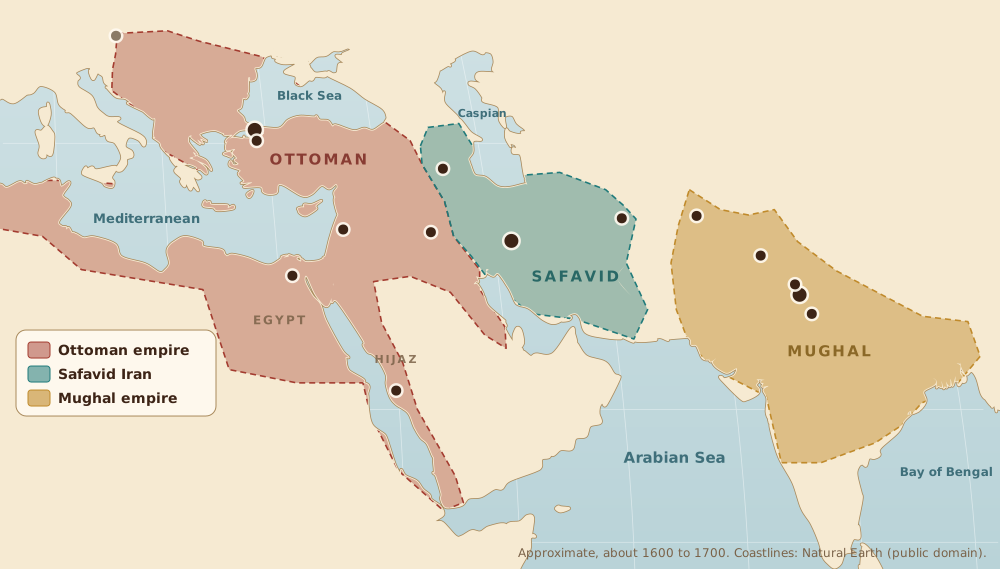
Toca el lugar Find the capital
Tap Istanbul.
Ver la respuesta
Istanbul sits on the strait between Europe and Asia.
Ordena
Put the events in order
Ponlos en el orden correcto.
- Osman’s small state
- Bursa becomes the capital
- Timur defeats Bayezid at Ankara
- Constantinople is taken
- Selim I takes Egypt
Ver la respuesta
Osman's small state about 1299, Bursa the capital in 1326, Timur's victory at Ankara in 1402, Constantinople in 1453, and Egypt in 1517.
Elige Check
Who took Constantinople in 1453?
Ver la respuesta
He was 21. The city became Istanbul, the Ottoman capital.
Piénsalo
From small beginnings
The Ottomans began as a small frontier state. What small good beginning in your life could grow, with patience?
Solo tú puedes verlo. Se guarda en este dispositivo.
Revelar
Common mistakes
Flip each card: what people often get wrong, and what is right.
- “The Ottomans were Arabs.” They were Turks from Anatolia, ruling many peoples.
- “Constantinople fell in a day.” After a siege of about seven weeks.
- “The empire was just Turkey.” It reached the Balkans, the Arab lands and North Africa.
Lee
For your life
Mehmed was twenty-one. Young people can carry great things when they are trusted and guided. Give the young in your family or masjid a real task this month, such as running a class, a stall or the iftar rota, and stand behind them.
Revelar
The lesson in three lines
Sum up the lesson in your own words first, then tap to check.
- The lesson in one line Osman’s small frontier state grew into the Ottoman Empire. Mehmed II took Constantinople in 1453 and made it Istanbul, and Selim I added Egypt and the Hijaz in 1517. It lasted about six centuries.
Lección terminada
A frontier state becomes an empire
Has añadido un siglo a un mapa cuyas fronteras cambian.
Lo que aprendiste
- A small frontier state became the Ottoman Empire and took Constantinople in 1453.
- hechos
- 0
- bien a la primera
- 0
- para repasar
- 0
Tu obra · Pruébalo hoy
Start one small good habit today and plan to keep it for years.
Lo que guardaste
Inicia sesión para guardar tu progreso en todos tus dispositivos.