
0 guardado
Entra en la escena
A knee operation
After surgery, Hana cannot kneel or stand for long. She is afraid she will have to stop praying for weeks. She does not. Salah adapts to the body; it never stops while the mind is clear.
Del hadiz
Standing, sitting, lying
وَعَنْ عِمْرَانَ بْنِ حُصَيْنٍ قَالَ: قَالَ رَسُولُ اللَّهِ صَلَّى اللَّهُ عَلَيْهِ وَسَلَّمَ: «صَلَّى اللَّهُ عَلَيْهِ وَسلم قَائِمًا فَإِنْ لَمْ تَسْتَطِعْ فَقَاعِدًا فَإِنْ لَمْ تستطع فعلى جنب» . رَوَاهُ البُخَارِيّ
‘Imran b. Husain reported God’s Messenger as saying, “Pray standing, but if you are unable, do it sitting; and if you are unable to do that, do it lying on your side.” Bukhari transmitted it.
Mira
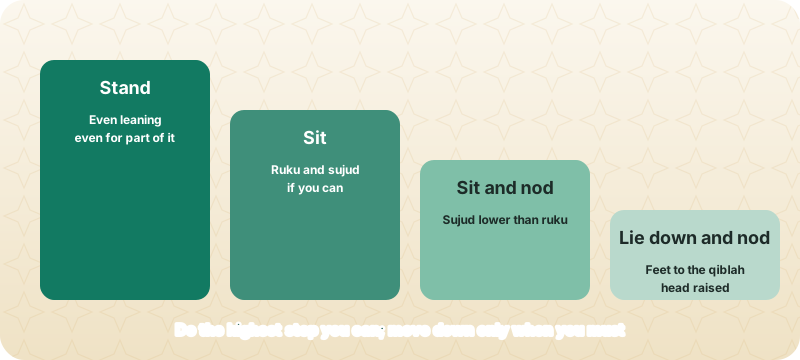
The ladder of ease
Revelar
Think first, then tap the card.
- The steps Stand if you can, even leaning on a wall or a stick, even for part of the recitation. If you cannot, sit however is comfortable (like the tashahhud is best), with ruku and sujud as normal. If you cannot bow and prostrate, sit and nod: a small nod for ruku, a deeper one for sujud. If you cannot sit, lie down and nod.
Lee
How to sit and nod

Sit in the way that is easiest: as in the tashahhud if you can, cross-legged if not. For ruku, bend the head and back forward a little; for sujood, bend lower than for ruku.
Do not raise a pillow or a stool to your forehead; it is disliked. Simply nod. Recite and say the tasbihs as normal.
On a chair, keep the feet on the floor and nod as above. Sit on the floor if you can manage ruku and sujood there; the chair is for when you cannot.
Mira
On a chair
Elige Which bed position?
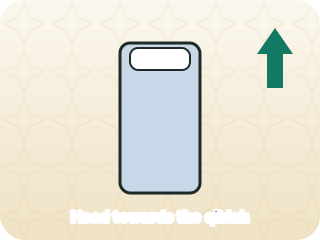
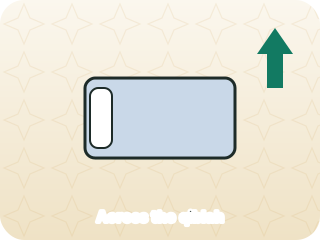
A patient must pray lying on her back. How should the bed be placed?
Ver la respuesta
Lying on the back, the feet point towards the qiblah, with the head raised on a pillow so the face looks towards it. Lying on the right side facing the qiblah is also allowed.
Toca el lugar Where do the feet go?
The patient will pray lying on his back. Tap the end of the bed where his feet should be.

Ver la respuesta
The feet point towards the qiblah, here the top of the bed. The pillow is under the head at the other end.
Lee
Lying down
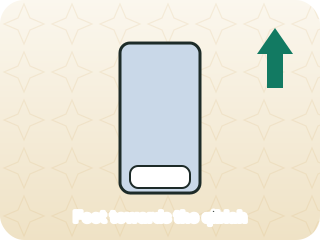
If you cannot sit, lie on your back with your feet towards the qiblah and a pillow under your head, so your face points to the qiblah. Or lie on your right side facing it.
Nod with the head for ruku and a little more for sujood. Hana's family turned her bed so her feet pointed to the qiblah: a small move, a whole prayer.
Go deeper: when the bed cannot be moved
If the bed cannot be turned and no one can move you, pray in the direction you are lying. The qiblah is required of those who can face it. A hospital chaplain or nurse will often help turn a bed if asked.
Lee
When even nodding is impossible
If someone cannot even nod with the head, the prayer is postponed: it is not prayed with the eyes or the heart alone. If this lasts more than a full day and night, those prayers are forgiven. If less, they are made up when able.
Lee
Wudu and clean sheets in illness
- If water would harm you, make tayammum. If you cannot do it yourself, someone may help you.
- A constant drip or leak: you are an excused person, one wudu for each prayer time.
- An impure sheet: change it if you can. If changing it would harm you, or it would be soiled again at once, pray as you are.
Keep a smooth stone or a small block of clean clay by the bed for tayammum, and a jug and bowl for wudu where water is allowed.
¿Qué harías?
On the ward
Your uncle is in hospital with a drip in his arm. He can sit up in bed but not stand. Dhuhr comes in. What do you suggest?
- Wait until he is home and can standNo. The prayer is not postponed while he can pray in some way. Sitting is his prayer now.
- Pray sitting in bed, nodding for ruku and sujoodRight. He prays at the highest step he can manage: sitting, nodding lower for sujood.
Completa el hueco Fill the gap
If you can stand for part of the prayer, you ______.
Ver la respuesta
Standing is a pillar, so keep whatever part of it you are able to.
Revelar
Common mistakes
Think of the right answer first, then flip each card.
- "If I can't pray properly, I shouldn't pray." You pray the best way you can. That is the proper prayer for you now.
- "I'll raise a book to my forehead for sujood." Disliked. Nod, and bend lower for sujood than for ruku.
- "Lying down, my head goes towards the qiblah." The feet go towards the qiblah, with the head raised on a pillow.
- "Sitting for part means sitting for all." Stand for whatever part you can, then sit.
Piénsalo
Pause and think
Prayer does not leave the sick bed. Who do you know who is ill, and how could you help them pray this week?
Solo tú puedes verlo. Se guarda en este dispositivo.
Lección terminada
Praying when you are ill
Has añadido una raka a una alfombra de oración que se llena, raka a raka.
Lo que aprendiste
- Stand if you can, even leaning or for part of it; then sit; then lie down.
- Sitting: nod for ruku, lower for sujood; nothing raised to the forehead.
- Lying: feet to the qiblah, head raised; or on the right side.
- hechos
- 0
- bien a la primera
- 0
- para repasar
- 0
Tu obra · Pruébalo hoy
If someone you know is ill, share the ladder of ease with them: each prays as he or she is able.
Lo que guardaste
Inicia sesión para guardar tu progreso en todos tus dispositivos.