
0 guardado
Entra en la escena
Eyes that wander, hearts that wander
Watch someone pray with darting eyes and you will see a wandering heart. The scholars give the eyes a place to rest in every position, so the mind has one less door to escape through.
Lee
The resting places of the eyes
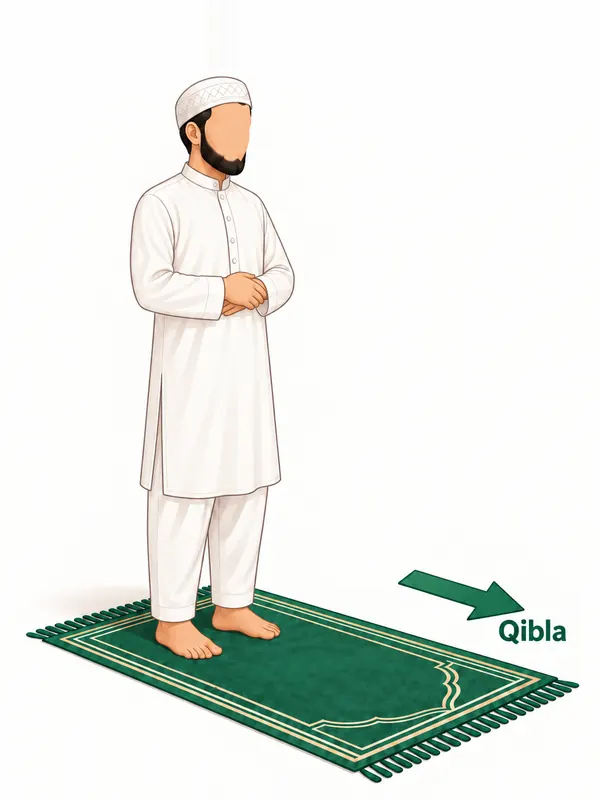
- Standing: the place where your forehead will touch in sujud.
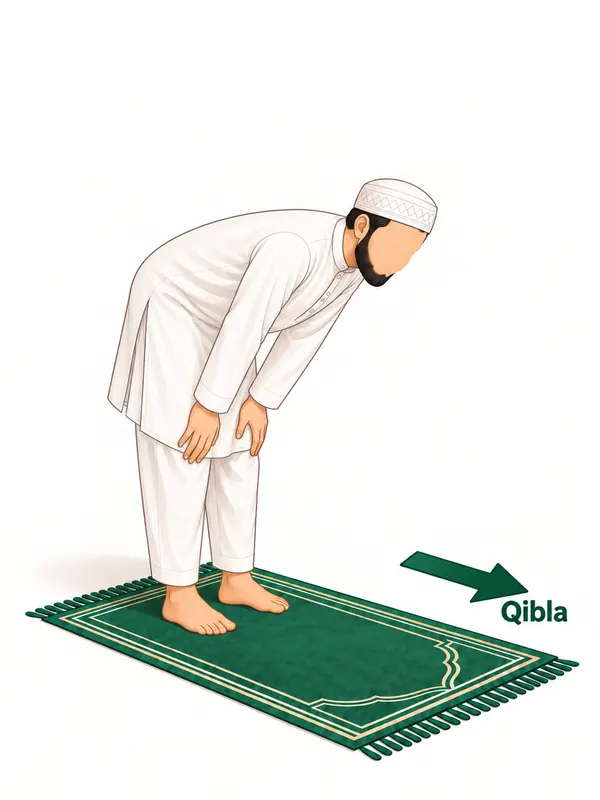
- Ruku: the tops of your feet.
- Sujud: the tip of your nose.
- Sitting: your lap.
- Salam: your shoulder, right then left.
Lee
Why the eyes matter
The eyes lead the mind. Wherever they wander, the thoughts follow: the clock, a pattern, someone walking past.
Giving the eyes a fixed resting place in each position is one of the easiest ways to hold the heart in the prayer. It is the same for men and women, the imam and the follower.
Try it once on purpose: pray two rak'ahs with the eyes fixed on their places, and notice how much quieter the mind is.
Toca el lugar Standing
Standing in prayer, tap where your eyes should rest.
Ver la respuesta
On the place of sujud, the spot on the mat where your forehead will go.
Toca el lugar Bowing
In ruku, tap where your eyes should rest.
Ver la respuesta
On the tops of your feet. The scholars give the eyes a resting place in every position, so the mind has one less door to wander through.
Practica
Eyes in every position, men
-
1De pie Standing: eyes on the place where your forehead will touch. -
2Inclinación (ruku') Ruku: eyes on the tops of your feet. -
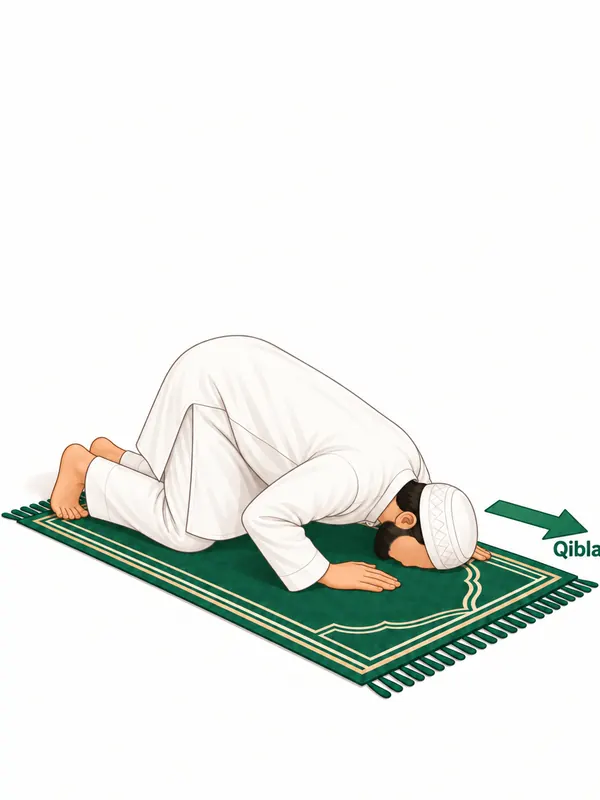
3Postración (sajdah) Sujood: eyes towards the tip of your nose. -
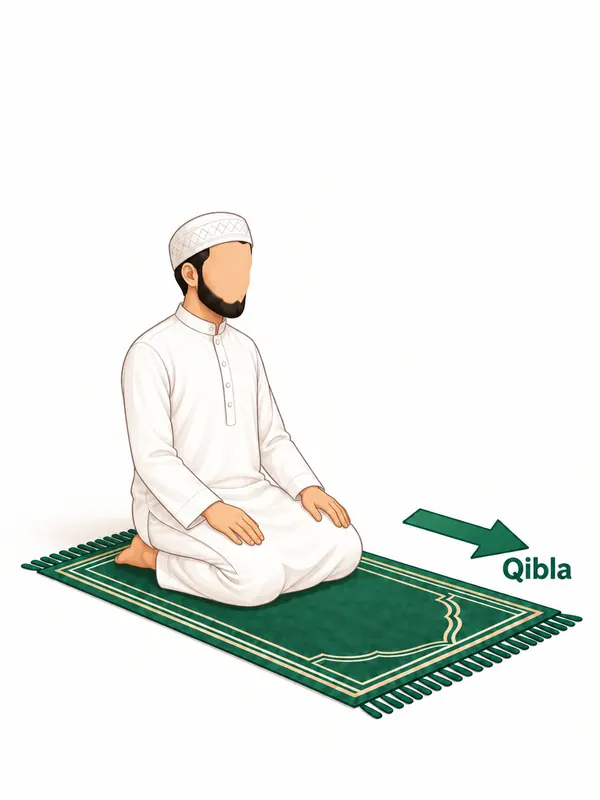
4Sentado, dedo bajado Sitting: eyes on your lap. -

5Salam a la derecha Salam: eyes on your right shoulder as the head turns.
Practica
Eyes in every position, women
-
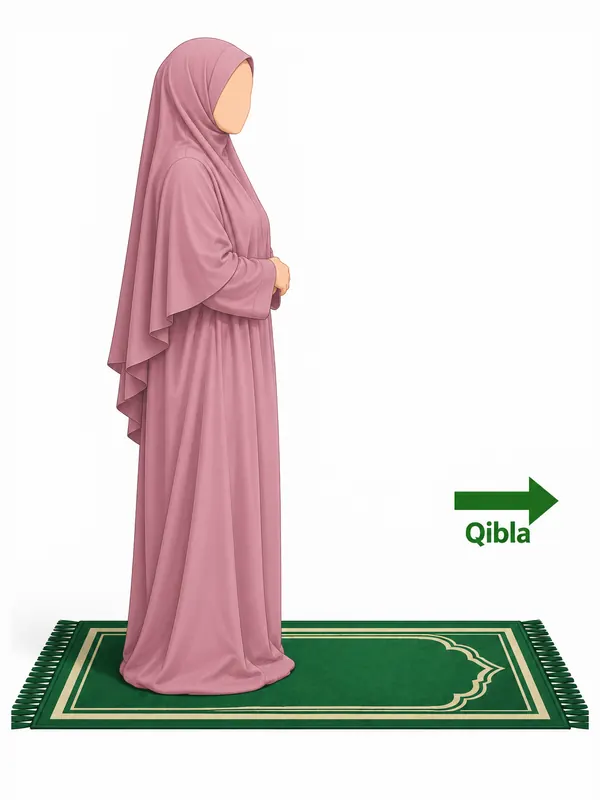
1De pie Standing: eyes on the place where your forehead will touch. -
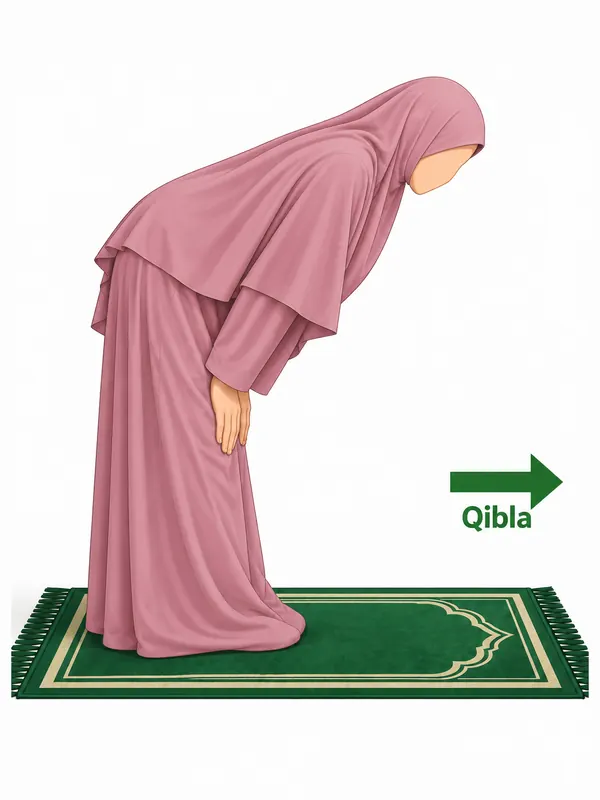
2Inclinación (ruku') Ruku: eyes on the tops of your feet. -
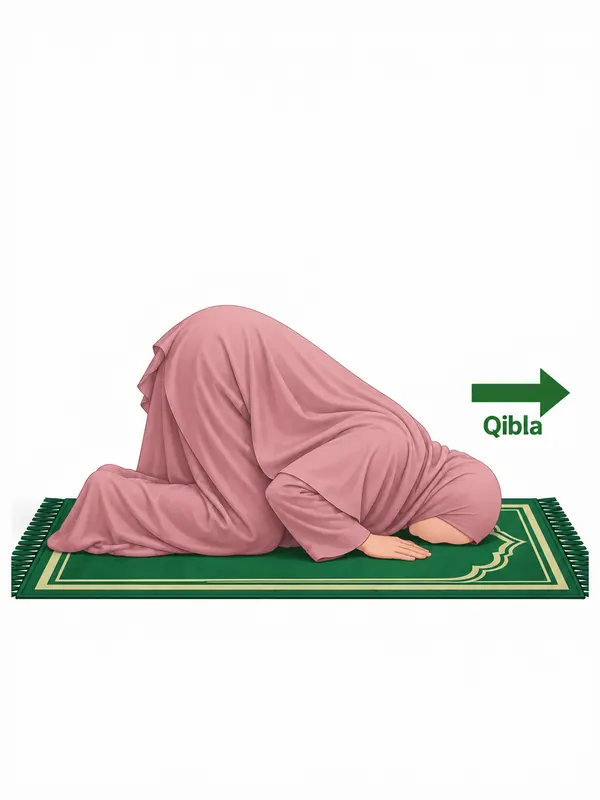
3Postración (sajdah) Sujood: eyes towards the tip of your nose. -

4Sentado, dedo bajado Sitting: eyes on your lap. -
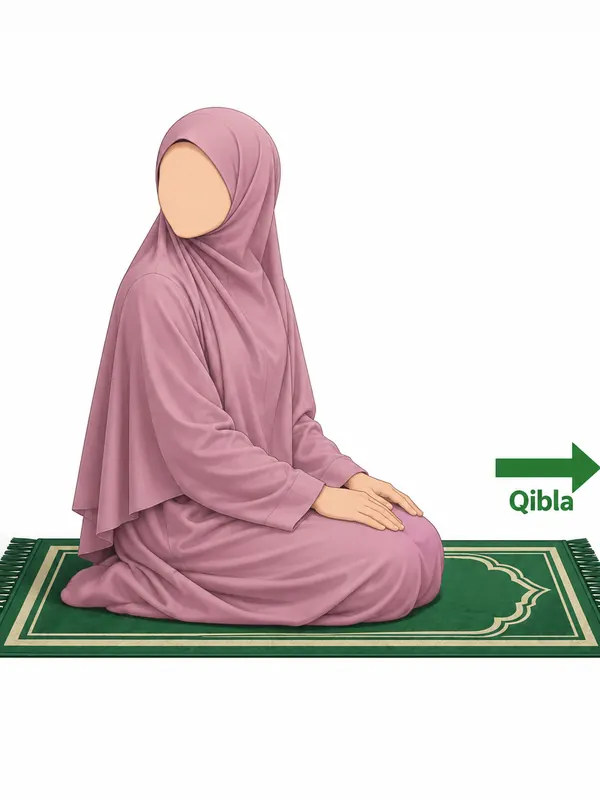
5Salam a la derecha Salam: eyes on your right shoulder as the head turns.
Del hadiz
Eyes raised to the sky
عن أنس بن مالك قَالَ : قَالَ رسولُ اللهِ : « مَا بَالُ أقْوامٍ يَرْفَعُونَ أبْصَارَهُمْ إِلَى السَّمَاءِ في صَلاَتِهِمْ » ! فَاشْتَدَّ قَولُهُ في ذَلِكَ حَتَّى قَالَ : « لَيَنْتَهُنَّ عَنْ ذَلِكَ ، أَوْ لَتُخطفَنَّ أَبْصَارُهُمْ » ! . رواه البخاري
Anas bin Malik (May Allah be pleased with him) said: The Messenger of Allah (ﷺ) said, "How is it that some people raise their eyes towards the sky during As-Salat (the prayer)?" He stressed (this point) and added, "People must refrain from raising their eyes towards heaven in Salat (prayer), or else their sights will certainly be snatched away."
Del hadiz
A snatch from the prayer
عن عائشة رضي الله عنها قالت: سألت رسول الله صلى الله عليه وسلم عن الالتفات في الصلاة فقال: "هو اختلاس يختلسه الشيطان من صلاة العبد" ((رواه البخاري)).
'Aishah (May Allah be pleased with her) said: I asked the Messenger of Allah (ﷺ) about random looks in Salat (prayer), and he replied, "It is something which Satan snatches from the slave's Salat."
Revelar
What the hadith teach
Think about it first, then open the card.
- How do you live it? Raising the eyes to the sky in prayer was strongly warned against. And a glance around is described as something Shaytan snatches from your prayer: a small theft each time. Keeping the eyes in their place protects what you have.
Lee
Patterns, pictures and people

In the masjid, the most beautiful carpet can be a distraction. Pray where the space in front of you is plain. At home, face a plain wall rather than a bookshelf or a screen.
If someone is sitting facing you, or walking past, move a little or set a small object in front of you. The less there is to read, the more there is to feel.
Go deeper: a sutrah at home
At home, a chair, a cushion or a bag set just in front of your mat stops family walking through your place of prayer and gives the eyes a clear edge. Children soon learn to walk behind it.
Une
Position and gaze
Une cada uno con su pareja.
- Standing Place of sujud
- Ruku Tops of the feet
- Sujud Tip of the nose
- Sitting The lap
Ver la respuesta
One resting place for the eyes in each position.
Elige Check your understanding
Should you close your eyes to concentrate?
Ver la respuesta
Keeping the eyes open, resting in their place, is the Sunnah. Closing them is disliked unless it genuinely helps you focus.
Lee
Closing the eyes
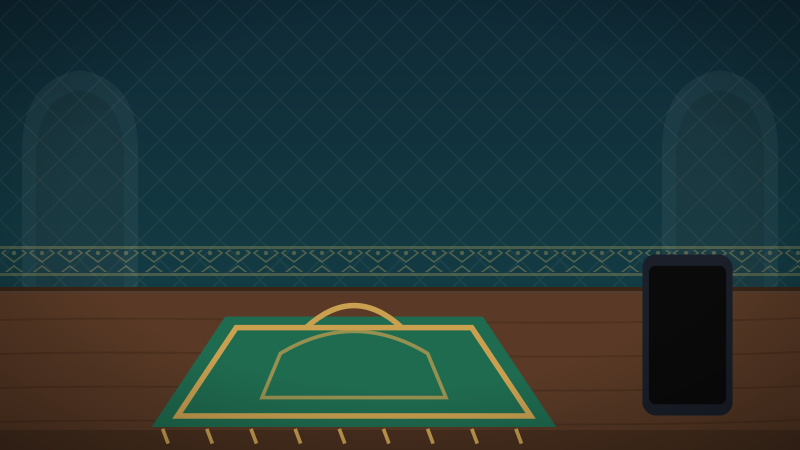
The Sunnah is to keep the eyes open, resting on their places. Closing them is disliked, because it is not the way the Prophet ﷺ prayed.
But if something in front of you truly keeps pulling your eyes, a picture you cannot cover or a crowd moving past, closing them may help, and then it is not disliked. Use it as a tool, not a habit.
Revelar
Common mistakes
Think of the right answer first, then flip each card.
- "I look straight ahead at the imam." Standing, the eyes rest on the place of sujood, not on the imam or the wall.
- "Closing my eyes is always better." Open eyes resting low is the Sunnah. Close them only when something keeps distracting you.
- "A quick look up at the clock is harmless." Looking up is strongly warned against, and a glance around takes from the prayer.
- "The patterned rug helps me focus." Busy patterns pull the eyes. A plain space in front is better.
Piénsalo
Pause and think
Where do your eyes usually go during prayer? What could you change in front of your mat tonight?
Solo tú puedes verlo. Se guarda en este dispositivo.
Lección terminada
Where the eyes rest
Has añadido una raka a una alfombra de oración que se llena, raka a raka.
Lo que aprendiste
- Standing: the place of sujood. Ruku: the feet. Sujood: the nose. Sitting: the lap.
- Never up to the sky; no looking around.
- Open eyes are the Sunnah; close them only if it truly helps.
- hechos
- 0
- bien a la primera
- 0
- para repasar
- 0
Tu obra · Pruébalo hoy
In your next prayer, keep your eyes on the resting place of each position.
Lo que guardaste
Inicia sesión para guardar tu progreso en todos tus dispositivos.