
0 guardado
Entra en la escena
An announcement after Jumu'ah
"There will be a janazah prayer after the sunnah." Many people stay, unsure what to do. The funeral prayer ( ṣalāt al-janāzah ) is short, prayed standing, with no ruku and no sujud.
Mira

It is a last gift to a fellow Muslim.
Lee
A duty on the whole community
The funeral prayer is fard kifāyah: if some Muslims pray it, the rest are free of the duty; if no one does, everyone who knew is sinful.
It has no ruku and no sujood: it is prayed standing, and standing is fard. It still needs what every prayer needs: wudu, a pure body and place, the awrah covered and the qiblah.
Go deeper: tayammum for a funeral
If the funeral prayer is about to begin and you fear you will miss it while making wudu, tayammum is allowed for it, because it cannot be made up. This is for those attending, not for the guardian who leads or for whom the people would wait.
Del hadiz
A reward like a mountain
عن أبي هريرة رضي الله عنه قال: قال رسول الله صلى الله عليه وسلم : “من شهد الجنازة حتي يصلى عليها، فله قيراط ، ومن شهدها حتي تدفن، فله قيراطان" قيل: وما القيراطان؟ قال: “مثل الجبلين العظيمين” ((متفق عليه)) .
Abu Hurairah (May Allah be pleased with him) reported: The Messenger of Allah (ﷺ) said, "Whoever follows the funeral procession and offers the funeral prayer for it, will get a reward equal to one Qirat, and whoever attends it till burial, will get a reward equal to two Qirat.'' It was asked, "What are two Qirat?'' He (ﷺ) replied, "Equal to two huge mountains."
Revelar
What the hadith teaches
Think about it first, then open the card.
- What is the lesson for you? Whoever attends the funeral prayer earns a great reward, and more again for staying until the burial. The Prophet ﷺ described each portion of that reward as large as a mountain. It is a communal duty ( farḍ kifāyah ): if some pray it, the rest are free of sin, but the reward goes to those who came.
Lee
Four takbirs
- Takbir 1, raising the hands: then the thana.
- Takbir 2, without raising the hands: the salawat on the Prophet ﷺ (Durood Ibrahim).
- Takbir 3: the dua for the deceased.
- Takbir 4: then the salam to the right and to the left.
All standing. The hands are raised only at the first takbir.
Del hadiz
Four takbirs
وَعَنْ أَبِي هُرَيْرَةَ: أَنَّ النَّبِيَّ صَلَّى اللَّهُ عَلَيْهِ وَسَلَّمَ نَعَى لِلنَّاسِ النَّجَاشِيَّ الْيَوْمَ الَّذِي مَاتَ فِيهِ وَخرج بِهِمْ إِلَى الْمُصَلَّى فَصَفَّ بِهِمْ وَكَبَّرَ أَرْبَعَ تَكْبِيرَات
He said the Prophet gave the people news of the death of the Negus on the day on which he died, took them out to the place of prayer, drew them up in rows and said “God is most great” four times. (Bukhari and Muslim.)
Del hadiz
The dua for the deceased
وعن أبي هريرة وأبي قتادة، وأبي إبراهيم الأشهلي عن أبيه -وأبوه صحابي- رضي الله عنهم، عن النبي صلى الله عليه وسلمى الله عليه وسلم الله عليه وسلم الله عليه وسلم أنه صلى علي جنازة فقال: "اللهم اغفر لحينا وميتنا، وصغيرنا وكبيرنا، وذكرنا وأنثانا، وشاهدنا وغائبنا. اللهم من أحييته منا، فأحيه علي الإسلام، ومن توفيته منا، فتوفه علي الإيمان؛ اللهم لا تحرمنا أجره، ولا تفتنا بعده" ((رواه الترمذي)) من رواية أبي هريرة وأبو هريرة صحيح والأشهلي، ورواه أبو داود من رواية أبي هريرة وأبي قتادة. قال الحاكم: حديث أبي هريرة صحيح علي شرط البخاري ومسلم، قال الترمذي: قال البخاري: أصح روايات هذا الحديث رواية الأشهلي. قال البخاري: وأصح شيء في الباب حديث عوف بن مالك.
Abu Hurairah, Abu Qatadah, and Abu Ibrahim Al-Ash-hali (May Allah be pleased with them) reported: The Prophet (ﷺ) offered a funeral prayer and said: "Allahummaghfir lihaiyina wa maiyitina, wa saghirina wa kabirina, wa dhakarina wa unthana, wa shahidina wa gha'ibina. Allahumma man ahyaiytahu minna, fa'ahyihi 'alal-Islam, wa man tawaffaiytahu minna, fatawaffahu 'alal-Iman. Allahumma la tahrimna ajrahu, wa la taftinna ba'dahu (O Allah, forgive our living and our dead, our present and our absent, our young and our old, our male and our female. O Allah, whosoever of us You keep alive, keep him alive (faithful) to Islam, and whosoever of us You cause to die, let him die having Iman. O Allah, do not deprive us of our reward (for being patient) and do not subject us to trials after his death."
Revelar
What the dua asks
Think about it first, then open the card.
- How do you live it? It asks forgiveness for every Muslim, living and dead, young and old, present and absent, and asks Allah to keep the living on Islam and take the dying with faith. Even at a stranger's funeral, you pray for yourself and your whole family too. For a child, a different dua is said, asking that the child be a reward and an intercessor for the parents.
Lee
A child, and when you do not know the dua

For a child, or an adult who never reached sound mind, the third takbir is followed by a different dua: it asks that the child be a reward going ahead of the parents, a treasure kept for them and an intercessor.
Still learning the dua? Any sincere dua for the deceased's forgiveness, in the words you know, after the third takbir is enough while you learn.
Mira
Watch: the funeral prayer
Cuéntalo
The four takbirs
Takbirs
- Takbir, hands raised Fold the hands. The thana.
- Takbir The salawat on the Prophet ﷺ.
- Takbir The dua for the deceased.
- Takbir Then the salam, right and left.
The funeral prayer has four takbirs, all said standing, with no ruku or sujud, and then the salam. It is short, so everyone can stay and pray for the deceased.
Mira
The rows
Lee
Who leads, and the women

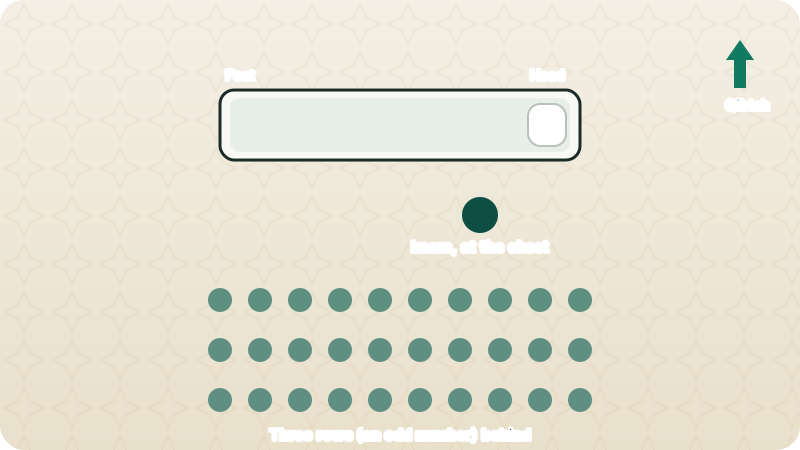
The right to lead goes to the ruler or his deputy, then the imam of the local masjid, then the deceased's nearest male guardian.
Women may pray the funeral prayer, in their own rows behind the men. The Sunnah keeps women from following the bier to the graveyard, as a later lesson shows. Whoever has died, man or woman, the imam stands level with the chest.
Ordena
The funeral prayer in order
Ponlos en el orden correcto.
- Intention, then takbir with raised hands
- Thana
- Takbir, then the salawat
- Takbir, then the dua for the deceased
- Takbir, then the salam to both sides
Ver la respuesta
Each takbir opens the next part. No ruku, no sujud.
Revelar
Common mistakes
Think of the right answer first, then flip each card.
- "There is a ruku in the funeral prayer." No ruku and no sujood. Four takbirs, all standing.
- "I raise my hands at every takbir." Only at the first.
- "Someone else will pray, so I can go." It is a communal duty; staying earns a reward like a mountain.
- "I need no wudu, since there is no sujood." It is a prayer: wudu, the qiblah and covering are all needed.
Piénsalo
Pause and think
One day the rows will stand for you. What would you hope they say about you as they pray?
Solo tú puedes verlo. Se guarda en este dispositivo.
Lección terminada
The funeral prayer
Has añadido una raka a una alfombra de oración que se llena, raka a raka.
Lo que aprendiste
- Fard kifayah: prayed by some, the rest are free.
- Four takbirs, standing: thana, salawat, dua for the deceased, salam.
- Hands raised only at the first takbir; wudu and the qiblah are needed.
- hechos
- 0
- bien a la primera
- 0
- para repasar
- 0
Tu obra · Pruébalo hoy
Learn the order of the four takbirs today, so you are ready to join the next funeral prayer at your masjid.
Lo que guardaste
Inicia sesión para guardar tu progreso en todos tus dispositivos.