
0 محفوظ
ادخل المشهد
Madinah, long ago
Five questions
A quiet gathering in the masjid. A stranger arrives with five questions, and the answers become a map of the whole religion.
انظر
A man no one knew

One day the companions were sitting with the Prophet ﷺ when a man came in. He was dressed in spotless white, his hair jet black, with no dust of travel on him, yet he was a stranger to everyone.
He sat right in front of the Prophet ﷺ, knee to knee, and asked about Islam, then iman, then ihsan, then the Hour. After he left, the Prophet ﷺ told ’Umar (radiyallahu ’anhu) that the visitor had been Jibril, come to teach them their religion.
من الحديث
The hadith of Jibril
عَنْ عُمَرَ بْنِ الْخَطَّابِ رَضِيَ اللَّهُ عَنْهُ قَالَ: بَيْنَا نَحْنُ عِنْدَ رَسُولِ اللَّهِ صَلَّى اللَّهُ عَلَيْهِ وَسَلَّمَ ذَاتَ يَوْمٍ إِذْ طَلَعَ عَلَيْنَا رَجُلٌ شَدِيدُ بَيَاضِ الثِّيَابِ شَدِيدُ سَوَادِ الشَّعْرِ لَا يُرَى عَلَيْهِ أَثَرُ السَّفَرِ وَلَا يَعْرِفُهُ مِنَّا أَحَدٌ حَتَّى جَلَسَ إِلَى النَّبِيِّ صَلَّى اللَّهُ عَلَيْهِ وَسلم فأسند رُكْبَتَيْهِ إِلَى رُكْبَتَيْهِ وَوَضَعَ كَفَّيْهِ عَلَى فَخْذَيْهِ وَقَالَ: يَا مُحَمَّدُ أَخْبِرْنِي عَنِ الْإِسْلَامِ قَالَ: " الْإِسْلَامُ: أَنْ تَشْهَدَ أَنْ لَا إِلَهَ إِلَّا اللَّهُ وَأَنَّ مُحَمَّدًا رَسُولُ اللَّهِ وَتُقِيمَ الصَّلَاةَ وَتُؤْتِيَ الزَّكَاةَ وَتَصُومَ رَمَضَانَ وَتَحُجَّ الْبَيْتَ إِنِ اسْتَطَعْتَ إِلَيْهِ سَبِيلًا ". قَالَ: صَدَقْتَ. فَعَجِبْنَا لَهُ يَسْأَلُهُ وَيُصَدِّقُهُ. قَالَ: فَأَخْبِرْنِي عَنِ الْإِيمَانِ. قَالَ: «أَنْ تُؤْمِنَ بِاللَّهِ وَمَلَائِكَتِهِ وَكُتُبِهِ وَرُسُلِهِ وَالْيَوْمِ الْآخِرِ وَتُؤْمِنَ بِالْقَدَرِ خَيْرِهِ وَشَرِّهِ» . قَالَ صَدَقْتَ. قَالَ: فَأَخْبِرْنِي عَنِ الْإِحْسَانِ. قَالَ: «أَنْ تَعْبُدَ اللَّهَ كَأَنَّكَ تَرَاهُ فَإِنْ لَمْ تَكُنْ تَرَاهُ فَإِنَّهُ يَرَاكَ» . قَالَ: فَأَخْبِرْنِي عَنِ السَّاعَةِ. قَالَ: «مَا المسؤول عَنْهَا بِأَعْلَمَ مِنَ السَّائِلِ» . قَالَ: فَأَخْبِرْنِي عَنْ أَمَارَاتِهَا. قَالَ: «أَنْ تَلِدَ الْأَمَةُ رَبَّتَهَا وَأَنْ تَرَى الْحُفَاةَ الْعُرَاةَ الْعَالَةَ رِعَاءَ الشَّاءِ يَتَطَاوَلُونَ فِي الْبُنْيَانِ» . قَالَ: ثُمَّ انْطَلَقَ فَلَبِثْتُ مَلِيًّا ثُمَّ قَالَ لِي: «يَا عُمَرُ أَتَدْرِي مَنِ السَّائِلُ» ؟ قُلْتُ: اللَّهُ وَرَسُولُهُ أَعْلَمُ. قَالَ: «فَإِنَّهُ جِبْرِيل أَتَاكُم يعلمكم دينكُمْ» . رَوَاهُ مُسلم
‘Umar b. al-Khattab said: One day when we were with God's messenger, a man with very white clothing and very black hair came up to us. No mark of travel was visible on him, and none of us recognised him. Sitting down beside the Prophet, leaning his knees against his, and placing his hands on his thighs, he said, “Tell me, Muhammad, about Islam." He replied, “Islam means that you should testify that there is no god but God and that Muhammad is God’s messenger, that you should observe the prayer, pay the zakat, fast during Ramadan, and make the pilgrimage to the House if you have the means to go." He said, “You have spoken the truth." We were surprised at his questioning him and then declaring that he spoke the truth. He said, “Now tell me about faith.” He replied, “It means that you should believe in God, His angels, His books, His apostles, and the last day, and that you should believe in the decreeing both of good and evil." Remarking that he had spoken the truth, he then said, “Now tell me about doing good." He replied, “It means that you should worship God as though you saw Him, for He sees you though you do not see Him." He said, “Now tell me about the Hour." He replied, “The one who is asked about it is no better informed than the one who is asking." He said, “Then tell me about its signs." He replied, “That a maid-servant should beget her mistress, and that you should see barefooted, naked, poor men and shepherds exalting themselves in buildings." said to me, “Do you know who the questioner was, ‘Umar?" I replied, “God and His messenger know best." He said, “He was Gabriel who came to you to teach you your religion." Muslim transmitted it.
انظر
Three circles

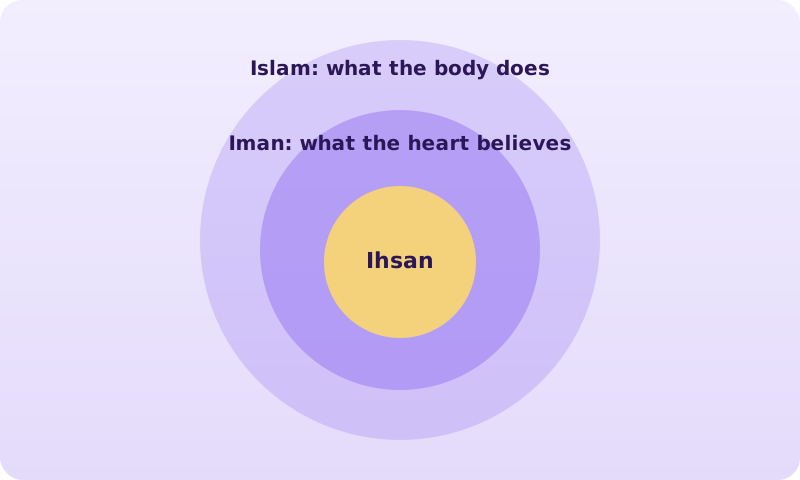
The answers draw three circles, one inside the other:
- Islam: what the body does. The testimony of faith, prayer, zakat, fasting and Hajj.
- Iman: what the heart believes. Allah, His angels, His books, His messengers, the Last Day, and the decree, its good and its bad.
- Ihsan: the heart of it all. Worshipping Allah with the awareness of someone who sees Him, and, short of that, with the certainty that He sees you.
انظر
Islam, iman and ihsan
صنّف
Islam, iman or ihsan?
Which circle does each belong to?
Islam: what the body does
- Praying the five daily prayers
- Fasting in Ramadan
Iman: what the heart believes
- Believing in the angels
- Believing in qadar, its good and its bad
Ihsan: worship as if you see Him
- Praying as though you see Allah
- Keeping your manners when no one but Allah sees you
اقرأ
What it means for your day
Islam is your body's worship: the prayer you will pray at Dhuhr. Iman is your heart's belief: that Allah sees, angels record and the Day is coming. Ihsan is the quality: praying that Dhuhr as if you see Him.
Each day you can grow in all three, starting from wherever you are.
Go deeper: ihsan in words
The hadith describes ihsan as worshipping Allah as though you see Him, and if you do not see Him, knowing that He sees you. Scholars call the first the higher station and the second its foundation.
اكشف
Common mistakes
Flip each card.
- "Iman is only in the heart, deeds do not matter." Belief is in the heart, and it shows in deeds. A believer who never prays is in great danger.
- "Ihsan is for saints only." One calm prayer, aware that Allah sees you, is ihsan.
- "Islam is just rules." The rules are the outward shape of a living belief.
صِل
Match the word
صِل كل واحد بما يناسبه.
- Islam The outward acts of worship
- Iman The belief of the heart
- Ihsan Worshipping as though you see Allah
أظهر الإجابة
The hadith of Jibril is called “the mother of the Sunnah” because it sums up the whole religion.
اقرأ
Why it was taught this way

Jibril came as a questioner so that the companions would learn by watching: a question, an answer, and the Prophet ﷺ confirming it.
It is a model for you too. Ask clear questions about your deen, to people who know, and listen to the whole answer.
اختر Which circle?
You pray Dhuhr at work, calm and aware that Allah sees you. Which of the three circles is that awareness?
أظهر الإجابة
The prayer is Islam, the belief behind it is iman, and the awareness that Allah sees you is ihsan.
صح أم خطأ Check
The stranger in the hadith was the angel Jibril.
أظهر الإجابة
The Prophet ﷺ said he came to teach the companions their religion.
اقرأ
A moment for the heart
The hadith ends with the Prophet ﷺ telling his companions that it was Jibril, come to teach them their religion. That lesson has reached you.
Fourteen centuries later, you are sitting in the same circle, learning the same answers.
انتهى الدرس
A stranger with questions
أضفت حلقة من النور إلى حلقات من النور حول مركز.
ما تعلّمته
- Islam is the body’s worship, iman the heart’s belief, and ihsan worshipping as though you see Allah.
- منجزة
- 0
- صحيح من أول مرة
- 0
- للمراجعة
- 0
عملك · جرّبه اليوم
In one salah today, aim for ihsan: remember that Allah sees you from the first takbir to the salam.
ما حفظته
سجّل الدخول لتحفظ تقدّمك على كل أجهزتك.