
0 محفوظ
ادخل المشهد
Kabul, 1504
A prince without a kingdom
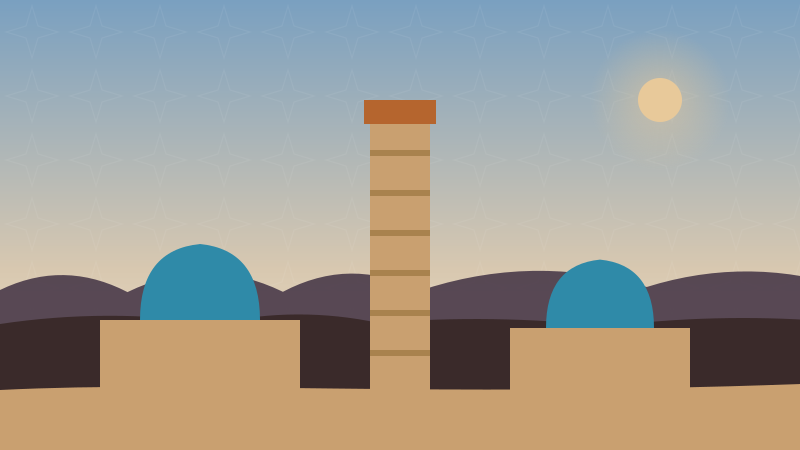
Mountains around Kabul at dawn. A prince who has lost his homeland looks south towards India.
انظر
A prince without a kingdom
Babur (1483–1530) was descended from Timur on his father’s side and from Chinggis Khan on his mother’s. He won Samarkand three times and lost it three times.
In 1504 he took Kabul instead. He wrote a famous memoir, the Baburnama, full of gardens, fruit, friends and battles, and his own mistakes.
شاهد
Watch: the Ottomans, Safavids and Mughals
الطريق
From Kabul to Agra

- Kabul, 1504 Babur makes it his base and loves its gardens.
- Lahore He raids into the Punjab.
- Panipat, 1526 With cannon and cavalry he defeats Ibrahim Lodi, the sultan of Delhi.
- Delhi The Mughal empire begins.
- Agra His capital, where he lays out gardens by the river.
Islam had been in India for centuries through traders, Sufis and the Delhi sultans. The Mughals built on all of it.
انظر
Great Mughals
- Akbar (1556–1605) built a vast, well-run empire and gave high posts to Hindus. Later in life he ran a court creed of his own, which scholars such as Shaykh Ahmad Sirhindi strongly criticised.
- Shah Jahan (1628–1658) built the Taj Mahal as a tomb for his wife, and the Jama Masjid of Delhi.
- Aurangzeb (1658–1707), pious and austere, had hundreds of scholars compile al-Fatawa al-Hindiyyah, a great book of Hanafi law. Historians still debate his policies towards non-Muslims.
اقرأ
Aurangzeb and the book of rulings

Aurangzeb (ruled 1658 to 1707) gathered scholars to compile al-Fatawa al-Hindiyyah, a great book of rulings still used by muftis today. He is reported to have lived simply, copying the Quran and sewing caps to pay his own way.
His long wars in the south drained the empire, and historians judge him very differently.
Go deeper: before the Mughals
Islam reached India long before Babur: Sindh in 711, traders on the Kerala coast, the sultans of Delhi from 1206, and Sufis such as Mu’in ad-Din Chishti of Ajmer (died 1236). The Mughals ruled a land where Islam was already old.
اختر Check
Which great book of rulings was compiled under Aurangzeb?
أظهر الإجابة
Also called al-Fatawa al-’Alamgiriyyah, it gathers rulings and is still a reference.
خمّن
The Mughals
The Mughal dynasty ruled from Panipat in 1526 until 1857. About how many years?
أظهر الإجابة
331 years About 330 years, though real power faded in the last century.
صِل
Match the Mughal to the deed
صِل كل واحد بما يناسبه.
- Babur Won at Panipat, 1526
- Akbar A vast, well-run empire
- Shah Jahan The Taj Mahal
- Aurangzeb Al-Fatawa al-Hindiyyah
أظهر الإجابة
Babur won at Panipat in 1526, Akbar ran a vast empire, Shah Jahan built the Taj Mahal, and Aurangzeb sponsored al-Fatawa al-Hindiyyah. Four rulers, two centuries.
المس المكان Find the city
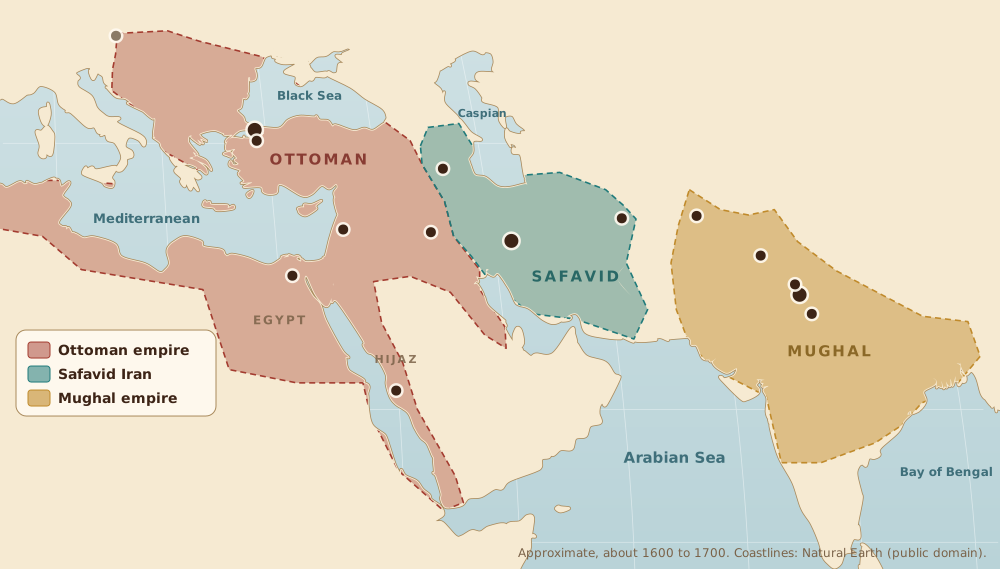
Tap Delhi.
أظهر الإجابة
Delhi is in the north of India, on the Yamuna.
صح أم خطأ True or false?
Islam first reached India with the Mughals.
أظهر الإجابة
Traders came in the first century of Islam, Sindh opened in 711, and the Delhi sultans ruled from the 13th century.
فكّر في الأمر
Islam before the Mughals
Islam reached India centuries before the Mughals, through traders and teachers. Who first brought Islam to your family, and how?
لا يراه أحد غيرك، ويُحفظ على هذا الجهاز.
اكشف
Common mistakes
Flip each card: what people often get wrong, and what is right.
- “Islam first came to India with the Mughals.” It came centuries earlier, by traders, Sufis and the Delhi sultans.
- “Every Mughal ruled the same way.” Akbar’s court creed and Aurangzeb’s strict rule were far apart.
- “The Taj Mahal is a mosque.” It is a tomb, with a mosque beside it.
اقرأ
For your life
Babur lost Samarkand three times and kept going. When a plan of yours fails, a job, an exam, a business, make dua, ask what you can learn, and try again in a new direction. Perseverance is part of trusting Allah.
اكشف
The lesson in three lines
Sum up the lesson in your own words first, then tap to check.
- The lesson in one line Babur, who lost Samarkand three times, won at Panipat in 1526 and founded the Mughal Empire. Akbar, Shah Jahan and Aurangzeb ruled a vast land where Islam was already old. Aurangzeb’s scholars compiled al-Fatawa al-Hindiyyah.
انتهى الدرس
Babur’s road to Delhi
أضفت قرنًا إلى خريطة تتغيّر حدودها.
ما تعلّمته
- Babur founded the Mughal Empire; Islam had reached India centuries before.
- منجزة
- 0
- صحيح من أول مرة
- 0
- للمراجعة
- 0
عملك · جرّبه اليوم
Ask an elder in your family today how Islam came to your family.
ما حفظته
سجّل الدخول لتحفظ تقدّمك على كل أجهزتك.