
0 محفوظ
ادخل المشهد
Four, then four, then two?
At Dhuhr in the masjid, people pray on their own, then together, then on their own again. A newcomer wonders: how many am I meant to pray?
انظر
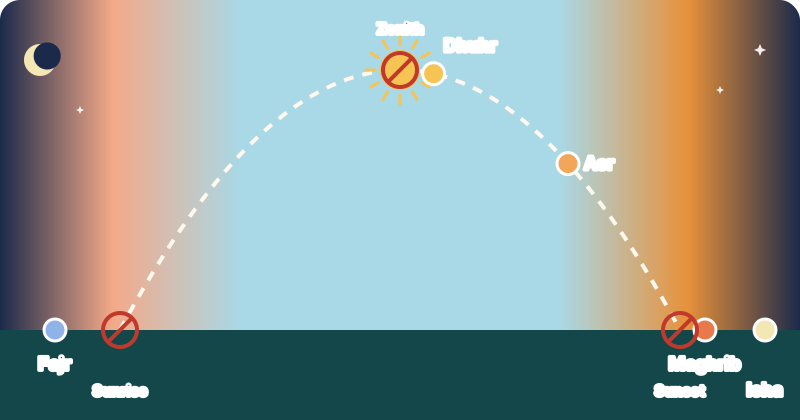
Each prayer has a fard part (obligatory) and sunnah prayers around it. Once you see the map, it is easy.
Think of the fard as the picture and the sunnahs as its frame. On a hard day the fard is never dropped. On an ordinary day the stressed sunnahs are kept too, because the Prophet ﷺ kept them, at home and on journeys, and promised so much for them.
شاهد
Watch: a four-rak'ah prayer
انظر
Every prayer, block by block
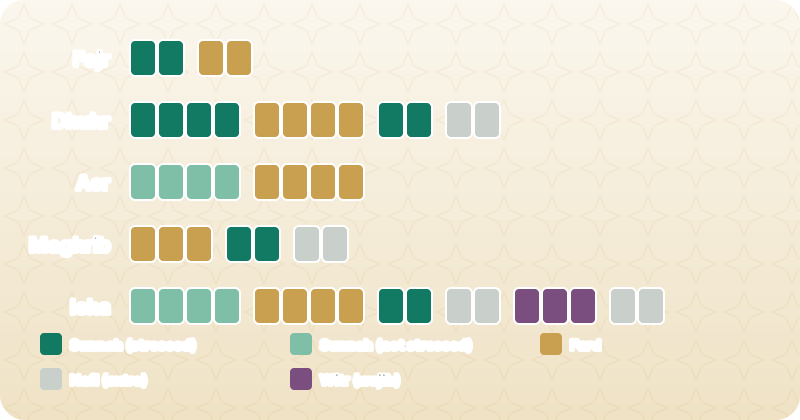
اقرأ
Fard, wajib, sunnah, nafl
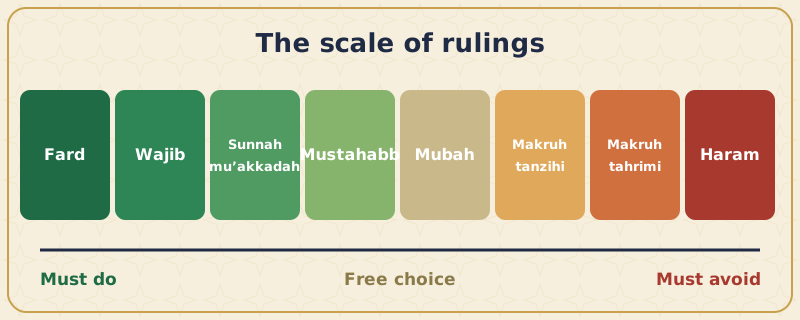
The colours on the chart are rulings:
- Fard: commanded beyond doubt. Leaving it is a major sin.
- Wajib, such as witr: required, one step below fard.
- Stressed sunnah (mu'akkadah): what the Prophet ﷺ kept to. Leaving it now and then is not a sin; making a habit of it is blameworthy.
- Unstressed sunnah and nafl: extra reward, no blame.
Go deeper: why witr is wajib, not fard
In practice a wajib is treated almost like a fard: witr is never left, and it is made up if missed. The difference is one of degree, which is why the school gives it its own name.
جنبًا إلى جنب
The daily map
| Prayer | Before | Fard | After |
|---|---|---|---|
| Fajr | 2 sunnah (stressed) | 2 | - |
| Dhuhr | 4 sunnah (stressed) | 4 | 2 sunnah (stressed), then 2 nafl |
| Asr | 4 sunnah (not stressed) | 4 | - |
| Maghrib | - | 3 | 2 sunnah (stressed), then 2 nafl |
| Isha | 4 sunnah (not stressed) | 4 | 2 sunnah (stressed), 3 witr (wajib), nafl |
من الحديث
A house in Paradise
عن أم المؤمنين أم حبيبة رملة بنت أبي سفيان، رضي الله عنهما، قالت سمعت رسول الله صلى الله عليه وسلم، يقول: ما من عبد مسلم يصلي لله تعالى كل يوم ثنتي عشرة ركعة تطوعًا غير الفريضة، إلا بنى الله له بيتًا في الجنة أو: إلا بني له بيت في الجنة" ((رواه مسلم)).
Umm Habibah (May Allah be pleased with her) the Mother of the Believers reported: I heard the Messenger of Allah (ﷺ) saying, "A house will be built in Jannah for every Muslim who offers twelve Rak'ah of optional Salat other than the obligatory Salat in a day and a night (to seek the Pleasure of Allah)."
اكشف
What is the lesson for you?
Think about it first, then open the card.
- Twelve rak'ahs a day The Prophet ﷺ promised a house in Paradise for the one who keeps twelve sunnah rak'ahs every day. They are the stressed sunnahs on the map: 2 before Fajr, 4 before and 2 after Dhuhr, 2 after Maghrib, 2 after Isha. Missing them now and then is not a sin, but making a habit of leaving them is blameworthy.
من الحديث
Better than the world
وعنها عن النبي صلى الله عليه وسلم قال: "ركعتا الفجر خير من الدنيا وما فيها" ((رواه مسلم)). وفي رواية لهما لأحب إلي من الدنيا جميعًا.
'Aishah (May Allah be pleased with her) reported: The Prophet (ﷺ) said, "The two Rak'ah before the dawn (Fajr) prayer are better than this world and all it contains."Another narration goes: "The two Rak'ah before the dawn (Fajr) prayer are dearer to me than the whole world."
اقرأ
Praying the sunnahs
Sunnahs are prayed like the fard, with two differences:
- In every rak'ah of a sunnah you recite al-Fatihah and a surah. In the third and fourth of a fard, al-Fatihah alone.
- The four before Dhuhr are prayed with one salam. In their first sitting, recite the tashahhud only and stand.
اقرأ
When you arrive late at Fajr

The imam has started Fajr. Your two sunnahs are still unprayed. If you can pray them away from the rows and still catch at least one rak'ah with the imam, pray them first, then join. If not, join the imam at once.
Missed them? Do not pray them straight after Fajr. Make them up after the sun is up, before midday.
Go deeper: Dhuhr's four sunnahs
If you join the fard of Dhuhr without having prayed the four sunnahs before it, pray them after the fard, after its two sunnahs. Other missed sunnahs are not made up, except Fajr's in the way described.
صنّف
Count the fard
Sort each card: 2, or 4, or 3?
2
- Fajr
4
- Dhuhr
- Asr
- Isha
3
- Maghrib
رتّب
Isha
رتّبها بالترتيب الصحيح.
- 4 sunnah (not stressed)
- 4 fard
- 2 sunnah (stressed)
- 3 witr
أظهر الإجابة
Isha has the longest sequence. Witr comes last, after the sunnah; if you plan to pray at night, you may delay witr until then.
املأ الفراغ Fill the gap
The two sunnah rak'ahs the Prophet ﷺ valued most were the two before ______.
أظهر الإجابة
He described the two rak'ahs before Fajr as worth more than the whole world, and never left them, even when travelling.
فكّر في الأمر
Your twelve
Look at the map again. Which of the twelve stressed sunnah rak'ahs do you already pray, and which one will you add this week?
لا يراه أحد غيرك، ويُحفظ على هذا الجهاز.
اكشف
Common mistakes
Think of the right answer first, then flip each card.
- "Sunnahs are optional, so I never pray them." Missing a stressed sunnah now and then is forgiven, but leaving them as a habit is blameworthy. The twelve rak'ahs are a house in Paradise.
- "Witr is just another sunnah." Witr is wajib. It is never left, and is made up if missed.
- "I pray the four before Dhuhr as two and two." The four are one prayer with one salam.
- "After Fajr I can catch up my sunnah at once." No nafl or sunnah after the fard of Fajr until the sun is up. Fajr's sunnah may be made up after sunrise, before midday.
انتهى الدرس
The rak'ah map
أضفت ركعة إلى سجادة تمتلئ ركعة بعد ركعة.
ما تعلّمته
- Seventeen fard rak'ahs a day, three wajib of witr, twelve stressed sunnah.
- Fard is a must, wajib nearly so, stressed sunnah a habit to keep.
- Every rak'ah of a sunnah has al-Fatihah and a surah; the four of Dhuhr have one salam.
- منجزة
- 0
- صحيح من أول مرة
- 0
- للمراجعة
- 0
عملك · جرّبه اليوم
Add the two sunnah rak‘ahs before Fajr to tomorrow, the ones the Prophet ﷺ valued most.
ما حفظته
سجّل الدخول لتحفظ تقدّمك على كل أجهزتك.