Living with Surah Ya Sin · مبتدئ · الدرس 3/3 The man who came running

ادخل المشهد

A town square

A town that would not listen

A crowded square. Three messengers have spoken; the people jeer. Then, from the far edge of the town, someone comes running down the long road.

من القرآن

The people of the town

وَٱضْرِبْ لَهُم مَّثَلًا أَصْحَٰبَ ٱلْقَرْيَةِ إِذْ جَآءَهَا ٱلْمُرْسَلُونَ﴿13﴾ إِذْ أَرْسَلْنَآ إِلَيْهِمُ ٱثْنَيْنِ فَكَذَّبُوهُمَا فَعَزَّزْنَا بِثَالِثٍۢ فَقَالُوٓا۟ إِنَّآ إِلَيْكُم مُّرْسَلُونَ﴿14﴾ قَالُوا۟ مَآ أَنتُمْ إِلَّا بَشَرٌۭ مِّثْلُنَا وَمَآ أَنزَلَ ٱلرَّحْمَٰنُ مِن شَىْءٍ إِنْ أَنتُمْ إِلَّا تَكْذِبُونَ﴿15﴾ قَالُوا۟ رَبُّنَا يَعْلَمُ إِنَّآ إِلَيْكُمْ لَمُرْسَلُونَ﴿16﴾ وَمَا عَلَيْنَآ إِلَّا ٱلْبَلَٰغُ ٱلْمُبِينُ﴿17﴾ قَالُوٓا۟ إِنَّا تَطَيَّرْنَا بِكُمْ ۖ لَئِن لَّمْ تَنتَهُوا۟ لَنَرْجُمَنَّكُمْ وَلَيَمَسَّنَّكُم مِّنَّا عَذَابٌ أَلِيمٌۭ﴿18﴾ قَالُوا۟ طَٰٓئِرُكُم مَّعَكُمْ ۚ أَئِن ذُكِّرْتُم ۚ بَلْ أَنتُمْ قَوْمٌۭ مُّسْرِفُونَ﴿19﴾

13 Coin for them a similitude: The people of the city when those sent (from Allah) came unto them;

14 When We sent unto them twain, and they denied them both, so We reinforced them with a third, and they said: Lo! we have been sent unto you.

15 They said: Ye are but mortals like unto us. The Beneficent hath naught revealed. Ye do but lie!

16 They answered: Our Lord knoweth that we are indeed sent unto you,

17 And our duty is but plain conveyance (of the message).

18 (The people of the city) said: We augur ill of you. If ye desist not, we shall surely stone you, and grievous torture will befall you at our hands.

19 They said: Your evil augury be with you! Is it because ye are reminded (of the truth)? Nay, but ye are froward folk!

Ya-Sin 36:13–19 · Marmaduke Pickthall (en.pickthall)

اقرأ

Three messengers, and an omen

Ma‘arif explains that two messengers came first, were rejected, and were strengthened by a third. The townspeople called them a bad omen; reports mention a famine. The messengers answered: your misfortune is with yourselves.

Go deeper: which town?

The Quran does not name the town. Ma‘arif records reports from Ibn Ishaq that it was Antakiyah, and notes the Quran first calls it a qaryah and later a madinah: a large city.

التفسير

“Three messengers, and an omen” in the commentary

وَٱضْرِبْ لَهُم مَّثَلًا أَصْحَٰبَ ٱلْقَرْيَةِ إِذْ جَآءَهَا ٱلْمُرْسَلُونَ﴿13﴾ إِذْ أَرْسَلْنَآ إِلَيْهِمُ ٱثْنَيْنِ فَكَذَّبُوهُمَا فَعَزَّزْنَا بِثَالِثٍۢ فَقَالُوٓا۟ إِنَّآ إِلَيْكُم مُّرْسَلُونَ﴿14﴾ قَالُوا۟ مَآ أَنتُمْ إِلَّا بَشَرٌۭ مِّثْلُنَا وَمَآ أَنزَلَ ٱلرَّحْمَٰنُ مِن شَىْءٍ إِنْ أَنتُمْ إِلَّا تَكْذِبُونَ﴿15﴾ قَالُوا۟ رَبُّنَا يَعْلَمُ إِنَّآ إِلَيْكُمْ لَمُرْسَلُونَ﴿16﴾ وَمَا عَلَيْنَآ إِلَّا ٱلْبَلَٰغُ ٱلْمُبِينُ﴿17﴾ قَالُوٓا۟ إِنَّا تَطَيَّرْنَا بِكُمْ ۖ لَئِن لَّمْ تَنتَهُوا۟ لَنَرْجُمَنَّكُمْ وَلَيَمَسَّنَّكُم مِّنَّا عَذَابٌ أَلِيمٌۭ﴿18﴾ قَالُوا۟ طَٰٓئِرُكُم مَّعَكُمْ ۚ أَئِن ذُكِّرْتُم ۚ بَلْ أَنتُمْ قَوْمٌۭ مُّسْرِفُونَ﴿19﴾

13 Coin for them a similitude: The people of the city when those sent (from Allah) came unto them;

14 When We sent unto them twain, and they denied them both, so We reinforced them with a third, and they said: Lo! we have been sent unto you.

15 They said: Ye are but mortals like unto us. The Beneficent hath naught revealed. Ye do but lie!

16 They answered: Our Lord knoweth that we are indeed sent unto you,

17 And our duty is but plain conveyance (of the message).

18 (The people of the city) said: We augur ill of you. If ye desist not, we shall surely stone you, and grievous torture will befall you at our hands.

19 They said: Your evil augury be with you! Is it because ye are reminded (of the truth)? Nay, but ye are froward folk!

Ya-Sin 36:13–19 · Marmaduke Pickthall (en.pickthall)

The screens before this one tell Ma‘arif al-Qur’an’s commentary on these verses in our own words. Open it to read the commentary itself.

اقرأ التفسير Ma'arif al-Qur'an · المفتي محمد شفيع 36:13–19 7 دقائق للقراءة

Ma'arif al-Qur'an معارف القرآن

المفتي محمد شفيع · طبعة إنجليزية روجعت بإشراف المفتي محمد تقي العثماني

التفسير باللغة الإنجليزية.

جارٍ تحميل التفسير…

Ma'arif al-Qur'an · المفتي محمد شفيع · 36:13–19

من الحديث

Omens are not from Islam

وعن قبيصة بن المخارق رضي الله عنه قال: سمعت رسول الله صلى الله عليه وسلم يقول: "العِيافة، والطِّيَرة، والطرق، من الجبت". ((رواه أبو داود بإسناد حسن)). وقال: «الطَّرْقُ» هُوَ الزَّجْرُ: أيْ زَجْرُ الطَّيْرِ وَهُوَ أنْ يَتَيَمَّنَ أو يَتَشَاءمَ بِطَيَرَانِهِ، فإنْ طَارَ إلَى جِهَةِ اليَمِين، تَيَمَّنَ، وإنْ طَارَ إلَى جِهَةِ اليَسَارِ، تَشَاءمَ. قال أبو داود: «والعِيَافَةُ»: الخَطُّ. قالَ الجَوْهَريُّ في الصِّحَاحِ: الجِبْتُ كَلِمَةٌ تَقَعُ عَلَى الصَّنَمِ وَالكاهِنِ والسَّاحِرِ وَنَحْوِ ذلِكَ.

Qabisah bin Al-Mukhariq (May Allah be pleased with him) said: I heard the Messenger of Allah (ﷺ) saying, "The practice of 'Iyafah, the interpretation of omens from the flight of birds, the practice of divination by drawing lines on the ground and taking evil omens are all practices of Al-Jibt (the idol, the diviner, or sorcerer)."

Related by Abu Dawud with a hasan chain (رواه أبو داود بإسناد حسن) · Hasan

صنّف

Sort them

Trust in Allah, or omen thinking?

Trust in Allah

  • "The exam went badly; I will work harder and make dua."
  • "Something bad happened; maybe it is a reminder to turn back to Allah."

Omen thinking

  • "A black cat crossed my path, so today is ruined."
  • "Don’t start anything on that unlucky date."
  • "Since the new neighbour came, everything goes wrong."

اختر Check

The messengers answered the townspeople: "Your misfortune is with yourselves." What does that teach?

  • Our troubles come from our own choices and Allah’s decree, not from good people
  • Messengers bring bad luck
  • Nothing can be learned from misfortune
أظهر الإجابة

Verse 19 turns the blame back: the omen is in their own refusal, not in the messengers.

كلمة كلمة

Word by word

ۖ ﴿26﴾
  1. قِيلَ qīla it was said (passive of qala) · قول
  2. ٱدْخُلِ udkhuli to enter; (adkhala) to admit, to make enter · دخل
  3. ٱلْجَنَّةَ al-jannata garden; Paradise (plural jannat) · جنن
  4. قَالَ qāla to say · قول
  5. يَٰلَيْتَ yālayta O (calling someone)
  6. قَوْمِى qawmī people, nation, a community · قوم
  7. يَعْلَمُونَ yaʿlamūna to know · علم

It was said (unto him): Enter paradise. He said: Would that my people knew

Ya-Sin 36:26 · Marmaduke Pickthall (en.pickthall)

Find the man’s wish: it begins with "ya layta", if only.

انظر

Wishing good even for those who hurt him

A desert town at dawn with a long empty road running in from its far edge, palm trees, and a crescent fading in the sky

Ma‘arif explains verses 26 and 27: the man who came running was killed for his words, and told to enter Paradise. His first wish there was that his people could know how his Lord had forgiven and honoured him, so they too might believe. Even after they killed him, he wished them well.

اقرأ

Living with it

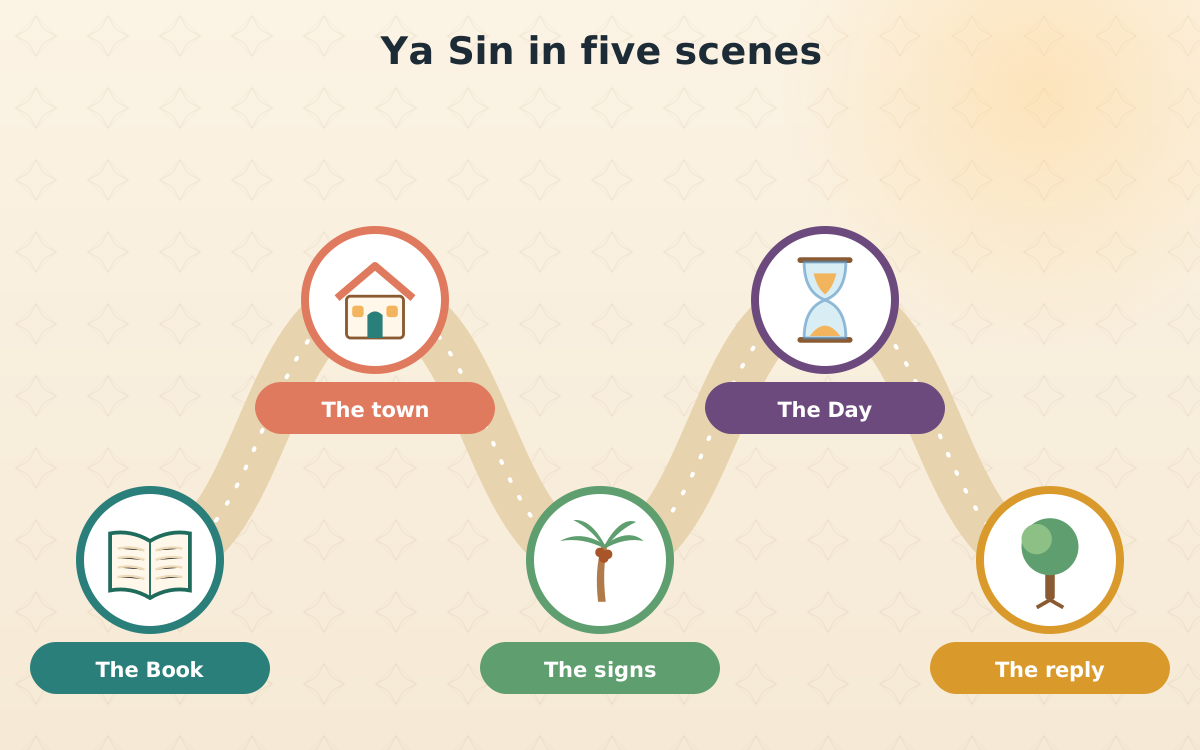
A path through Surah Ya Sin with five stations: the Messenger and the Book, the town, the signs, the Day, and the final reply

One man came running to support the truth when his town turned away. Deed: speak up kindly for what is right once this week, even if few agree.

اكشف

Common mistakes

Think of the right answer first, then flip each card.

  • "Speaking up is for leaders." One ordinary man made the difference.
  • "Truth needs anger." He spoke with care for his people.

انتهى الدرس

The man who came running

أضفت صفحة إلى مصحف تُقلَّب صفحاته.

ما تعلّمته

  • One voice can matter.
  • Speak with care.
  • Speak up kindly once this week.

عملك · جرّبه اليوم

Next time something goes wrong today, say "qaddarallah", Allah decreed it, instead of blaming a person or a day.

سجّل الدخول لتحفظ تقدّمك على كل أجهزتك.