
0 محفوظ
ادخل المشهد
Mount Uhud, Shawwal 3 AH
A mountain at their backs
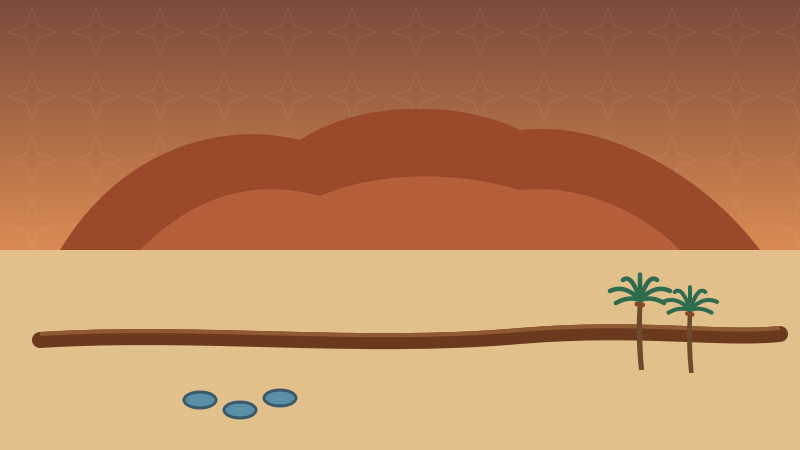
The great red mountain rises behind the Muslims. On a small hill to one side, fifty archers take their places.
انظر
Quraysh come for revenge

A year later, in Shawwal 3 AH (March 625), Quraysh marched on Madinah with about 3,000 men to avenge Badr. The Prophet ﷺ consulted his companions. He preferred to defend the town from inside; many young men, eager after missing Badr, wanted to go out. He accepted the majority view.
About 1,000 set out. ’Abdullah ibn Ubayy turned back with about 300 of them, leaving roughly 700.
استكشف الصورة
The field of Uhud

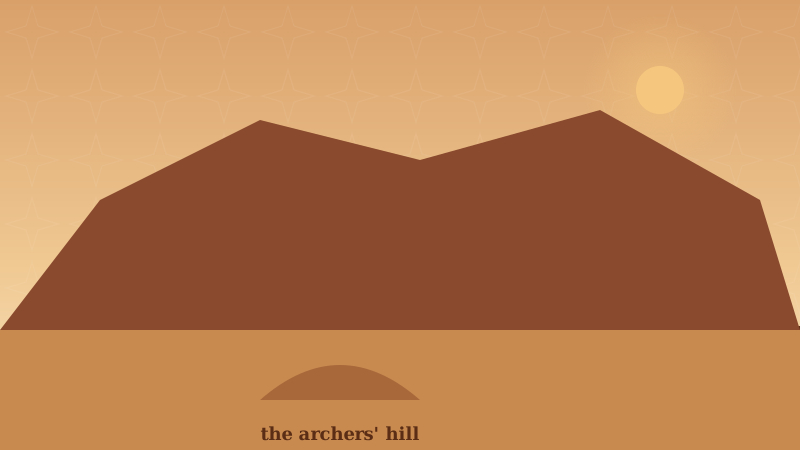
- Mount Uhud The Muslims stood with the mountain at their backs.
- The archers’ hill Fifty archers under ’Abdullah ibn Jubayr guarded the open flank.
- The Makkan army About 3,000, with 200 horsemen led by Khalid ibn al-Walid.
- The way round The only route by which horsemen could reach the Muslims’ rear.
انظر
The archers’ orders
He placed fifty archers on a small hill and ordered them never to leave it, whether the Muslims were winning or losing. The battle began well; the Makkans broke and ran.
Then most of the archers, seeing the enemy flee, came down to collect the spoils. Khalid ibn al-Walid, then still an enemy, saw the gap and led his horsemen round the hill and into the Muslims’ rear.
اقرأ
Consult, then commit

After he accepted the majority view and put on his armour, the young men felt they had pressed him too hard, and offered to stay in the town after all.
He refused: once a prophet has put on his armour, he does not take it off until Allah decides. Consult before a decision; once it is made, see it through.
Go deeper: why he preferred to stay
Madinah's houses were close together, like a fort. Inside, the defenders would have the advantage. Many older companions agreed with him. The younger men, who had missed Badr, longed to meet the enemy in the open.
اكشف
Common mistakes
Flip each card: what people often get wrong, and what is right.
- “Uhud was a total defeat.” It was a setback. Quraysh left without taking Madinah.
- “The archers left out of cowardice.” They thought the battle was won and wanted the spoils.
- “He ignored his companions’ advice.” He followed the majority, though he preferred otherwise.
اقرأ
The man who turned the battle
Khalid ibn al-Walid, who led the charge round the hill, became a Muslim about five years later. The Prophet ﷺ called him a sword of Allah, and in time he was counted among the greatest commanders in history.
The man who caused the worst hour of Uhud was welcomed with joy. Never write anyone off.
خمّن
After the walk-out
’Abdullah ibn Ubayy turned back with about a third of the army. About how many Muslims were left to fight at Uhud?
أظهر الإجابة
700 men About 700, against about 3,000 Makkans. Losing a third of the army just before the battle made Uhud a hard test from the start.
المس المكان The archers’ hill
Tap the hill where the archers were placed.

أظهر الإجابة
The small hill on the flank, facing the open ground the cavalry could use.
رتّب
The battle of Uhud
رتّبها بالترتيب الصحيح.
- The Muslims take position with Uhud behind them
- The archers are placed on the hill
- The Makkans break and run
- Most archers leave the hill
- Khalid’s horsemen ride round the hill
- The Muslims regroup on the slope of Uhud
أظهر الإجابة
Victory turned to loss when one command was broken.
اختر Check
What was the archers’ order?
أظهر الإجابة
Leaving the hill opened the way for the cavalry.
فكّر في الأمر
Do not leave the hill
The archers were told never to leave their hill, win or lose. Some left for the spoils. Where in your life is a “hill” you have been asked to hold, even when others leave?
لا يراه أحد غيرك، ويُحفظ على هذا الجهاز.
اقرأ
For your life
Most failures in a team come from someone leaving their post: a task left half done, a shift skipped, a promise forgotten because things seemed fine. Hold your hill, especially when it looks as if you are no longer needed.
اكشف
The lesson in three lines
Sum up the lesson in your own words first, then tap to check.
- The lesson in one line In 3 AH Quraysh marched on Madinah with about 3,000 men. He consulted, followed the majority, and placed fifty archers on a hill with clear orders. When most left their post, Khalid's horsemen turned the battle.
انتهى الدرس
The battle of Uhud
أضفت مرحلة من الرحلة إلى رحلة عبر جزيرة العرب.
ما تعلّمته
- At Uhud the archers’ order was clear: hold the hill whatever happens.
- منجزة
- 0
- صحيح من أول مرة
- 0
- للمراجعة
- 0
عملك · جرّبه اليوم
Keep one commitment today exactly, even when it would be easier to leave it.
ما حفظته
سجّل الدخول لتحفظ تقدّمك على كل أجهزتك.