
0 محفوظ
ادخل المشهد
A home at Maghrib
The first full day of prayers
Your seven-year-old has prayed all five today, some fast, some slow, one a little late. At Isha she asks, "Did I do it?"
انظر
Seven to ten: branches

From seven a child can follow steps, remember routines and feel proud of effort. This is when the five prayers, wudu, short surahs and daily manners become habits.
They still learn best by doing it with you. Praise effort, not perfection: "You remembered Asr all by yourself!"
انظر
Eleven to fourteen: fruit
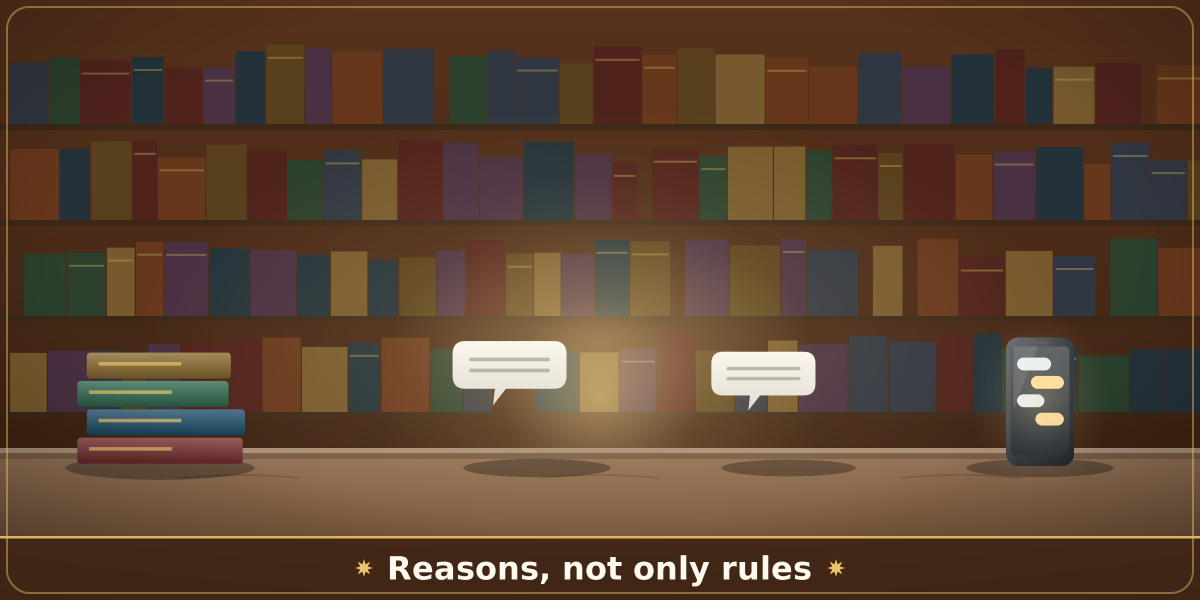
From about eleven children want reasons. They notice when we say one thing and do another. Bulugh may arrive in these years, and with it every duty becomes their own.
Your role moves from teacher to guide: explain why, give them trust and privacy, and keep talking.
صنّف
Sort them
Which age is this most like?
7 to 10
- "Can I tick off my prayer on the chart?"
- Wants to pray right beside you every time
- Learning the words of the tashahhud
11 to 14
- "But why do we have to pray at a fixed time?"
- Wants to pray in their own room, by themselves
- Asking what scholars say about a question online
اعثر عليها
Explore
Look again at the tree. Tap the two parts this lesson is about.
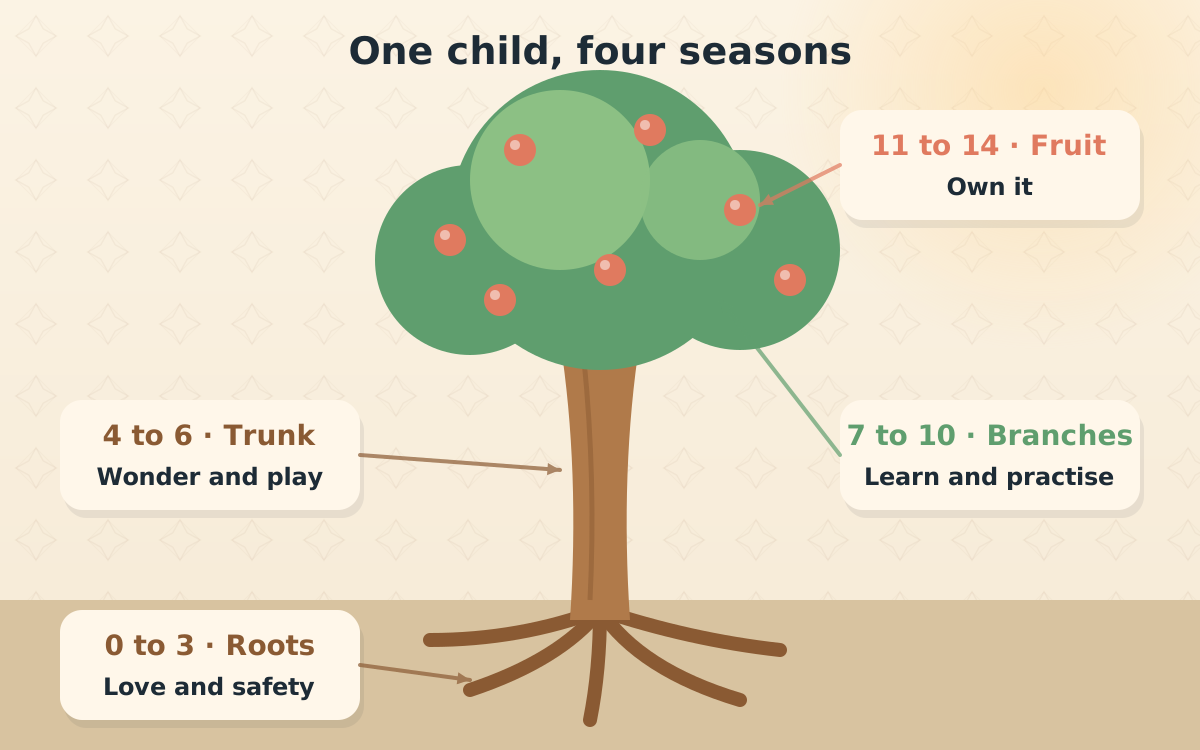
- Branches: 7 to 10 Practise every day, with you beside them.
- Fruit: 11 to 14 Owning their faith; you guide and trust.
من الحديث
Small and steady
- وعن عائشة رضي الله عنها أن النبي صلى الله عليه وسلم دخل عليها وعندها امرأة قال: من هذه؟ قالت: هذه فلانة تذكر من صلاتها قال: " مه عليكم بما تطيقون، فوالله لا يمل الله حتى تملوا" وكان أحب الدين إليه ما داوم صاحبه عليه. ((متفق عليه)) .
Aishah (May Allah be pleased with her) reported: The Prophet (ﷺ) came in when a woman was sitting beside me. He asked me, "Who is she?" I said: "She is the one whose performance of Salat (prayer) has become the talk of the town." Addressing her, he (ﷺ) said, "(What is this!) You are required to take upon yourselves only what you can carry out easily. By Allah, Allah does not withhold His Mercy and forgiveness of you until you neglect and give up (good works). Allah likes the deeds best which a worshipper can carry out constantly"..
انظر
Little and often

In this stored hadith the deed Allah loves most is the one kept up regularly, even if it is small. That is the secret of teaching children too: a few minutes every day beats a long lesson once a month.
ماذا كنت ستفعل؟
What would you do?
Your twelve-year-old says, "My friend says salah is just a habit our parents force on us." What do you say first?
- "Your friend is wrong. Don't talk to him."This ends the talk and makes the friend more interesting. Keep the door open.
- "Good question. What do you think salah is for?"Yes. Asking first shows respect, and you learn what your child really thinks.
خمّن
Estimate
About how many minutes can a twelve-year-old focus on one task, as a rough guide?
أظهر الإجابة
30 minutes Around half an hour is a fair guide. Even so, short focused times (and a break) beat long lectures at every age.
فكّر في الأمر
Reflect
Which of your child's habits today would you most like to see them still keeping at twenty? What could you do this year to make it steadier?
لا يراه أحد غيرك، ويُحفظ على هذا الجهاز.
اقرأ
Little and often
From seven to fourteen, add one habit at a time: the five prayers, a short surah, a dua, a chore, honesty in small things. Praise effort more than results.
By puberty they should know the basics of purity and salah well.
صح أم خطأ True or false?
Before puberty, children should learn the basics of purity and salah.
أظهر الإجابة
True. Prepare them before they become accountable.
انتهى الدرس
Branches and fruit (7 to 14)
أضفت نافذة مضاءة إلى بيت تضيء غرفه.
ما تعلّمته
- 7 to 10: branches; 11 to 14: fruit.
- Small and steady habits.
- Prepare them before bulugh.
- منجزة
- 0
- صحيح من أول مرة
- 0
- للمراجعة
- 0
عملك · جرّبه اليوم
Ask your child one "why" question about their faith today, and listen to the end before you answer.
ما حفظته
سجّل الدخول لتحفظ تقدّمك على كل أجهزتك.